Mon, November 17, 202520-Minute strength circuit for the winter months
Roman Knight
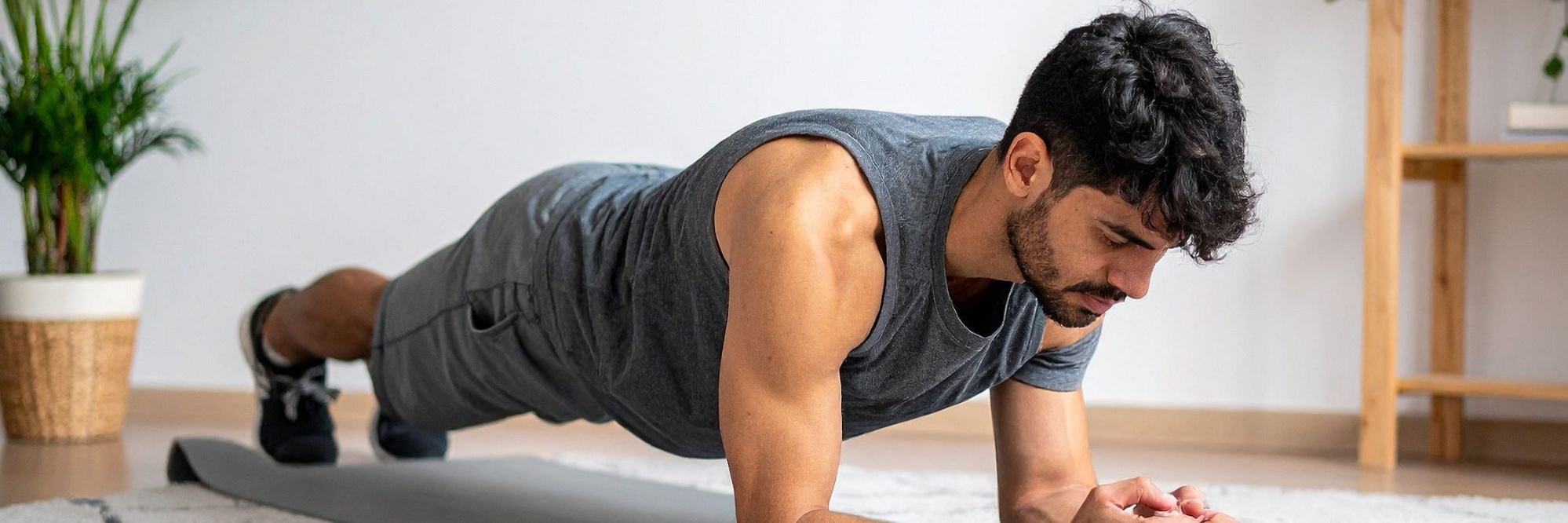
Strength training should be simple so that you actually do it. The simpler, the better. At home, all you need is a jump rope (even an imaginary one works), a dumbbell (or kettlebell) weighing 5–20 kg, a ball, and a mat. With these, you can create an effective workout once or twice a week. A strength circuit also benefits endurance if all exercises are done consecutively without breaks. The following six exercises increase strength, improve flexibility, and enhance posture.
Execution:
Short warm-up with basic gymnastics exercises
6 exercises, 60 seconds each (30 seconds per side for left/right exercises)
3–4 rounds in a row without breaks
Quick transitions between exercises
1. Jump rope
How: Jump with feet almost together, keeping jumps low but fast. Land on the balls of your feet.
Watch out: Move the rope only with your wrists. Keep feet and legs stable.
2. Jackknife with ball
How: Hold the ball with your hands. Extend arms and legs fully without touching the floor (A). Bring hands with the ball and feet together, squeezing the ball between the feet (B/C). Extend the feet with the ball again without touching the floor (C), then bring the ball back to your hands.
How: Hold a kettlebell or dumbbell with one hand. Stand shoulder-width apart, bend your knees, and let the weight hang between your legs with a straight arm (A). Place your other hand on your hip. Swing the kettlebell up over your head by extending your knees and straightening your upper body (B/C). Let it swing back down and control the motion. Perform 30 seconds per side.
Watch out: Keep your back straight and knees above the feet. The movement comes from body momentum; the torso stays stable. Don’t try to lift the kettlebell with your arm.
4. T-Push ups
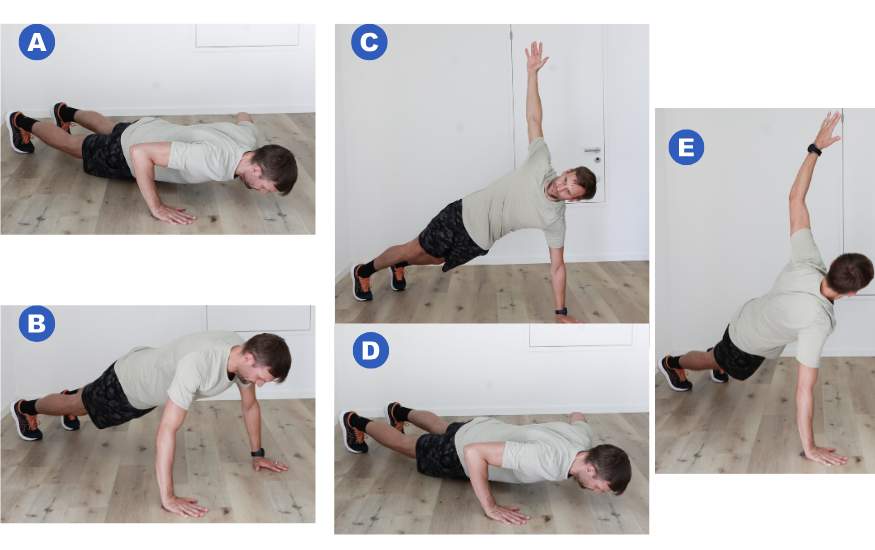
How: Start in a standard push-up position (A). Perform one push-up (B), then reach one hand toward the ceiling as your body rotates (C). Return to the starting position and perform another push-up. Repeat on the other side (E), alternating.
Watch out: Keep the body aligned during the movement. The supporting arm must be stable at the hand, elbow, and shoulder. Rotate slowly and controlled.
5. Split squat jumps
How: Start in a lunge position with both knees bent at 90°, back knee hovering above the floor, torso upright, and feet pointing forward. The front knee should be aligned over the front foot (A). Explosively jump into the air (B), switch legs mid-air, and land back in a lunge position (C). Alternate legs with each jump.
Watch out: Keep feet and knees pointing forward; don’t let them collapse inward or outward.
6. One-arm row
How: Hold a kettlebell or dumbbell in one hand and hinge forward at the hips. Feet hip-width apart, back straight, eyes down, free hand on your chest (A). Pull the weight backward along the chest while rotating your torso slightly in the same direction (B/C). Return the weight down, allowing the torso to rotate back. Perform 30 seconds per side.
Watch out: Keep hips and legs engaged. Keep your gaze down and neck long. The head stays still.
You might be interested in
Diet tips
The new carbohydrate system in endurance sports
Modern research allows athletes to consume up to 120 grams or more of carbohydrates per hour, thereby improving performance and recovery - provided that the gastrointestinal tract is specifically trained for this purpose.
General tips
10 points to improve your performance
After the season, it's time to look back on the past season. What went well? What went badly? We give you ten tips on how to make next season more successful.
Interviews
Jon Kistler in the Datasport-Check
The 22-year-old Jon Kistler from Zurich wants to represent Switzerland in the newly added sport of ski mountaineering sprint at the Olympic Games in Milano Cortina.
.jpg)
.jpg)
.png)
.png)
.jpg)