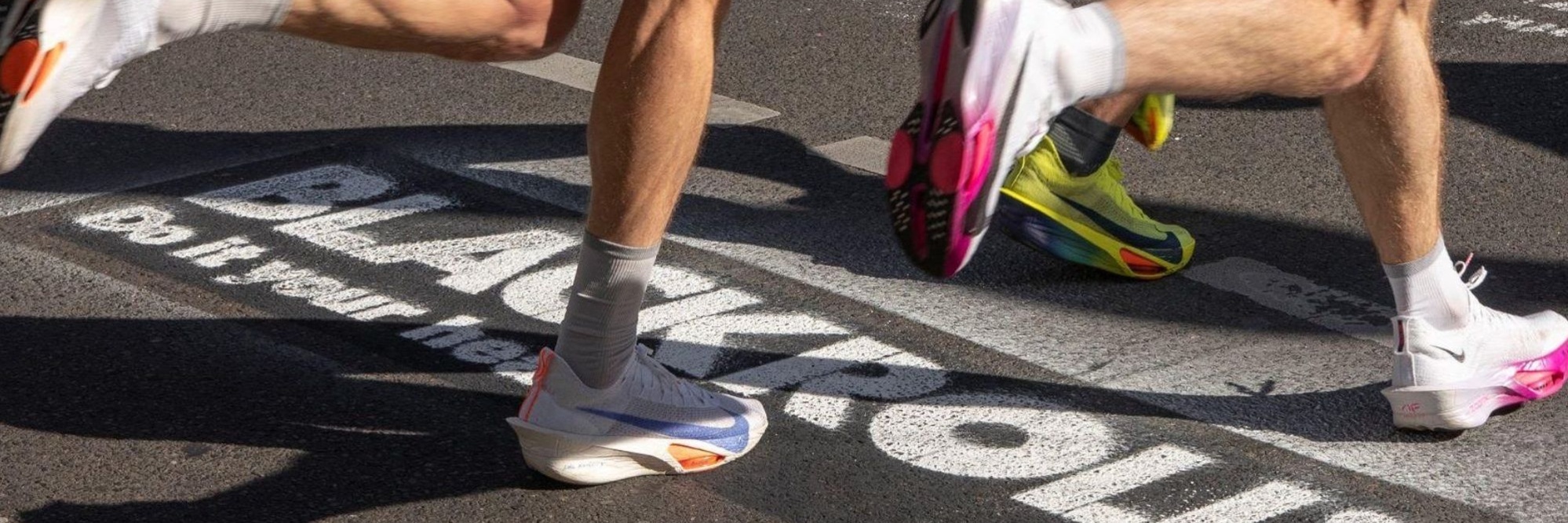
Many runners looking for the perfect equipment focus on high-performance shoes with carbon plates. Discover the advantages of these innovative running shoes and learn how to prepare yourself optimally for wearing these super shoes.
.png)
Many runners will soon begin preparing for the new running season. Alongside training, the right gear plays a crucial role – and high-tech running shoes with thick soles and carbon plates are stealing the spotlight. They don’t just look futuristic; they also deliver real performance benefits that are becoming increasingly popular among recreational runners.
If you’ve ever stood along the course of a half marathon or marathon, you’ve seen them: oversized running shoes with ultra-thick soles, often referred to as carbon running shoes. Originally developed for elite athletes, studies suggest they can offer up to four minutes of advantage over the marathon distance and significantly boost running speed.
These so-called “super shoes” combine several innovative elements designed for maximum efficiency on long distances – especially the carbon plate embedded in the midsole. It enhances energy return and gives you more propulsion with every stride – perfect if you’re looking to push your personal best.
.jpg)
Key benefits:
-
Increased stiffness with enough flex
-
Optimised toe-off phase
-
Reduced dorsiflexion – meaning less unintended bending in the toe area
-
Lower energy loss on long distances like 21.1 km or 42.2 km
According to World Athletics regulations, the maximum sole thickness for official races is 40 mm – and many models take full advantage of that limit.
Carbon-plate running shoes are no longer just for elites. Many brands now offer models for beginners and ambitious recreational athletes.
Whether you’re hunting for the best shoe for your next half marathon, an extra boost for your marathon, or simply a modern, comfortable training shoe, these new thick-soled models might be exactly what you need.
Possible downsides of high-performance running shoes
1. Biomechanical adaptation
The carbon plate and highly responsive midsole change your running mechanics. They increase the load on your Achilles tendon, calf muscles and forefoot. Without proper preparation, muscular overload can occur.
2. Reduced proprioception and stability
The heavy cushioning reduces sensory feedback from the ground. This can lead to instability or compensation issues, especially if your foot muscles are undertrained.
3. Limited everyday usability
They’re engineered for race performance, not for long break-in phases or slow recovery runs. Reduce risks with targeted strength training
Strength training 2–3 times per week helps strengthen key muscle groups and lowers the injury risk when transitioning to high-performance shoes. Introduce them gradually and adapt your training to help your body adjust to the new biomechanical demands.
.jpg)
Conclusion: innovation meets running comfort
With carbon plates and rocker soles, the running industry has reinvented itself. If you want to break your personal best, run more efficiently, and feel less fatigue on long distances, this trend is hard to ignore.
And if you want to level up your recovery too: after your run is before your recovery – with BLACKROLL.
Discover our recovery tools for runners
.jpg)