Training tips
Run faster with a strong core
A stable pelvis supports the whole body and enables greater performance. Three specific exercises for the centre of the body.
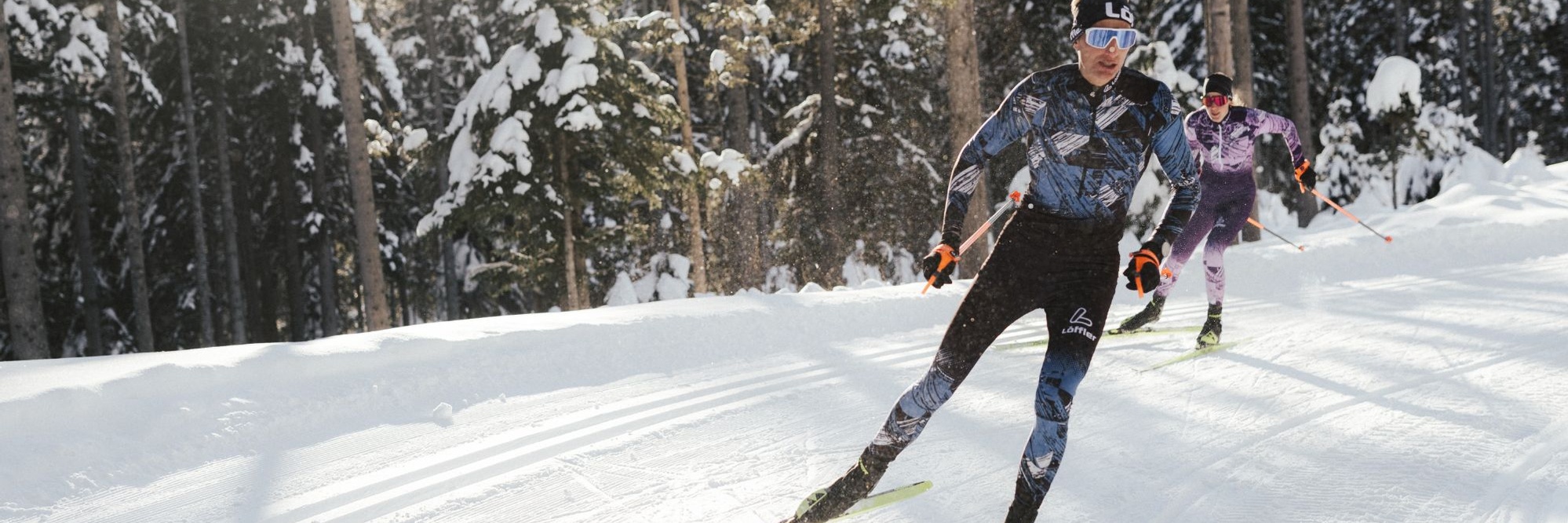
Your cross-country skis are waxed and ready for your first training session. Now it’s your body that also needs to specifically prepare. The legs require flexibility, strength and balance. The following 4 exercises will make sure that you're ready.
Skating involves constantly switching from one ski to the other. This weight shift from one leg to the other should also be practised during training. The easiest way to practise the dynamics of lateral push-offs is with lateral jumps using a stepper or a wooden box, for example.
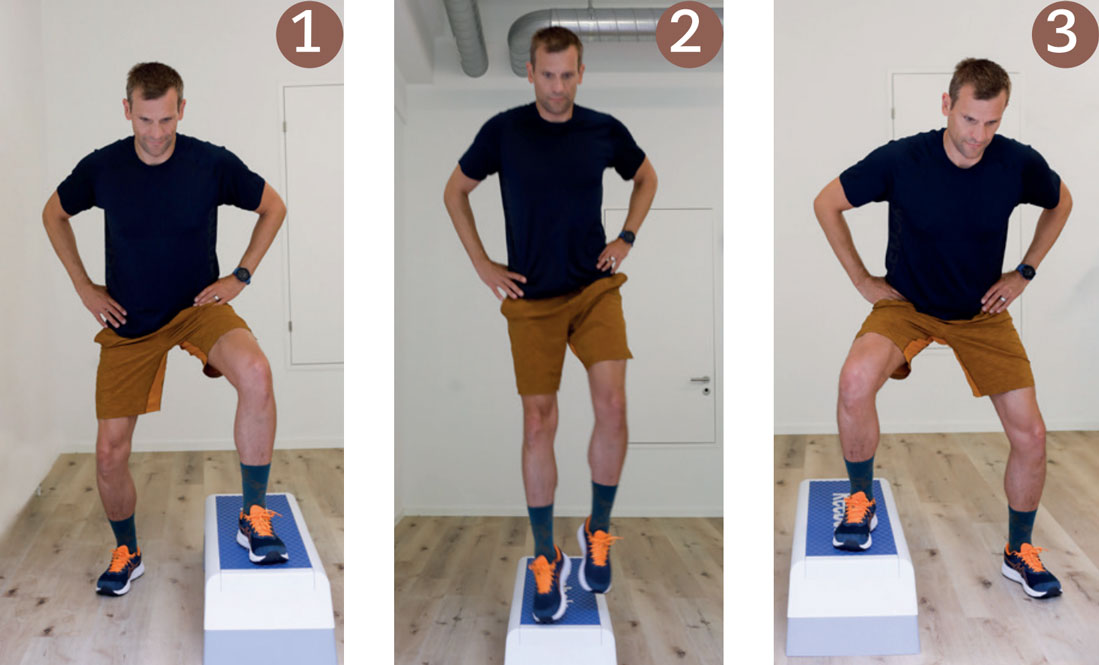
Here’s how:
Take note: Always keep your knees straight above your foot, your upper body and pelvis should remain upright.
Repetitions: 2 sets of 30-40 jumps
In classic cross-country skiing, in addition to a stable leg axis, mobility in the hip joint (extension towards the back) and mutual twisting of the upper body are required. The backwards leg movement during classic cross-country skiing – with an upright pelvis and upper body – is the main method of propulsion along with the poles. The more powerfully the leg can be stretched backwards, the better the movement. When running as well as cross-country skiing, the strength comes from the extension of the hip. The following exercise helps to increase flexibility in the hips and upper body:
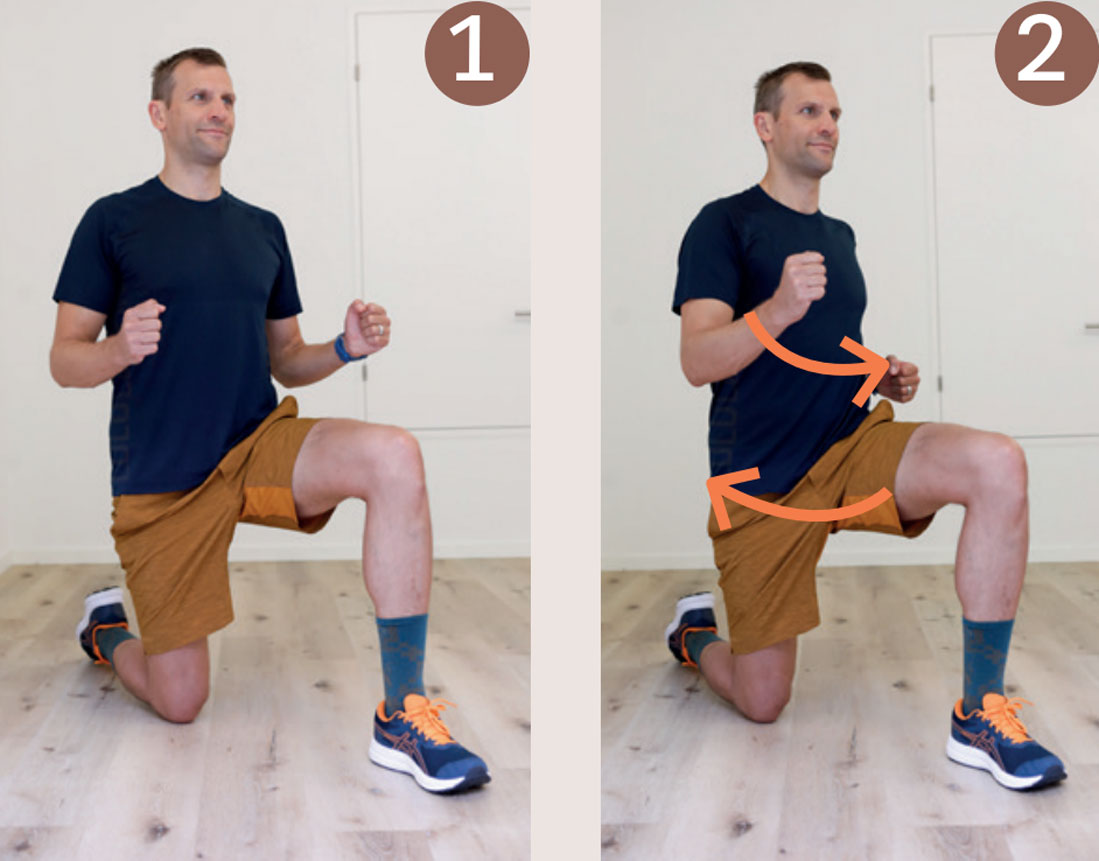
Here’s how:
Take note: The front knee must remain straight above the foot during the pelvis rotation. Keep your head facing forward.
Repetitions: 2 sets of 10 repetitions per side
The push-off phase in cross-country skiing is a one-legged movement and requires a lot of strength in the thighs and buttocks. It is therefore important for functional training to also do one-legged exercises. In addition to coordination and balance, strength should also be trained on one leg. The following exercise will strengthen the thigh and gluteal muscles:
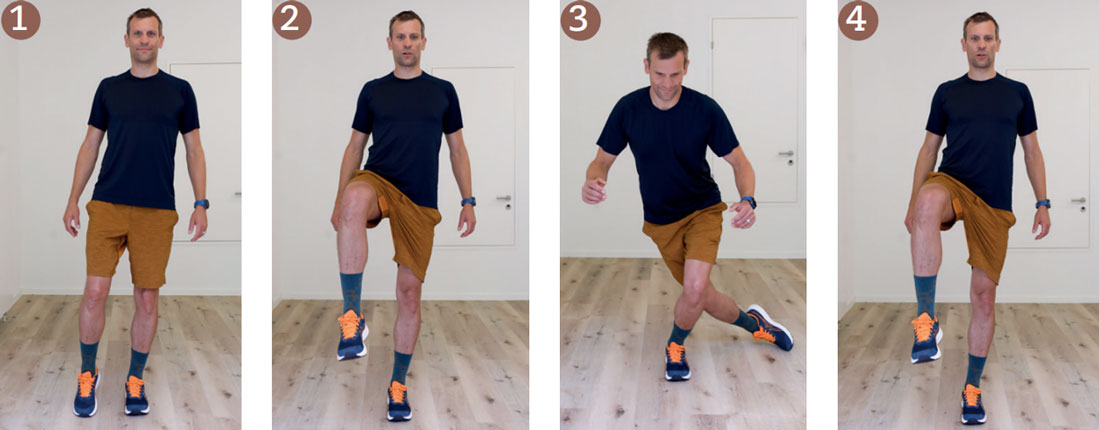
Here’s how:
Take note: The front knee should be directly over the front foot. Bend the supporting leg only as far as the movement can be guided back up in a controlled manner.
Repetitions: 2 sets of 15 repetitions per side
When cross-country skiing, the support area is small and the snow slippery. On thin skis, good balance is crucial for long, powerful glides through the snow. Good foot and leg-axis stability is required in order to optimally transfer the power over the skis into the snow. A strong push-off only works if both legs are well-coordinated.
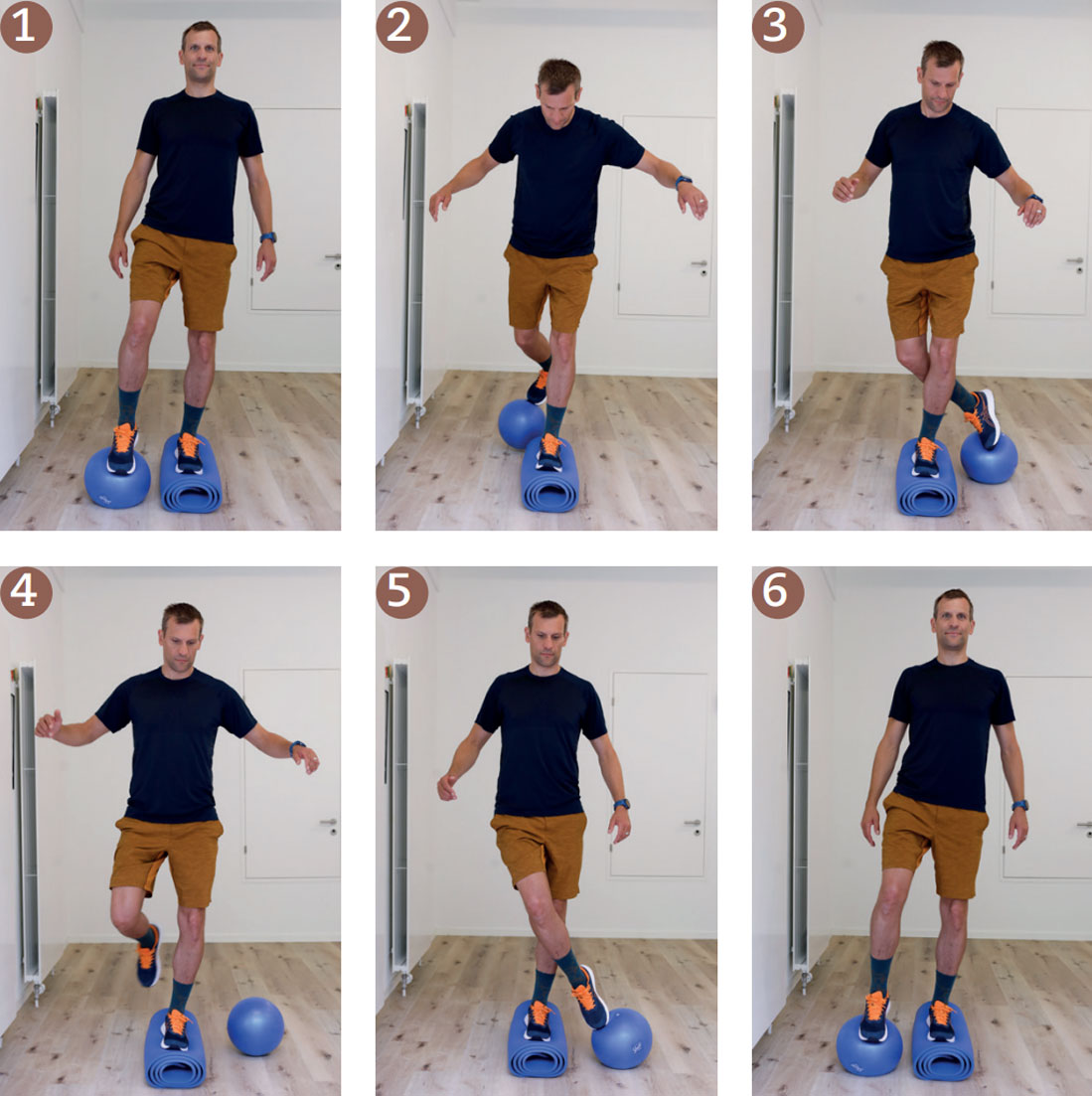
Here’s how:
Take note: Always keep the supporting leg stable, your knee should always be directly over the foot. Moving the ball slowly helps to maintain balance. The tighter the roll, the more unstable it is and the more difficult it becomes to balance.
Repetitions: 6-8 rounds per leg
A stable pelvis supports the whole body and enables greater performance. Three specific exercises for the centre of the body.
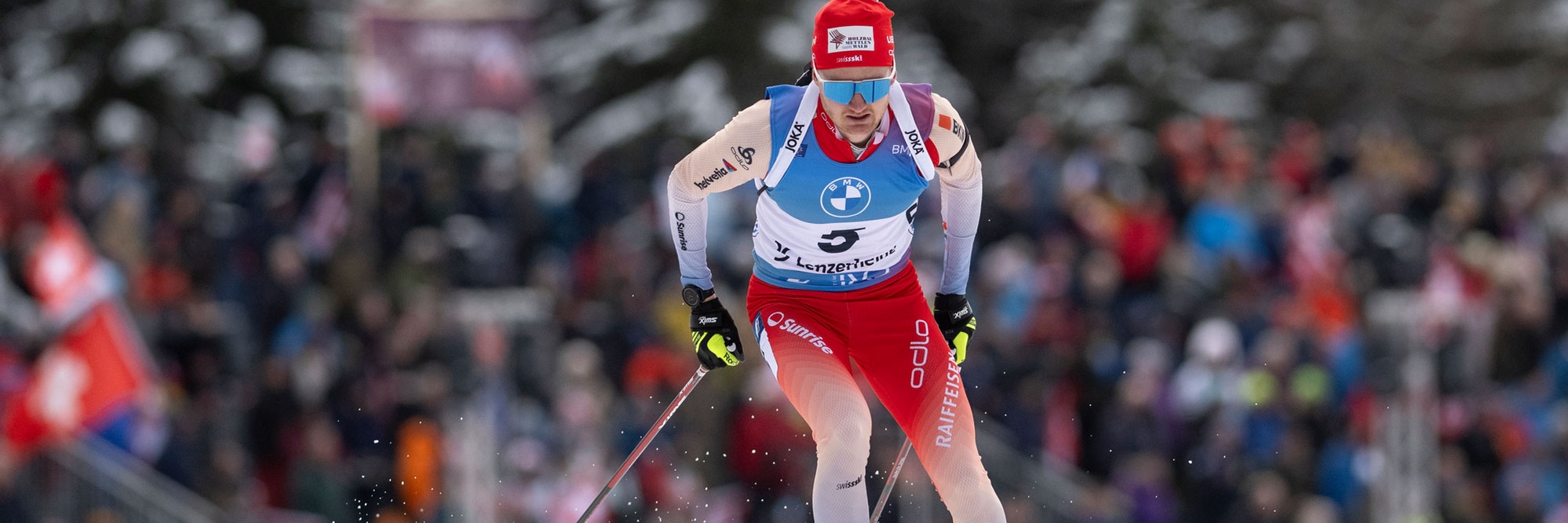
Sebastian Stalder caused a sensation last winter with several top ten placings and raised hopes for the home World Championships from 12 to 23 February 2025.