News
Strengthen your legs through hill sprints
Every week we publish a training tip at this point. Follow this and stay in shape.
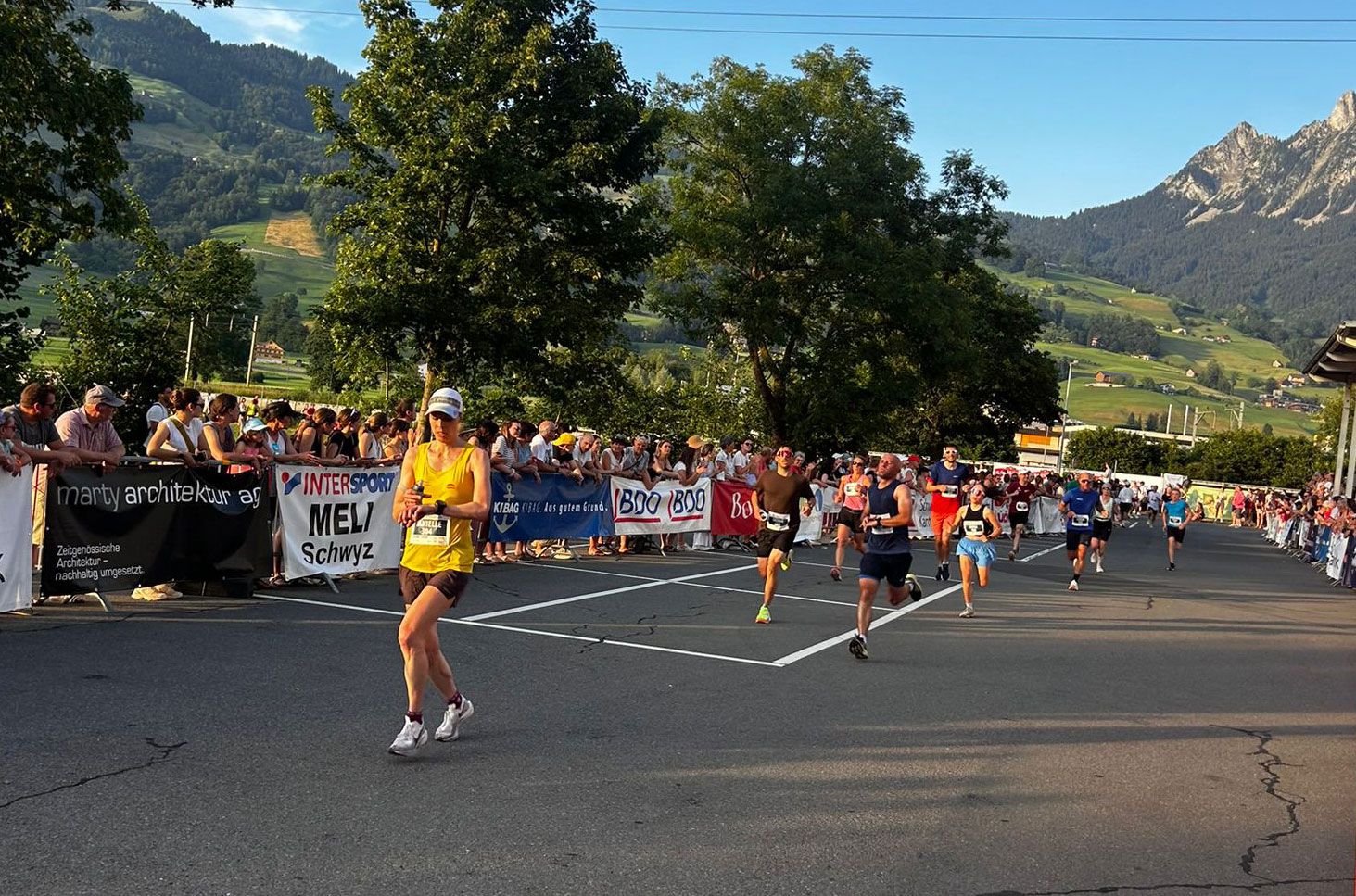
Not only major championship races are decided in the final meters. Even in fun runs, the final sprint can determine victory and defeat or a new personal best. How is your final speed?
A good final sprint is rarely a coincidence – it is the result of planning, physiological adaptation, and the mental ability to dig deep in the final meters. The good news: You can improve. And there are various ways to do so.
Those who pace their race well have the strength at the end to give it their all. However, those who can't hold back their horses and "shine" with a fast start, deplete their glycogen stores and lactate buffering capacity early on, effectively taking themselves out of the race.
=> Develop a strategy for competitions to avoid starting too fast. Also, practice running a faster second half during intense training sessions.
When you start the final sprint in the last 200 meters, lactate concentration rises rapidly. It is now crucial how the body can handle it. Those who train frequently have a higher buffering capacity and tolerate acidosis longer. Additionally, those who regularly perform tempo runs and intense intervals at the anaerobic threshold improve their ability to cope with higher lactate levels.
=> Regularly perform intervals and try to consciously run the last 200 to 400 meters faster, for example.
Those who are genetically predisposed to have more fast muscle fibers have an advantage in the final sprint. However, through targeted training, long-distance runners can also learn to better activate their fast fibers under fatigue.
=> Make it a habit to perform 3-4 strides or hill sprints after long runs.
Not only energy metabolism limits the final sprint – the nervous system also fatigues. Under exhaustion, the ability to quickly activate motor units decreases.
=> Regularly perform short intervals of 30 to 60 seconds at 95-100% or add a final acceleration of one to two minutes at the end of long runs.
Studies show that the brain, not the body, decides whether a final sprint is possible or not.
=> Mentally rehearse the final sprint repeatedly in advance and try to push your pain threshold occasionally during training.
Every week we publish a training tip at this point. Follow this and stay in shape.

Tips on how to prepare for your athletic goal can be found everywhere. But what about when it comes to post-race recovery? Although a gap exists here, with some simple tricks you can reduce the aftermath and accelerate your recovery so nothing will get in the way of preparing for your next major goal.

The race has been hanging over your daily training sessions for months and guiding your way. There are several key points to remember and mistakes to avoid during those last seven days.