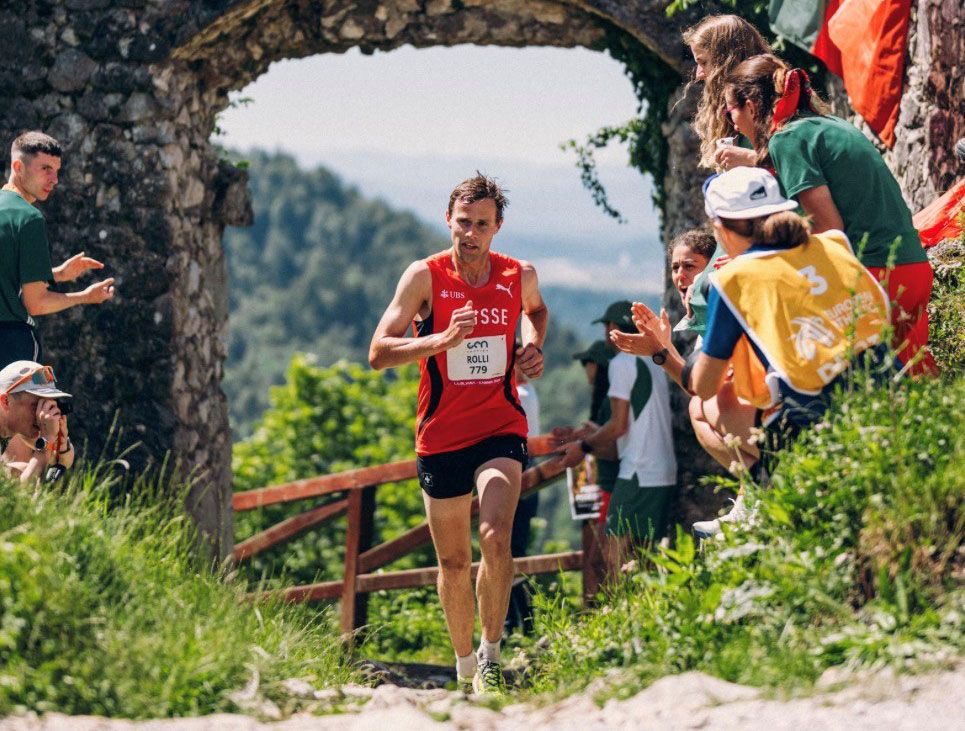
Foto: @anderesformat
At the beginning of June, Dominik Rolli won the third European Championship medal of his career at the European Off-Road Running Championships in Kamnik (SLO). The 30-year-old from the canton of Bern, who has already won medals at Swiss Championships over 5,000 m, 10,000 m, half marathon, marathon, cross-country and mountain running in recent years, once again demonstrated that he belongs among the world's best mountain runners.
European Championships in Kamnik
The Uphill and Up and Downhill races were my first major targets of the season. I travelled to Slovenia with the goal of winning a medal. I believed I had the best chance in the Up and Downhill race because I am strong both uphill and downhill. With the silver medal in the Up and Downhill race, fifth place in the Uphill race in a very strong field, and two team medals, I am more than satisfied.
Road, track, cross country or mountain running
I would simply describe myself as a runner who can perform successfully across all disciplines with specific preparation. My greatest international medal prospects are in uphill-and-downhill mountain running, as I do not have any particular weaknesses in that discipline.
Mountain running training
Almost all of my training includes significant elevation gain. This helps my body adapt to running downhill and then climbing again on fatigued legs. That means I deliberately choose routes that involve repeated ascents and descents. It is also important to include technically demanding downhill sections in training in order to build confidence and experience for racing at speed on the descents.

Training routine
As I work in a multi-generational farming business, I train from home throughout the year. Alongside a workload of around 70–75%, which involves three to five hours of work every day from Monday to Sunday, I complete seven to ten running sessions per week. For my harder sessions, I train with a group of competitive track, road, trail and orienteering runners in Bern. The group is coached by Beat Aeschbacher and Sandra Gasser. I complete the remaining sessions directly from home.
This adds up to around 160–170 kilometres and 4,500–6,000 metres of ascent each week. To prepare for my next major goals, the Mont-Blanc Marathon in Chamonix and Sierre-Zinal, I am including longer long runs this year, lasting three to three and a half hours and covering 1,200–1,500 metres of elevation gain.
Training philosophy
Get the simple things right – and do them consistently over many years. Success will eventually follow. More important than occasional extreme training sessions is maintaining consistency over the years through easy runs, long runs and quality workouts.
I am convinced that I benefit from the large amount of climbing I do and the variety it brings. I also respond particularly well to long runs and prolonged periods of exercise, especially when there are only short recovery breaks.
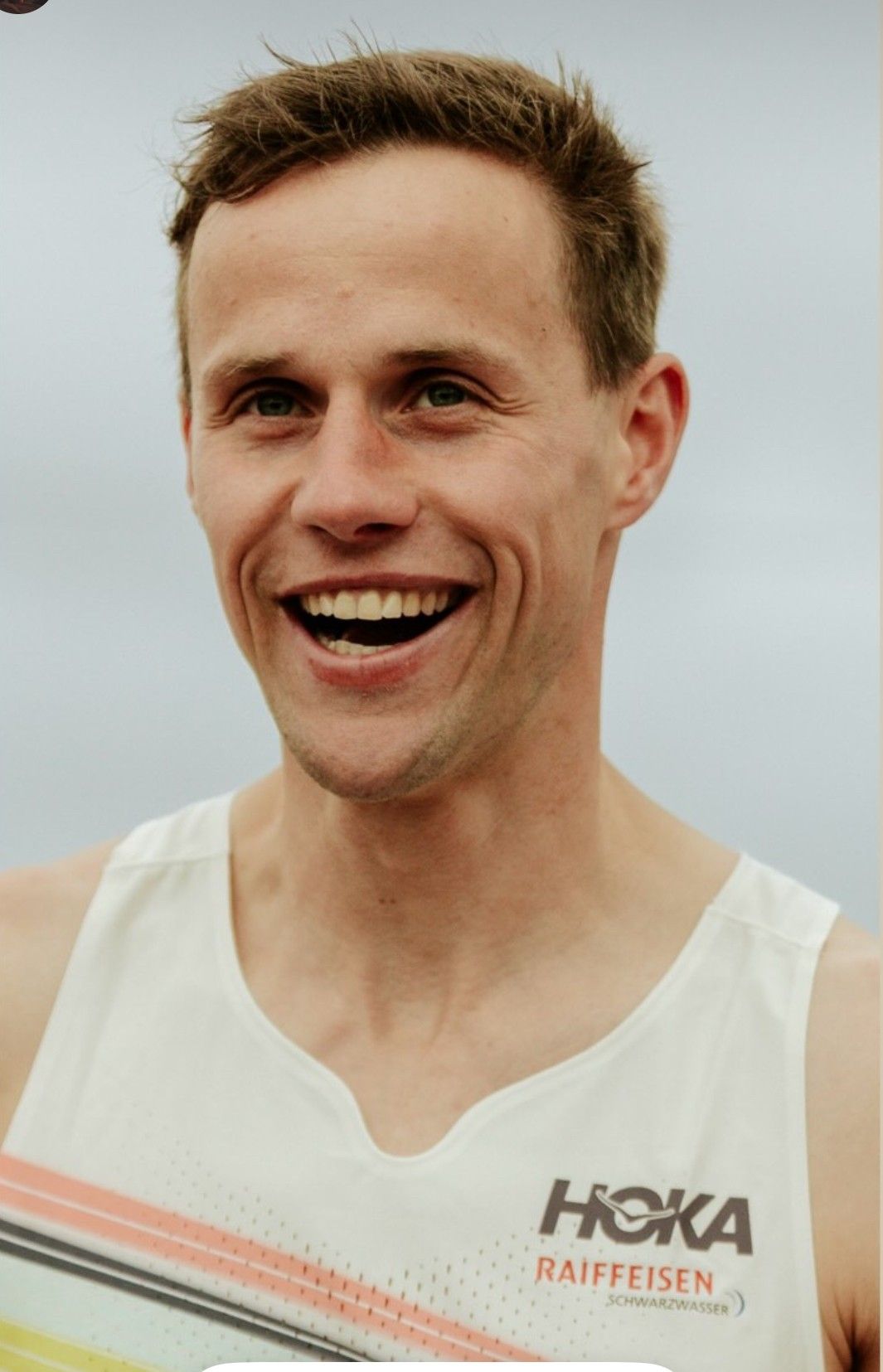
“Enjoyment is the most important factor. You have to genuinely enjoy training; otherwise, it is impossible to sustain the workload over the long term.”
Key to success
Enjoyment is the most important factor. You have to genuinely enjoy training; otherwise, it is impossible to sustain the workload over the long term. I also believe it helps not to become obsessed with minor details and to train with a group where athletes can motivate and push one another.
Recovery
Recovery is important and plays a major role in my routine. I prioritise sufficient sleep – around eight hours per night plus a 30 to 60-minute afternoon nap. I also make sure I eat regular meals and sufficient quantities of fresh food, preferably home-cooked meals prepared by my mother. In addition, I spend 30–40 minutes every day doing core-strength and stretching exercises.
My strength
My ability to recover. My body adapts quickly and efficiently, allowing me to bounce back rapidly from hard or long training sessions.
My weakness
My speed over shorter distances. There is definitely still room for improvement there.
Equipment
Modern running shoes are becoming increasingly important and make these high training volumes possible. For day-to-day training, I rotate around ten pairs of shoes to avoid repetitive strain from always using the same model. When travelling to races, I take four pairs of racing shoes with me. Depending on the course and weather conditions, I decide which model to use. In most cases, I race in carbon-plated shoes similar to those I wear for road races – unless conditions are wet. If it is wet, a trail racing shoe with more aggressive grip is essential. My advice to recreational runners is the same approach I follow myself: test everything in advance and pay close attention to the weather forecast.
We’d like to thank Dominik Rolli for his fascinating insights. You can find out more about Dominik Rolli here.