
Training tips
16-week training plan for a bike marathon
Want to challenge yourself to a bike marathon? This training plan will get you in peak condition for the highlight event of your season.
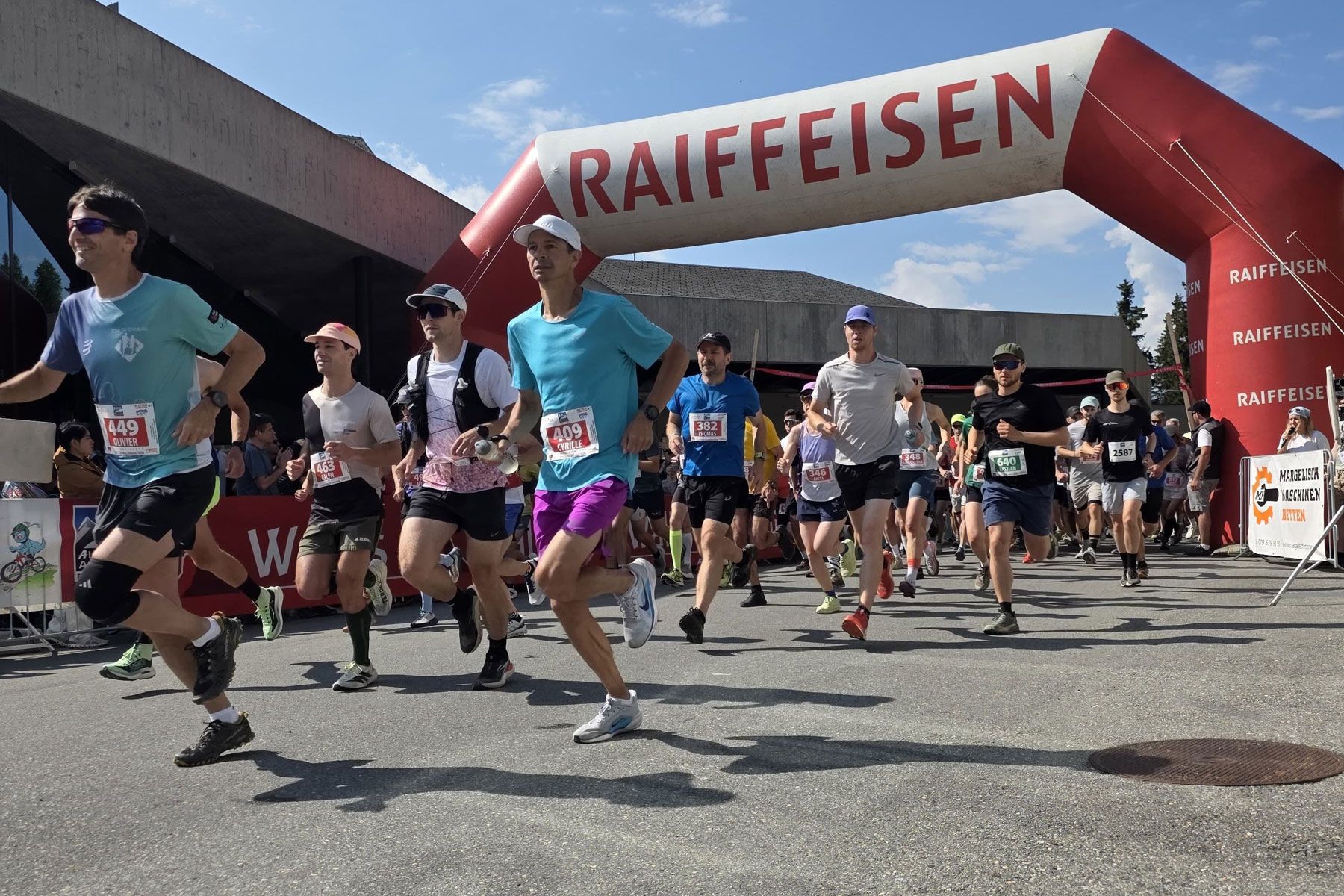
There is no such thing as a perfect running style – but there is such a thing as good running technique. We show you how optimising your VO₂max, threshold and running economy can improve endurance performance, and how adjustments to stride length, cadence and foot strike can help you save energy.
Some runners look light and effortless, while others appear more rigid – yet both can be fast. That’s because there is no single perfect running style. Body shape, mobility, strength, pace and experience all influence how we move. Good running technique therefore does not have to look particularly elegant. Above all, it should be efficient, stable and suited to the individual runner.
Three factors are particularly important for endurance performance: maximal oxygen uptake, or VO₂max, threshold and running economy. VO₂max describes how much oxygen the body can take in and use in the muscles during maximal exercise. Threshold indicates how hard someone can run for an extended period. Once this intensity is exceeded, fatigue increases significantly and the pace can only be maintained for a limited time. Running economy describes how much energy is required to maintain a given pace. If you use less energy at the same speed, you can either run faster or maintain your pace for longer.
Running technique primarily affects running economy. The less the body is slowed down with each stride and the more effectively movement is directed forwards, the less energy is required to maintain a given pace. Stride length, cadence and foot position on landing all play an important role.
Running speed is determined by the interaction between stride length and cadence. As pace increases, both usually increase as well. At a given speed, runners naturally tend to find a combination that feels efficient. That is why the often-cited 180 steps per minute is not a universal target. Problems can arise when the foot lands well in front of the body with the knee almost fully extended. This is known as overstriding and it acts like a brake with every step. The lost momentum then has to be regained. A slight increase in cadence can help shorten an overly long stride, but it is not a one-size-fits-all solution. What matters more is finding a smooth, natural rhythm in which the foot does not land unnecessarily far in front of the body.
There is no one-size-fits-all answer when it comes to foot strike, either. Most endurance runners land on their heel first. Studies have found no general efficiency advantage to forefoot running. Consciously changing your foot strike does not reliably improve running economy, nor has it been shown to reduce the risk of injury. Instead, it shifts more of the load onto the feet, calves and Achilles tendon. Muscles and tendons adapt to movement patterns over many years, so any change should be introduced gradually and only for a specific reason. Ultimately, what matters less is which part of the foot hits the ground first, and more where the foot lands in relation to the body.
Your upper body should remain upright and stable, while staying relaxed. A slight natural forward lean is fine, but excessive bending at the hips can be counterproductive. Keep your gaze forward and your shoulders and hands relaxed.
Your arms help stabilise your upper body and should swing naturally in the direction of travel, with your elbows bent at around 90 degrees. If your arms cross too far in front of your body, they create unnecessary rotational movement. Think of your arms as the pace-setters for your legs. They are directly linked to your leg movement: if your arms move slowly, because they have a large swing due to a wide elbow angle, for example, then so do your legs. However, if you manage to run with a narrow elbow angle and swing your arms quickly, this rhythm is transferred directly to your steps and your running speed.
As your pace increases, your swing leg naturally comes through more compactly. There is no need to consciously drive your heel high towards your glutes during easy runs.
Some up-and-down movement is perfectly normal. Excessive vertical movement, however, wastes energy that could otherwise contribute to forward motion. The goal is a relaxed, springy running style, rather than trying to minimise or maximise vertical movement.
Not every individual variation in running style is automatically a problem. Some patterns can nevertheless be less efficient, including:
What happens when you get tired can be particularly revealing. Towards the end of a long run, the pelvis and upper body may become less stable, ground contact time may increase and the foot may start landing further in front of the body. Good running technique is therefore also about maintaining an efficient rhythm for as long as possible.
Technique training works best in small, regular doses. After warming up, five to ten minutes of running drills such as ankle exercises, skipping or high knees is enough. Strides help develop a dynamic, controlled running motion, while short uphill sprints encourage a more active push-off. Strength training for the calves, glutes, hamstrings and core can help you maintain good posture even when fatigue sets in. Video footage can help identify noticeable movement patterns. A proper running analysis, however, should look beyond a single snapshot. It should assess the entire movement pattern, as well as your pace, any discomfort and your individual circumstances.
Focus on changing just one aspect at a time, particularly if it is causing discomfort, noticeably slowing you down or distributing the load inefficiently. Good running technique is not about matching a fixed ideal. In many cases, small, targeted adjustments can make a bigger difference than trying to completely reinvent your running style.
Joyner, M. J. & Coyle, E. F. (2008). Endurance exercise performance: the physiology of champions. The Journal of Physiology, 586(1), 35–44.
Joyner, M. J. (1991). Modeling: optimal marathon performance on the basis of physiological factors. Journal of Applied Physiology, 70(2), 683–687.
Wunsch, T. & Schwameder, H. (2022). Biomechanik des Laufens und Laufanalyse. In: Bewegung, Training, Leistung und Gesundheit. Springer. [in German]
Heiderscheit, B. C. et al. (2011). Effects of step rate manipulation on joint mechanics during running. Medicine & Science in Sports & Exercise, 43(2), 296–302.
Gruber, A. H. et al. (2013). Economy and rate of carbohydrate oxidation during running with rearfoot and forefoot strike patterns. Journal of Applied Physiology, 115(2), 194–201.
Perl, D. P., Daoud, A. I. & Lieberman, D. E. (2012). Effects of footwear and strike type on running economy. Medicine & Science in Sports & Exercise, 44(7), 1335–1343.
Hamill, J. & Gruber, A. H. (2017). Is changing footstrike pattern beneficial to runners? Journal of Sport and Health Science, 6(2), 146–153.
Arellano, C. J. & Kram, R. (2011). The effects of step width and arm swing on energetic cost and lateral balance during running. Journal of Biomechanics, 44(7), 1291–1295.
Arellano, C. J. & Kram, R. (2014). Partitioning the metabolic cost of human running: a task-by-task approach. Integrative and Comparative Biology, 54(6), 1084–1098.
Moore, I. S. (2016). Is there an economical running technique? A review of modifiable biomechanical factors affecting running economy. Sports Medicine, 46, 793–807.
running.COACH (2026). Running Technique: 7 ways to improve your running economy.
Want to challenge yourself to a bike marathon? This training plan will get you in peak condition for the highlight event of your season.
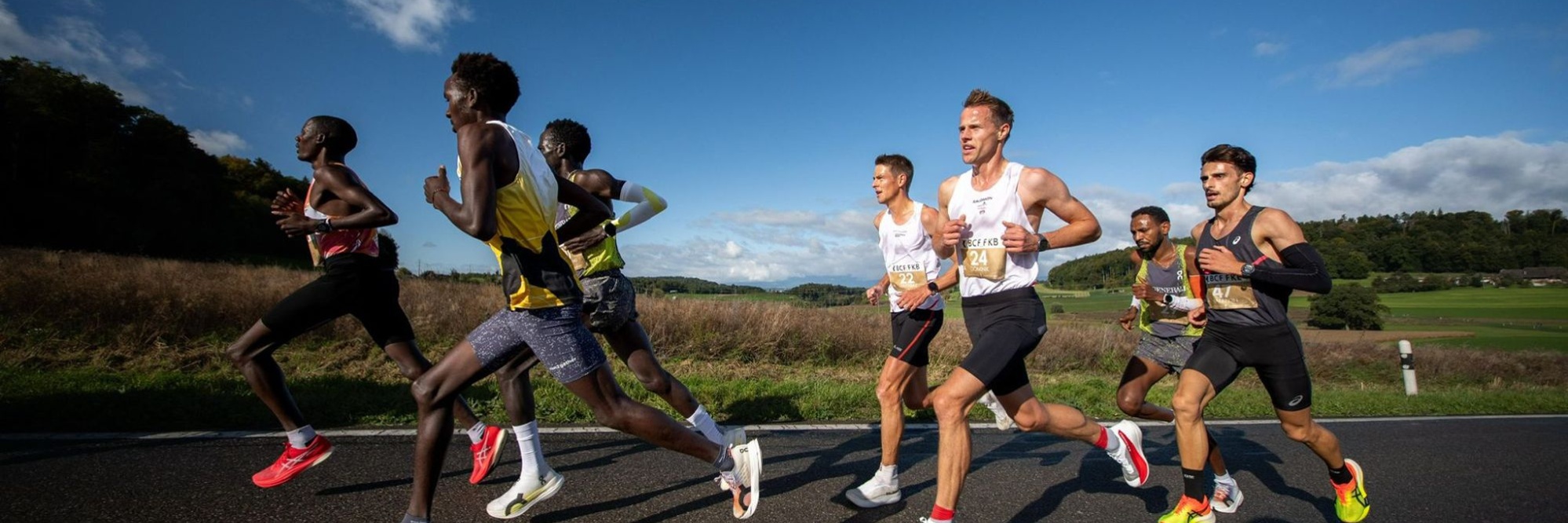
After the season, it's time to look back on the past season. What went well? What went badly? We give you ten tips on how to make next season more successful.