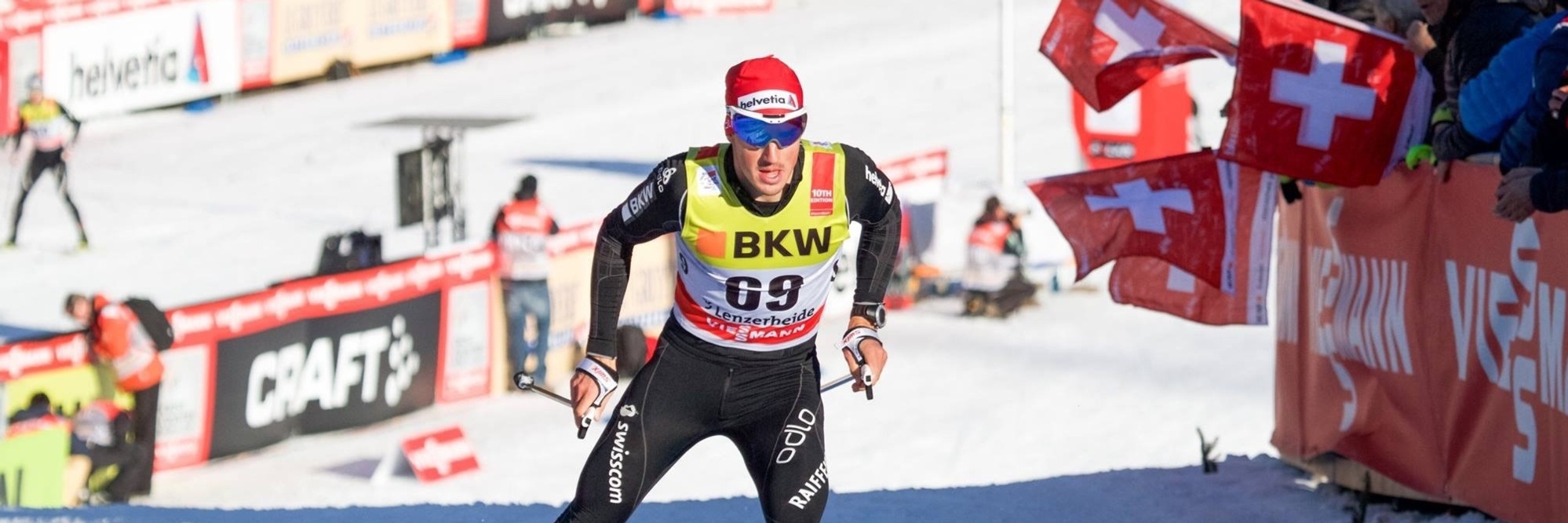
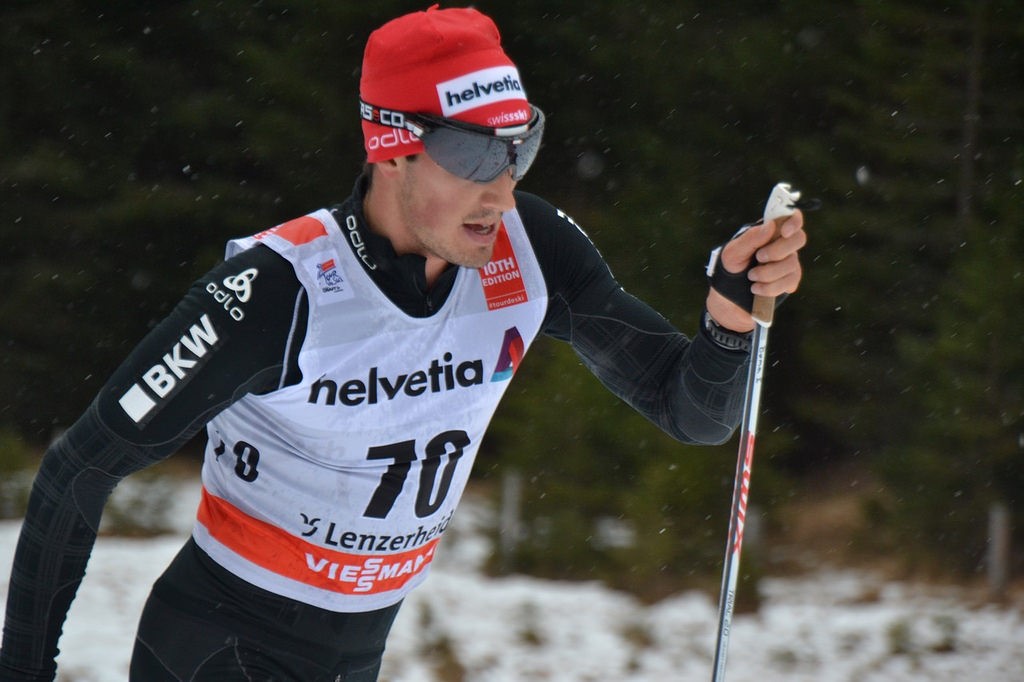
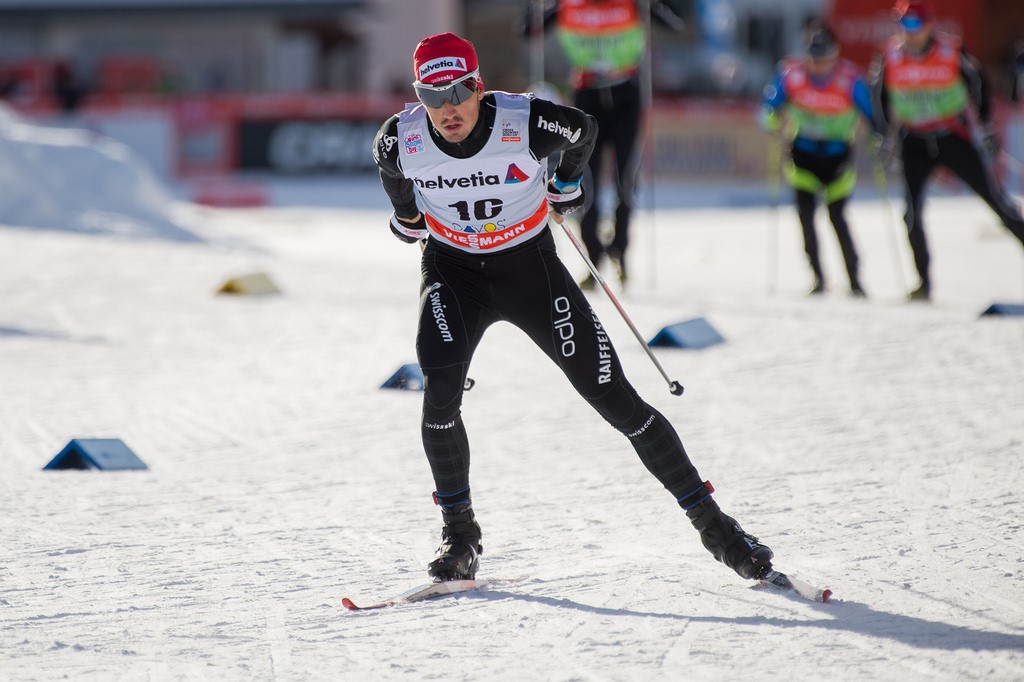
The 26-year-old from Graubünden has been taking part in the World Cup for four years and is steadily making his way to the top. In the wake of Dario Cologna, he has achieved several top results and started representing Switzerland at the World Championships and the Olympic Games in the past few years.
The World Cup races are currently being dominated by Norwegians. What makes these Scandinavians so strong and how can the gap be closed?
The Scandinavians have an extremely large reservoir of cross-country skiers. If one is out of shape, the next steps into the breach. The Norwegians also train extremely hard and push each other to their peak performances. What’s more, they do a lot of technique training on the treadmill. We certainly still have potential there.
The cross-country skiing sport is developing year after year. The classical style in particular is only partly being pushed and skis are no longer prepared with kick wax, rather skating skis are being used. What impact does this change have on the (summer) training? What now needs to be done differently than 5-6 years ago, for example?
The athletes are becoming increasingly stronger. The sport is developing to become more and more like a power endurance sport such as rowing. Everyday training focuses much more on strength and more double stick training is being done on roller skis. I think it’s a pity that things are developing this way because the classic technique is very elegant and traditional. The jury needs to take a tougher line and the route profiles need to be adapted or rather steeper ascents need to be integrated.
Cross-country skiers are known for doing a great amount of training. Can you give us an overview of how many hours you train on average each week in the different training phases (build-up phase, competition phase, transition phase), and how much of this time you spend on skis, the bike, roller skis, and sweat in the gym?
A good cross-country skier is made in the summer, they always say. But it is also true. The summer months are the most intensive training months. Up to 100 hours per month are spent training. An average week of training consists of between 16-25 hours of training. In summer, roller ski training makes up about 50%, split between both techniques. The remaining hours are spent on mountain biking, jogging, skiing, bike racing, and much more. In summer, 2-3 strength training sessions are completed each week, in winter 1-2. In the pre competitive phase, the volume is reduced and the intensity increased so that you can start the season fresh and with full batteries. Not so many hours are spent training in the winter due to the numerous competitions and the travelling that is involved. The idea is to preserve your level of fitness and save strength, which is needed for the competitions. Much more attention is also paid to recovery.
What tips do you have for all those wanting to successfully take part in a cross-country ski race this year? Can you give us 3 tips for the preparation and 3 tips for the race itself?
My tips for the preparation:
2.
Don’t overdo the training in the days before a competition. You should not have the feeling that you still need to fit in that missed training session before a competition.
4.
Prepare your equipment the evening before and check it to see everything is in order.
6.
Don’t change your eating habits in the days before a race. You should eat what agrees with you. I like to eat porridge before my competitions, for example.
My tips for the race:
2.
Warming up before the race certainly doesn’t do any harm but be careful not to overdo it.
4.
You shouldn’t start the competition with excessive zeal, and don’t let yourself get carried away by the others. For the races are usually long enough and are not already won in the first few metres.
6.
And select your clothing according to the weather.
Foto: ZVG
You might be interested in
Training tips
Preparing for the cross-country skiing season
While it’s not that far off, it is still quite possible that, as a lowlander, you will need to get by until Christmas without any snow at all. However, there are enough good training alternatives with which cross-country skiers can prepare for the winter.
Training tips
Five cross-country skate skiing training units to try out
You love skating, but usually skate in continuous mode and without much variation? Then why not try one of our five sample training units.