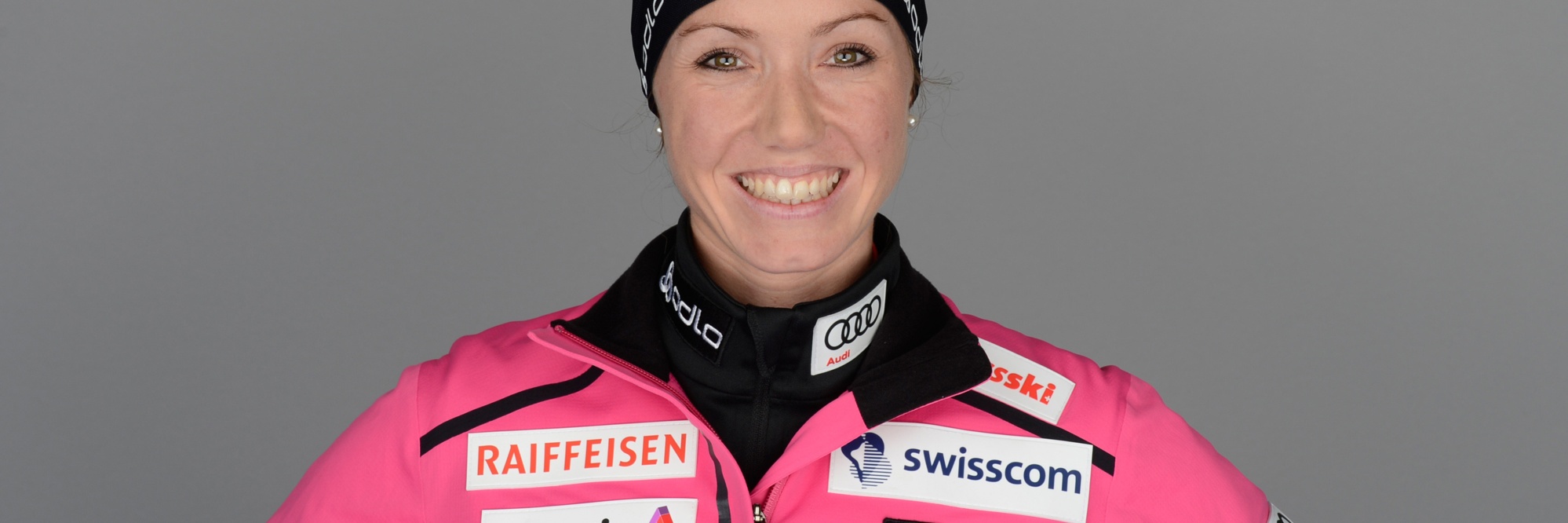
Selina Gasparin returned to the Biathlon World Cup last winter following her maternity leave. The Grisons athlete was able to catch up where she achieved several top 10 results.
You and your husband, cross-country skier Ilja Tschernoussow, became parents at the end of February 2015. What were the greatest challenges you faced with regard to resuming training, recovery, and your objectives?
The recovery. I was breast feeding right up until the competition season and had to get up every night. I started training 6 weeks after the birth. My fitness was at the lowest level. I was exhausted after 30min of cross-country skiing.I could only jog for 10 minutes to start with. I slowly and continuously increased my training. The scope and intensity of my training returned to normal after 5-6 months. A certain relaxed attitude and degree of spontaneity was needed to adapt, reduce, or even omit my training at short notice. It was only in November that I felt really fit again, just in time for the season.
I always have my daughter with me, which requires logistics and a certain degree of management... The additional planning and organisation costs a lot of time and energy in addition to being an athlete and mother.
As a biathlete, you were a lone fighter and a pioneer in Switzerland for many years. How would you describe the everyday training routine of a biathlete?
Shooting and a physical unit in the morning as well as one in the afternoon. Shooting can be combined with running to some extent. I don’t often carry the rifle on my back. It usually remains at the shooting range and I shoulder it shortly before. I do the most hours on roller skis. Intensity training is usually done in the skating style.
Add to this strength training, jogging, skiing, and cycling. My training is therefore extremely varied. The body can withstand more training because the loads and stresses are different. You cannot train too much, but it must always be in proportion to the regeneration.
I rest one day a week, which is when I usually travel or when other appointments crop up. I actually never really have a day off.
You have continuously worked your way up to world-class success. What are your top three most important tips that lead to success?
2.
Patience: You cannot force the body to be fast. In order to make progress, you can only challenge it on a daily basis until you get to the top.4.
Will: You need to have a goal in mind that you are determined to achieve. No matter what the cost. Training for training. Setbacks and failures are normal and par for the course. Only those who can overcome these manage to get well ahead.6.
Brains: The body is not a machine and there is no recipe for success. You need to be in touch with yourself and train properly. You won’t achieve anything with a crowbar. Tactics are also important in order to achieve your best on the day of the competition.
In many countries, a Biathlon is a large crowd puller. In your eyes, what is the appeal of this type of sport?
It is the perfect spectator sport: the competition does not take too long. The people want to see the athletes "suffer" and it is exciting, thanks to the shooting. The lead changes and the unexpected happens, which means the ranking is open right up to the end.
Foto: ZVG