Sun, October 4, 2026Jonathan Hofer in the Datasport-Check
Photo: Diego Menzi
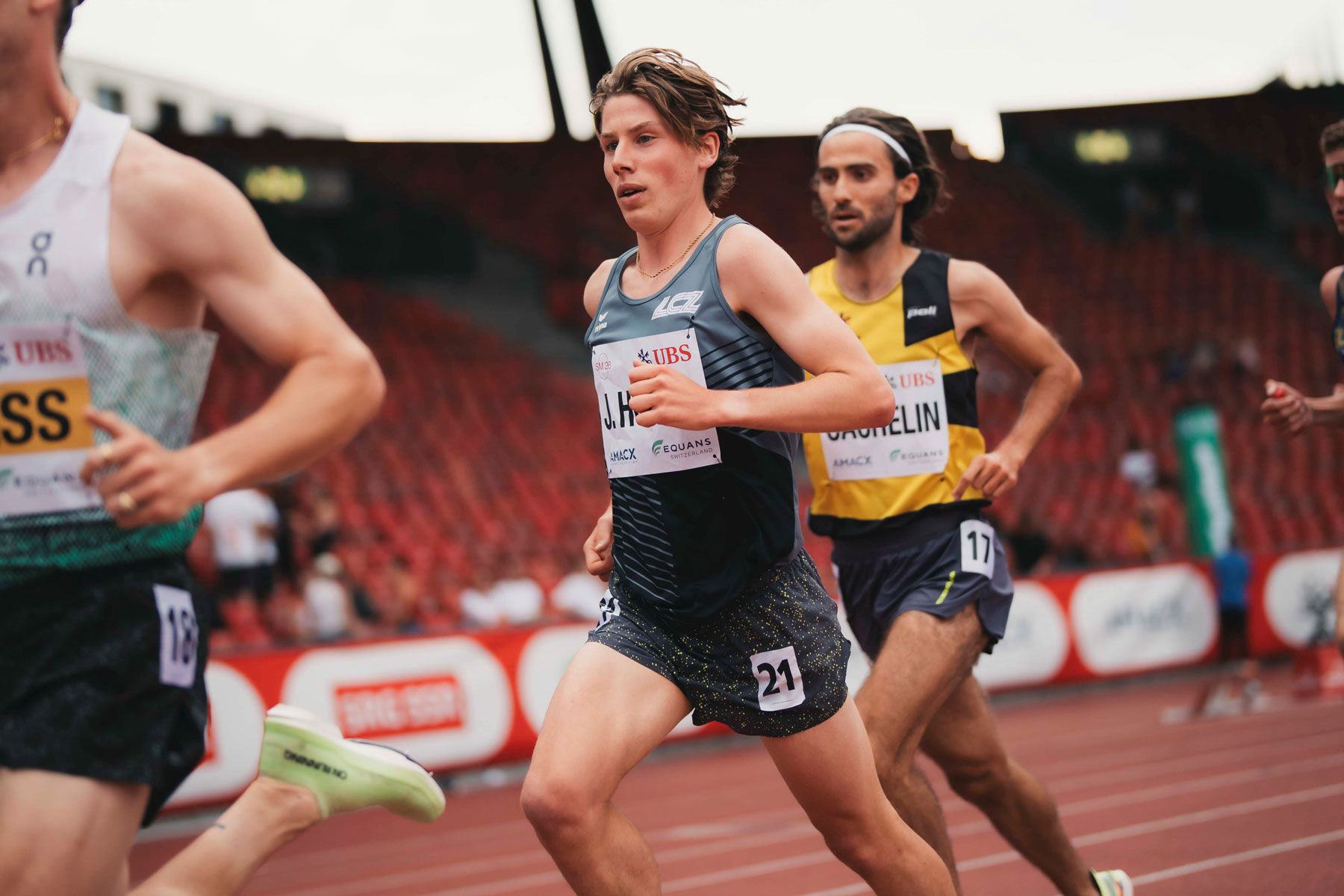
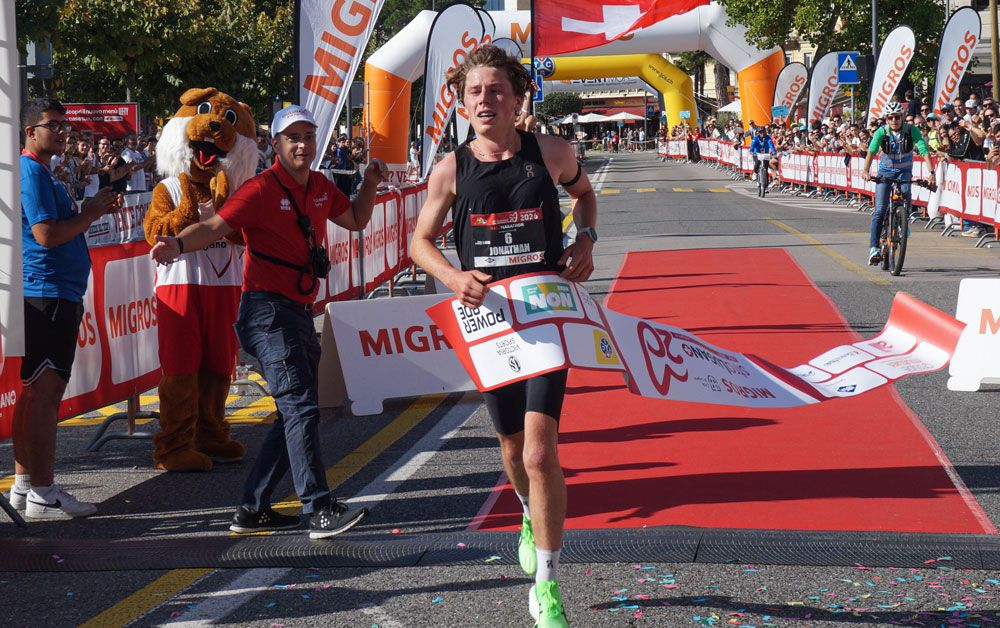
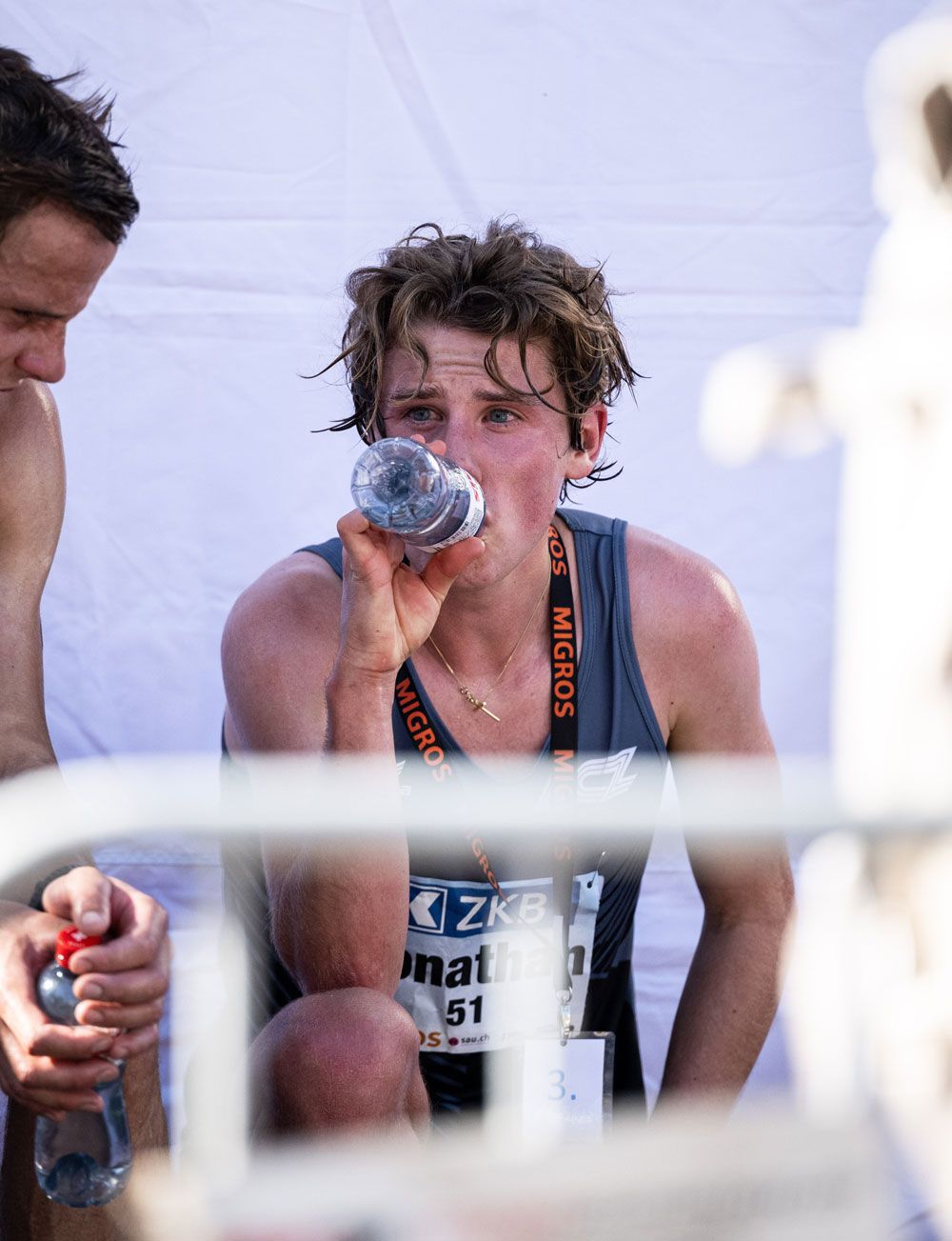
The 23-year-old Zurich native Jonathan Hofer is one of Switzerland’s most promising long-distance running talents. This year, he made his breakthrough: at the GP Bern, he ran the 10-mile race in 49:28 and finished fourth, while at the Berlin Half Marathon he set a personal best of 1:02:51. At the end of September, he rounded off his season by winning his first Swiss half-marathon title.
Swiss half-marathon champion
Since 2022, I have finished on the podium eight times at national championships but I had never stood on the top step. That makes this title particularly special to me, especially as it was my first time competing over this distance and I managed to prevail against a strong field. I particularly enjoyed the fantastic atmosphere in the streets of Lugano.
Sporting goals
I am currently still finding my way. Until last summer, my goal was to reach the international, or at least European, elite on the track. However, my coach’s philosophy is to move to the distance where you can fulfil your full potential as early as possible. That is probably more likely to be over the longer distances. Another factor is that the stringent qualifying standards make it difficult to qualify for the Olympic Games over 5,000 m or 10,000 m.
My goals for 2027 are already fairly clear: after a winter competing in cross country, I will run the half marathon at the European Road Running Championships in April, and in the summer I will compete in the 5,000 m, 10,000 m or half marathon at the Universiade. In the longer term, my goal is to compete at the 2028 or 2032 Olympic Games.
Cross country
Cross country is a huge passion of mine, and I want to continue pursuing it. Over the past six years, I have qualified for the European Championships every time. I want to extend that run, not least because I am convinced that cross country provides a good foundation for the road and track seasons. The strength endurance required on the often soft ground also pays dividends later in the season.
Photo: Swiss Athletics
Coach
National coach Michi Rüegg has been coaching me since spring 2025. His focus is more on long-distance running, so we have significantly changed my training: less intensity, more volume and a clear focus on endurance. Before that, Beat Ammann and Julia Stokar coached me for almost eight years and gave me a solid middle-distance grounding. I am very grateful to them for that.
My change of coach also brought changes to my training environment. Instead of training with my club, I now train in a professional group and have much more independence. I receive the plan for the new week every Sunday. At first, it was simply set and there was no discussion. That was good for me because I used to overthink things a lot, and Michi taught me to think less. After a year, it has developed into a genuine collaboration. He sets the basic philosophy. I make suggestions about what we could optimise or adjust, we discuss them and then adapt the plan accordingly. It is important to me to understand why I am doing something.
Training philosophy
My approach is pragmatic: what works stays and what does not is discarded. At the same time, I am open to new ideas and, in consultation with my coach, incorporate new methods, training stimuli and insights.
On average, I run around 130 kilometres a week. Consistency is more important to me than individual peak weeks. I increase my training volume gradually from year to year.
I train across all intensity levels, from easy runs to VO₂ max sessions. Once a week, I have a double-threshold day based on the Norwegian model. I also do two strength sessions per week. They make me more stable, allow me to run more kilometres and have helped reduce problems with my legs and back.
Favourite training session
20 × 400 m, in every possible form: controlled at threshold pace as the second session on a double-threshold day, or significantly faster at 3,000 m to 5,000 m pace. The session is so versatile that I never get tired of it.
I am currently still studying Computer Science full-time at ETH Zurich and will complete my Bachelor’s degree in January. For my Master’s degree, I will reduce my study load. Fortunately, many lectures can be attended from home, which is particularly practical during training camps. I do, however, try to be on campus as often as possible.
At the moment, I am coping well with the dual demands and appreciate the benefits: my studies provide a good balance to sport, keep me mentally stimulated and will soon lead to a degree.
My coach sends me the plan for the following week every Sunday. After my first training session in the morning, I study for one to two hours. After lunch and a nap, I study for another one to two hours before my second training session, followed by another two to three hours in the evening. On free afternoons and at weekends, I generally spend several more hours studying. My week otherwise looks roughly like this:
Session 1
Session 2
Monday
Easy run
Easy run + strength training
Tuesday
Threshold training
Threshold training
Wednesday
Easy run
Thursday
Easy run
Hard session
Friday
Easy run
Easy run + strength training
Saturday
Hard session
Sunday
Long run
Training partners
I do most of my training with Swiss steeplechase champion Camilo Irarragorri. Aarno Liebl and Nino Freitag also join us about once a week. We all completed the elite sports recruit school together and also travel to training camps together. I am very grateful to the military for that time, as it allowed me to focus entirely on sport for six months.
At training camps, I also train alongside athletes from other countries, such as Germany’s Freddy Ruppert, European 3,000 m steeplechase champion, and Florian Bremm, European silver medallist in the 5,000 m. Training with them and seeing what is possible inspires and motivates me enormously.
Key to success
My discipline is one of my greatest strengths. I can also handle a high training load without getting injured. At the same time, I am constantly striving to improve and think a lot about what I can optimise, whether it is my technique, warm-up or recovery. It is equally important to recognise when it is time to let go. For me, the key is finding the right balance between total focus and staying relaxed.
3 tips for a successful half marathon
1.
Test your breakfast. Before a hard training session, try out what works well for you before a race. You do not need to eat much on race morning. What matters is whether you have filled your glycogen stores in the days beforehand.
2.
Start the race well rested. You will not get any fitter in the final two weeks before a race; additional training will only make you tired. You will know whether you are sufficiently rested by around 15–16 kilometres at the latest.
3.
Keep your easy days easy. Run really slowly on the days between intense sessions. This is the only way to be fresh for the hard sessions and get the most out of them.
Insider tip
Try running without a watch! Simply run by feel, without constantly checking your pace, heart rate or distance. With all the training and data tracking, it is easy to forget to listen to what your body is telling you.
We would like to thank Jonathan Hofer for his interesting answers. Find out more about Jonathan here.
You might be interested in
General tips
The 5 most important tips for optimal recovery
When you finish your training, you’ve completed the first step toward improving your performance. Now comes the crucial second part: recovery. You can support this phase with various measures. Here are the five most important tips to help you achieve optimal recovery.
Training tips
The wise take the track
You run regularly and would like to get a little faster? Then try out track training.
Interviews
Interview with Michi Rüegg
Periodically we publish an interview with an interesting sports personality. Today with Michi Rüegg, national long distance, steeple, and cross-country coach.
Diet tips
The perfect breakfast
Butter braid and croissants? Muesli with fruit? Or just coffee? The best tips that physically active people should keep in mind when choosing the right breakfast for their everyday sports routine.