November
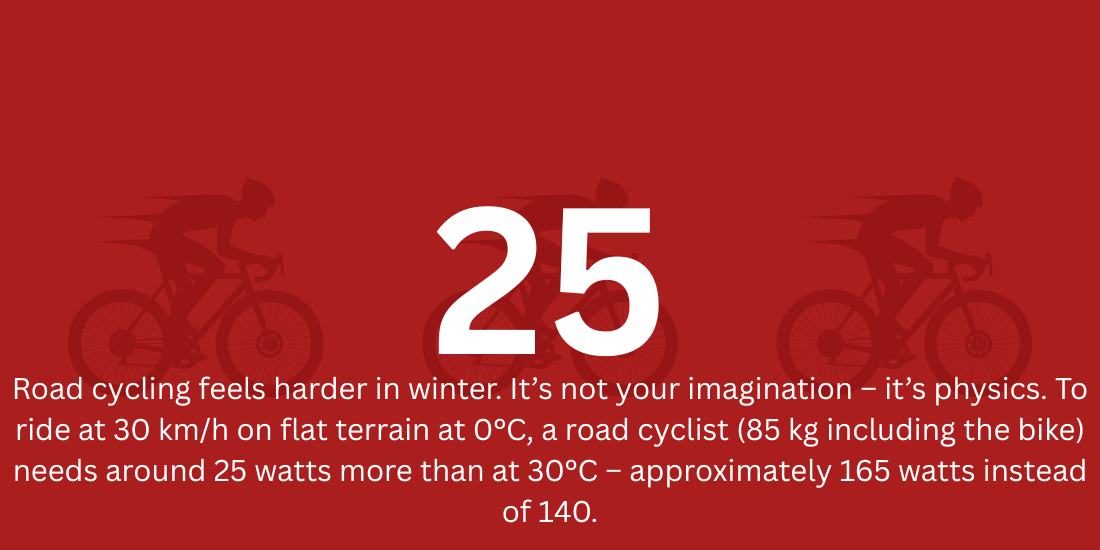
Most of this difference is caused by the air. Cold air is denser: one cubic metre weighs around 1.29 kg at 0°C, compared with just 1.16 kg at 30°C. This results in approximately 11% more air resistance. Since air resistance accounts for around four fifths of the total resistance at 30 km/h, this adds 12 to 15 watts.
The rest comes from tyres and clothing. Rubber becomes stiffer in cold temperatures, increasing rolling resistance by 10–20%, which adds another 3 to 5 watts. Jackets, overshoes and long trousers are also less aerodynamic, adding a further 5 to 10 watts.
So if you ride more slowly in winter despite producing the same power, there's no need to question your fitness. During the colder months, it makes more sense to base your training on power output in watts or heart rate rather than speed.
And what about running? The calculation is completely different. Runners move at such relatively low speeds that air resistance barely matters. At a pace of 4 minutes per kilometre, denser winter air requires only around 1 extra watt, while at 5 minutes per kilometre, it's just 0.6 watts – equivalent to less than one second per kilometre. For runners, heat is actually the bigger challenge: at 30°C, the body uses a lot of energy to stay cool. The fastest running performances generally occur at temperatures between 5 and 10°C. So while cold weather costs cyclists around 25 watts, it's more of a gift for runners.
October
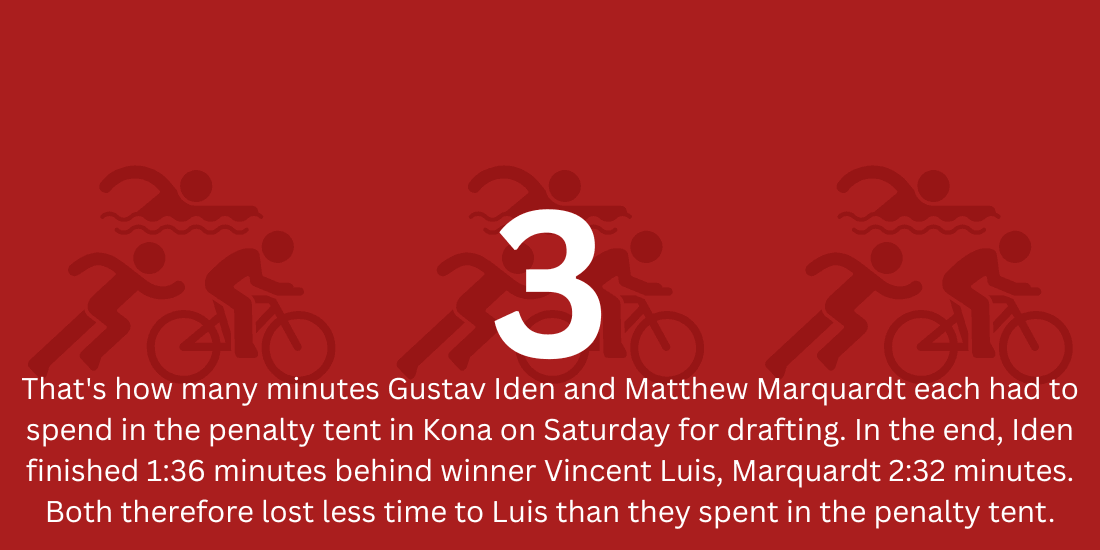
After 7:47:27 hours, 3.8 km of swimming, 180 km of cycling and 42 km of running, the top three were within 2½ minutes of each other, just over 0.5% of the race time.
Julie Derron was penalized as well. The Swiss athlete was given a three-minute fine in the penalty tent during her Hawaii debut and came off the bike in eighth place, more than nine minutes behind. She fought her way back during the marathon and ultimately finished third with a time of 8:46:25.
On the bike, professionals must keep a 20-metre draft zone. Anyone who enters it has 45 seconds to overtake, otherwise they get a blue card and a three-minute penalty. For amateurs, the rule is 12 metres and 25 seconds.
September
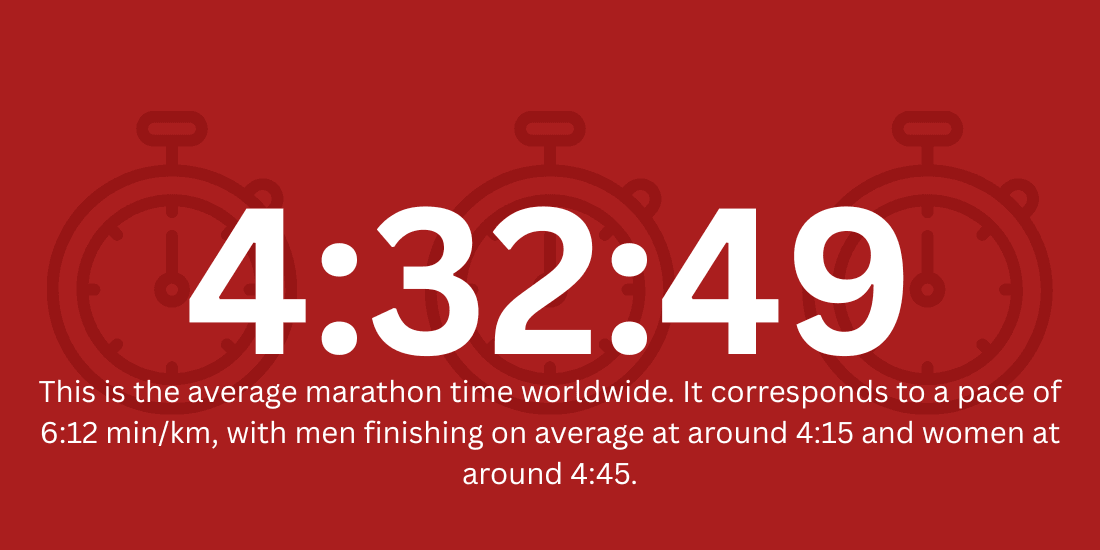
Broken down by gender, the picture becomes more nuanced: men run an average of 4:10:10 (average age 40), women 4:39:09 (average age 36), a difference of almost 29 minutes. The comparison between the two halves of the race is also revealing: men slow down in the second half by an average of 11:51 minutes, women by 11:43 minutes. The widespread belief that women pace themselves more evenly is therefore only marginally confirmed.
Broken down by age group, the picture is as follows (men / women):
20–24 years 4:01:55 / 4:28:59
40–44 years 4:09:36 / 4:34:13
60–64 years 4:53:26 / 5:12:26
65+ years 5:06:59 / 5:20:57
As expected, younger athletes run the fastest, after which times slow down steadily with age.
Particularly interesting is the historical comparison: in 1986, the average marathon time was still 3:52:35, meaning it is now around 40 minutes slower. The main reason: the marathon has evolved from a pure performance sport into a mass participation experience. Many more recreational runners without ambitions for a personal best now take part, which pushes the average up, that is, makes it slower.
For the half marathon, the global average is 2:00:55 (men 1:53:52, women 2:09:45).
August
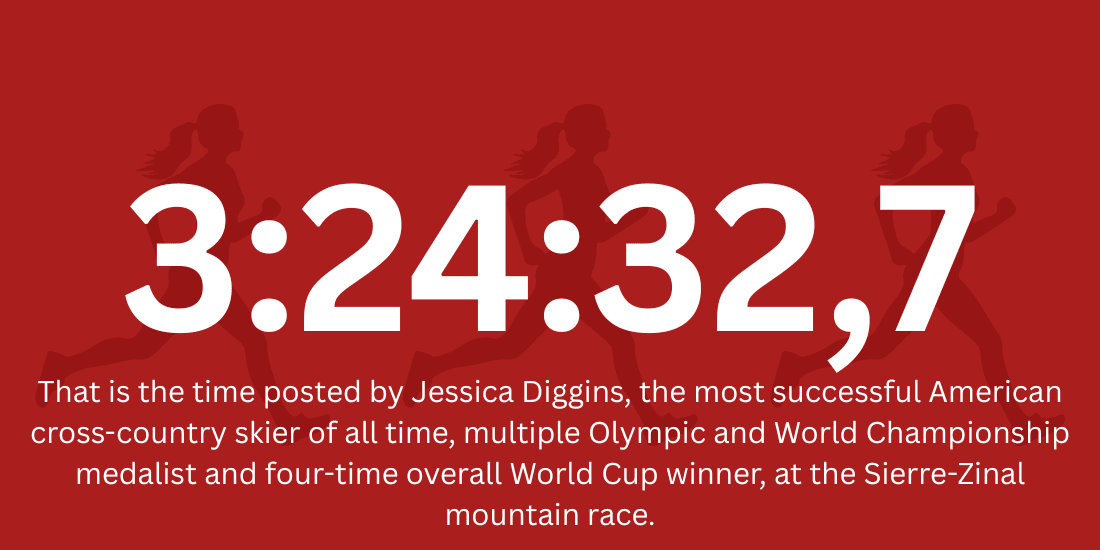
The 34-year-old ended her impressive cross-country career after last season and is now discovering running. Her big goal is a 100-mile race.
The Sierre-Zinal mountain race has established itself within just a few years as the unofficial world championship of mountain, trail, cross-country and orienteering runners. This traditional mountain race, also known as the "Race of the 5 Four-Thousanders", covers 31 kilometres with 2200 metres of ascent and 1100 metres of descent.
With a time of 3:24:32.7, Jessica Diggins finished 37th in this prestigious race. She needed just under 29 minutes more than the Romanian winner Monica Madalina Florea, who prevailed by 45 seconds over Kenyan Caroline Kimutai and 90 seconds over British runner Morven Goodrum. The race consistently attracts a highly international field. The top 10 featured runners from 7 different nations, while the top 100 included athletes from 23 countries spread across 5 continents. With 74 runners, Europeans form the largest contingent in the top 100, followed by North Americans and Africans with 8 runners each. Twenty Swiss women made it into the top 100.
July
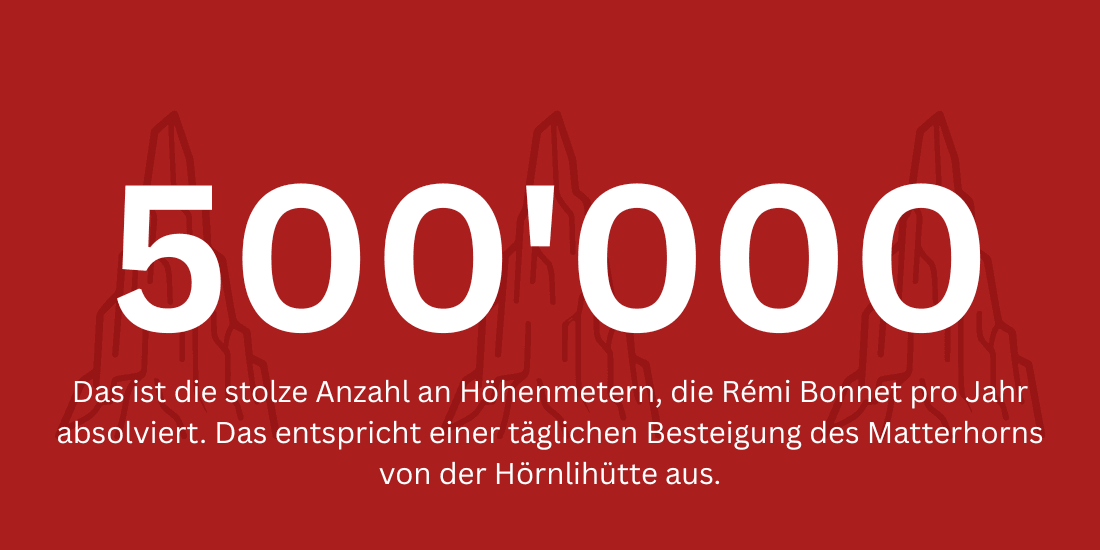
Bonnet, who has just won the prestigious Mont-Blanc Marathon, is one of the most successful ski mountaineers, trail, and mountain runners in the world and completes this high number of vertical meters in daily training. While it is obvious in winter that he climbs peaks and ridges with skins on his skis and thus completes vertical meters, it is not quite as obvious in the other three seasons. But the effects of uphill running speak for themselves and should also motivate you to leave the flat routes more often.
Strength and muscle building: Running uphill engages the glutes, thighs, and calves more intensively.
Higher intensity with less strain: The cardiovascular system is more challenged on the mountain, while the pace is lower. This means less impact forces with the same training stimulus.
Improved running economy: Uphill training improves neuromuscular coordination and leads to more efficient technique on flat terrain.
If these arguments convince you, then gradually incorporate vertical meters into your training routine. Keep in mind that you usually have to run back down the same way. This puts a lot of strain on your knee and thigh muscles. Therefore, start gently, increase the weekly vertical meters by a maximum of 10%, and plan enough recovery time.
June
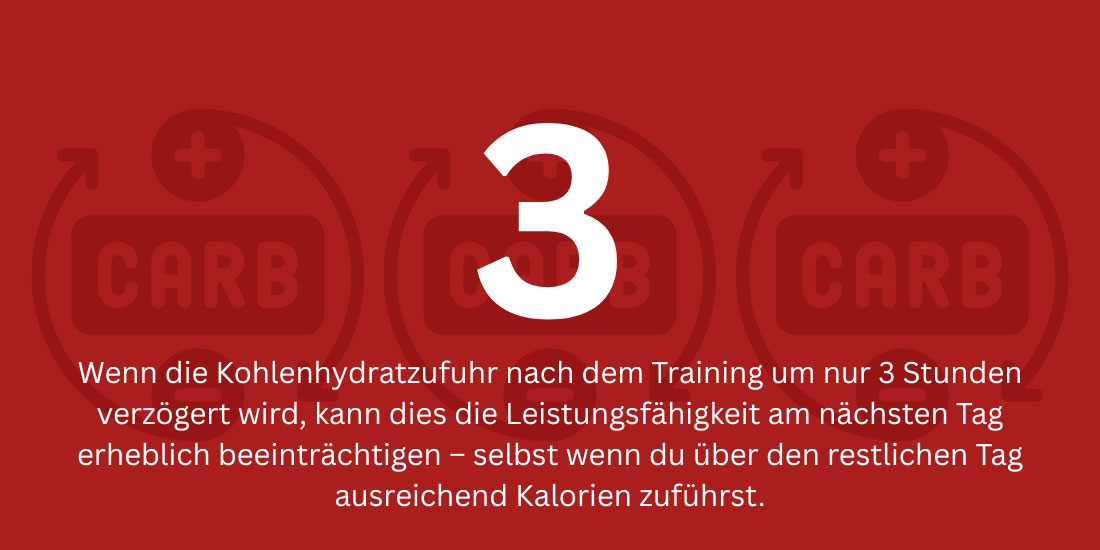
Timely nutrition is the key to processing the work done and boosting your performance! Make sure that when training, you not only think about the training stimulus but also what happens afterward. Because the level of a top-notch training session is completely lowered if the nutrition is only second or third rate.
The most important tips:
Fuel up before important training sessions so you don't start with an empty tank.
Practice energy intake not only during long sessions but especially during training sessions at race pace when preparing for a race that lasts longer than an hour.
Focus on post-training nutrition to support recovery.
May
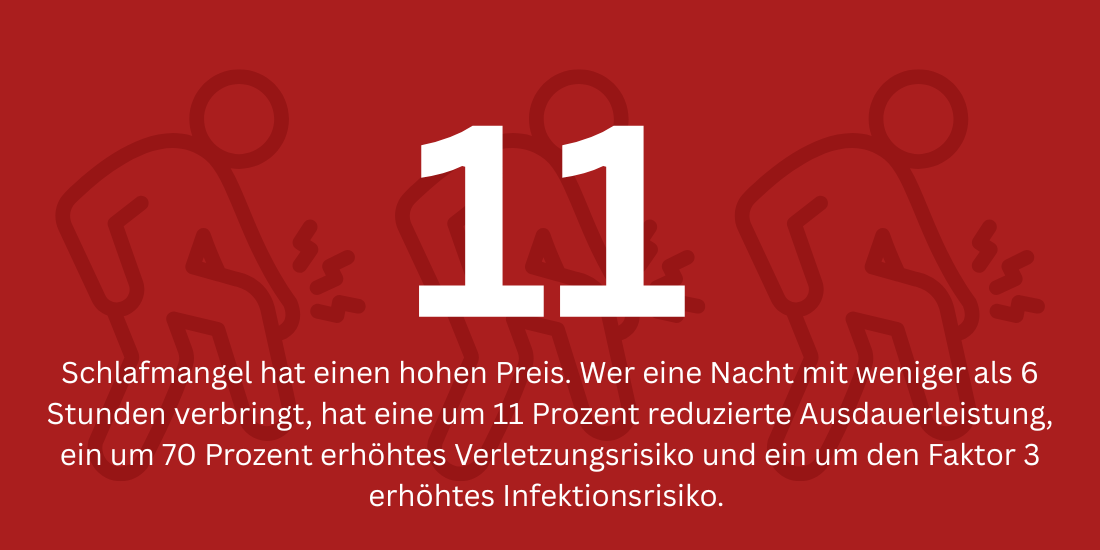
Sleep is often taken lightly. Yet it has enormous effects on our health and performance. We like to optimize our nutrition and training, manage our stress, and apply other biohacks, but we often fail at recovery in general and sleep in particular. This is where the true superpower lies, which is why it deserves to be our "Number of the Month."
Four tips for better sleep:
1. Try to sleep at least 7.5 to 9 hours daily.
2. Ideally, go to bed at the same time every day. Even on weekends.
3. Set up your bedroom to be quiet, dark, and not too warm.
4. Apply the 6-3-2-1 formula.
Avoid consuming caffeine within the last six hours before going to bed.
Avoid large meals within the last three hours.
Avoid work within the last two hours.
Avoid screen time within the last hour
April
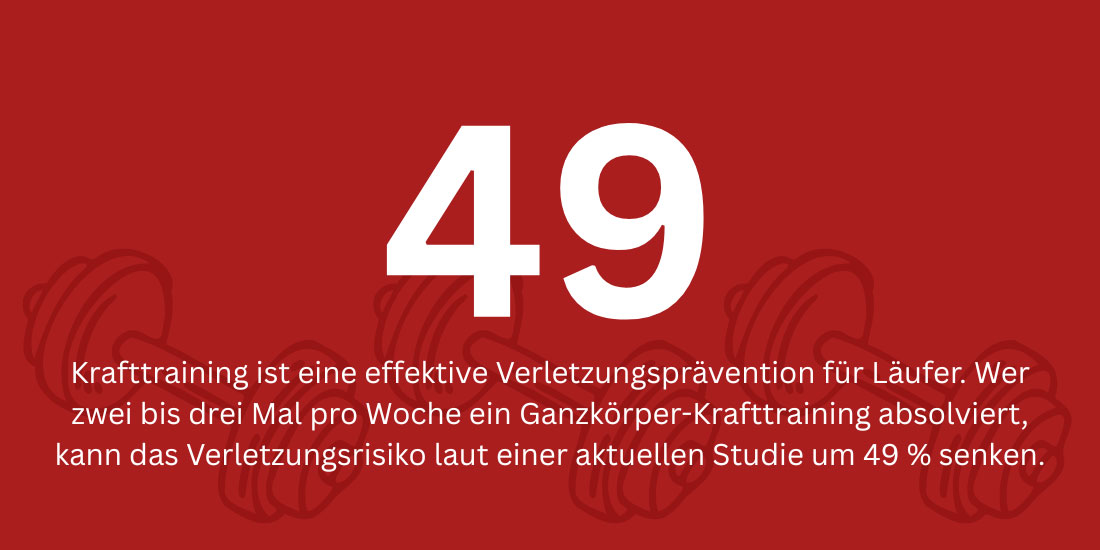
Running is one of the most popular sports activities worldwide. At the same time, it is also the one where injuries occur very frequently. A recent study showed a 49 percent reduction in the injury rate among runners who did strength training, as well as a 54 percent reduction in the severity of injuries in the same group (they did not have to miss runs).
However, running is not inherently dangerous. It is more a question of dosage, avoiding mistakes, and combining it with strength training. This high value illustrates this and therefore deserves to be our "Number of the Month."
March
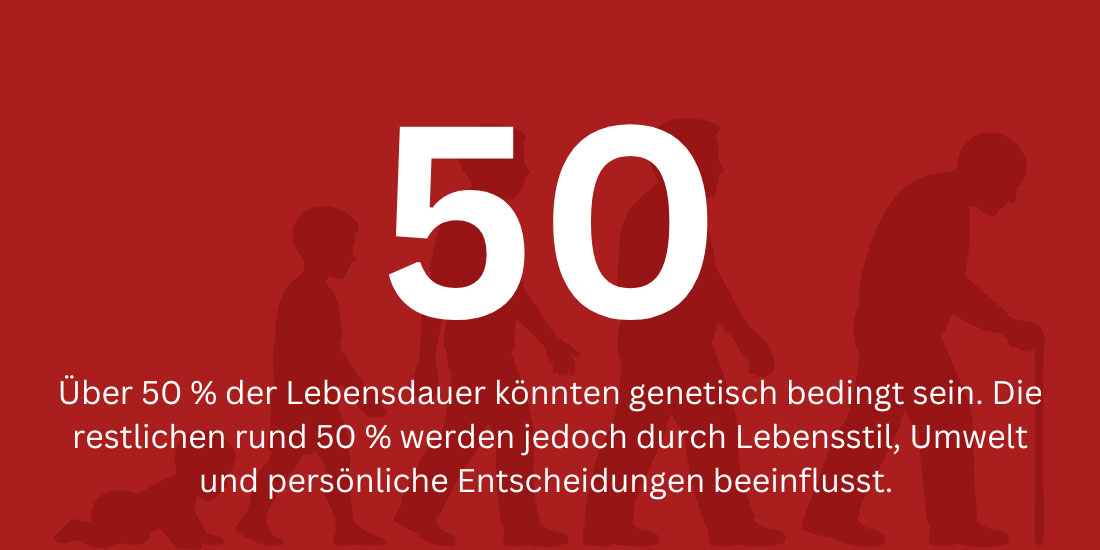
A new study in the journal Science shows that genetic factors have a much greater influence on lifespan than previously thought. While it was previously believed that DNA only explains about 20 to 25 percent of lifespan, research on twin datasets has shown that the heritability of human lifespan is actually over 50 percent.
However, a significant portion of almost 50 percent remains, determined by lifestyle, environment, and personal choices. This high proportion offers a significant opportunity to actively influence one's quality and length of life – through training, nutrition, and recovery behavior, and therefore deserves to be our "Number of the Month."
February
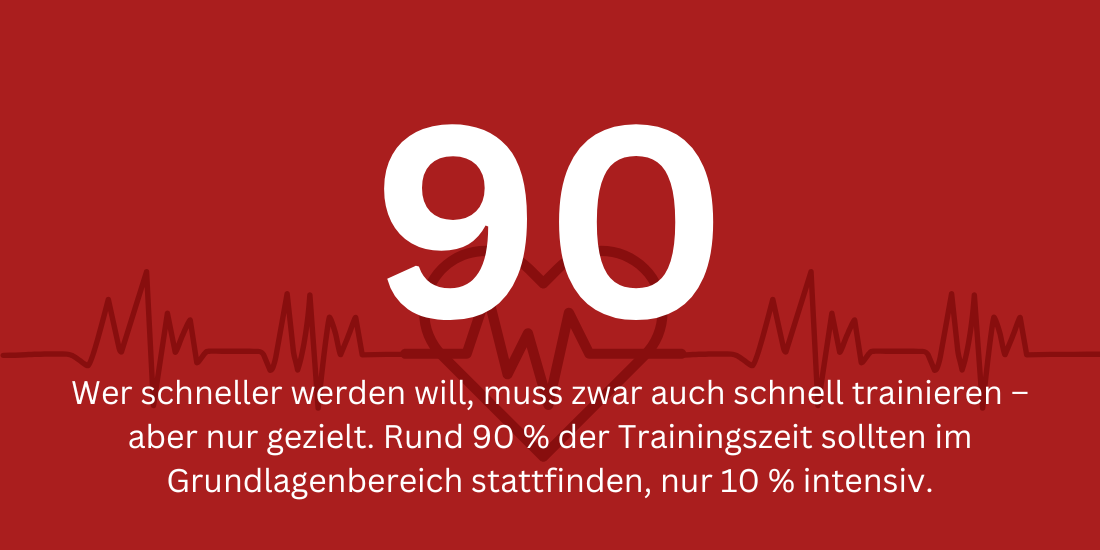
If you want to get faster, you undoubtedly have to run faster from time to time. But not only – on the contrary! 90 percent of your training time should be spent in the basic area. An enormously high value that deserves to be our "Number of the Month" in February.
This means especially for all those who do intensive sessions once or twice a week in the club (or alone) that they have to collect many sessions and minutes on the side to achieve the right ratio!
As a rule of thumb: Three out of four sessions should be extensive and one intensive. 90 percent of the time should be extensive and ten percent intensive.
January
.png)
Many of us have the goal of running 10 kilometers in less than 40 minutes once in our lives. In the 10K Valencia Ibercaja by Kiprun, an incredible 2526 people achieved this. This incredible number deserves to be our first "Number of the Month."
The race was won by the Swede Andreas Almgren in the new European record time of 26:45 minutes.
Up to the 2526th participant, an average of 198 runners crossed the finish line per minute. A total of 14,140 made it to the finish. The average finisher time was 53:55 minutes.
Swiss runners were also at the start: Morgan Le Guen undercut the EM limit in 27:42, and Oria Liaci is now the second fastest Swiss woman of all time with her 32:13!