Training tips
The most important training principles
There are several paths that lead to the goal. Nevertheless, there are some principles that you should definitely follow if you want to be successful in the long term.
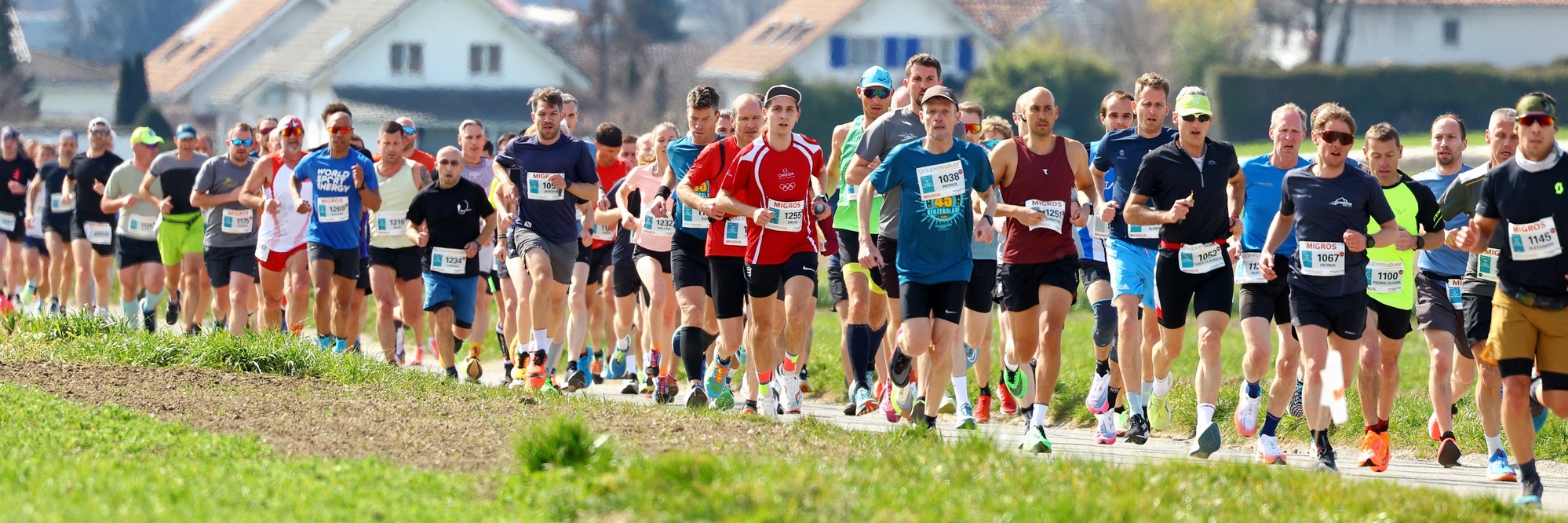
Do you run regularly year-round but (still) without any real guidance and want to take part in a run between 15 km and a half-marathon? We’ll show you how to train properly in the two months leading up to the event.
At first glance, running seems like an easy sport. The more you train, the better and more likely you are to win. Upon closer inspection, however, we can see that (even) running is a complex sport and winning isn't so easy. Running is a mix of factors: endurance, strength, flexibility, coordination, speed and mobility. While it requires all of these aspects, it needs them in different quantities - just like baking a cake. If something is left out, you'll quickly notice through stagnated performance or injury.
Endurance is the most important factor (70% of overall training time). You should run at a low intensity for three-quarters of the time. This is particularly the case if you are not sure what to do before a training session. In principle, the longer the duration, the slower the training runs should be. For 20-25% of your endurance training, you can and should include intensity if you want to increase your speed and enjoy diversity in your workouts. Ensure that there is a real difference between the individual intensity levels and don't always run at the same speed.
Strength is also required (15%). Particularly in the torso. In order to increase running stability and improve efficiency, year-round strength training should be carried that focuses on the feet, legs and torso. You can find examples of effective exercises here: www.fitforlife.ch/fitundbuendig.
A good technique makes you quick (7%), mobility keeps you supple (5%) and minimal contact with the ground (3%) is key to running success. It is therefore recommended to regularly invest time in running technique (e.g. ABC running drills) or ascending runs. Stretching and relaxation exercises are also good for minimising the risk of injury. Furthermore, certain running exercises should focus on the shortest possible contact time with the ground.
Endurance sports are extremely honest, yet brutal. Regular training pays off. Investing less time in your training will increase the time it takes for you to achieve your goal. In terms of training as a whole, there are several other key principles that are decisive when it comes to success and failure. We've summarised the main points:
Here you will find a guide on how to reach the next level of peak fitness in the following 8 weeks. The best thing: you can repeat this plan as often as you like as it is based on the basic principles for success and can be adapted to the key training rules, for example by including more optional training sessions in the following cycles. It’s therefore a timeless classic.
There are several paths that lead to the goal. Nevertheless, there are some principles that you should definitely follow if you want to be successful in the long term.

30-50% of active runners experience an injury at least once a year. Here are the 10 most important tips to avoid injuries.