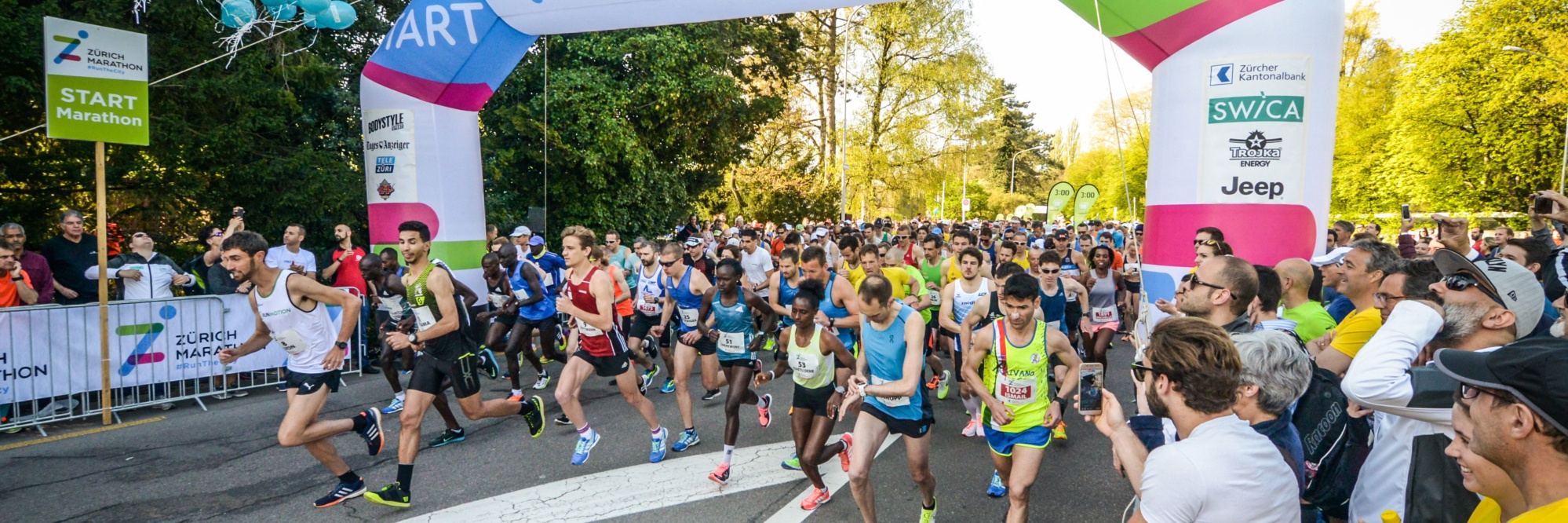
Your first time strength training, your first cross-country skiing unit, a badminton match with colleagues, a mountain tour with lots of downhill sections, or a classic marathon – after which you can only get down the stairs backwards: probably all those who do sports now and again, occasionally try something sporty, or overdo things from time to time know what it’s like to have sore muscles.
Tears in the muscles
In simple terms, sore muscles arise from performing a movement that the body or muscles are not or no longer used to. For instance, types of sports that are either completely new or put a particular strain on the muscles, such as running or stop-and-go sports like squash, badminton or team games. Or types of sports that have unfamiliar motion sequences, such as the stroking movement in skating. What’s special here: after any of the situations mentioned above, anyone can fall victim to sore muscles if they are not used to the movement – no matter how fit and well trained they may be.
Overdoing it in sports gives rise to small micro-traumas in the strained muscle tissue, which are ultimately responsible for the pain. The inflammations caused by the micro-traumas bring about oedemas due to the ingress of water. Sore muscles are not a heroic feat, but a small injury that should be properly cured before you start earnestly doing sports again.
How do you treat sore muscles?
If you get sore muscles, a happy medium works best: gentle movement. You should neither stop moving completely nor – as was sometimes previously the case – try to get rid of sore muscles by doing sports again. Although movement and the associated improved blood flow was often subjectively perceived to reduce sore muscle pain in the short term, when you are at rest it almost certainly comes back worse than the first time round. By the way, when you have muscle soreness, the “high point” of the pain sensation is not usually the day after, but the second day after the activity.
The severity of the injury depends on the duration of the muscle strain, its intensity, the training condition of the muscles, as well as the proportion of eccentric muscle work (for example, when running downhill). Even though the pain subsides after a few days, the healing duration can sometimes take weeks. Usually sore muscles heal without leaving any permanent damage.
How do you prevent sore muscles?
To prevent sore muscles, you should start doing unfamiliar muscle activities (long runs on tar, downhill running, ball games such as squash) at low intensities for short periods to start with and then gradually increase them in doses. Unfamiliar exercises where you need to use a lot of strength are to be avoided as is abruptly stretching tired and highly stressed muscles. Light gymnastic exercises, gentle sports such as swimming or cycling, and relaxed massages, warm baths, or other heat treatments are suitable for treating sore muscles.
Downhill running needs to be learned
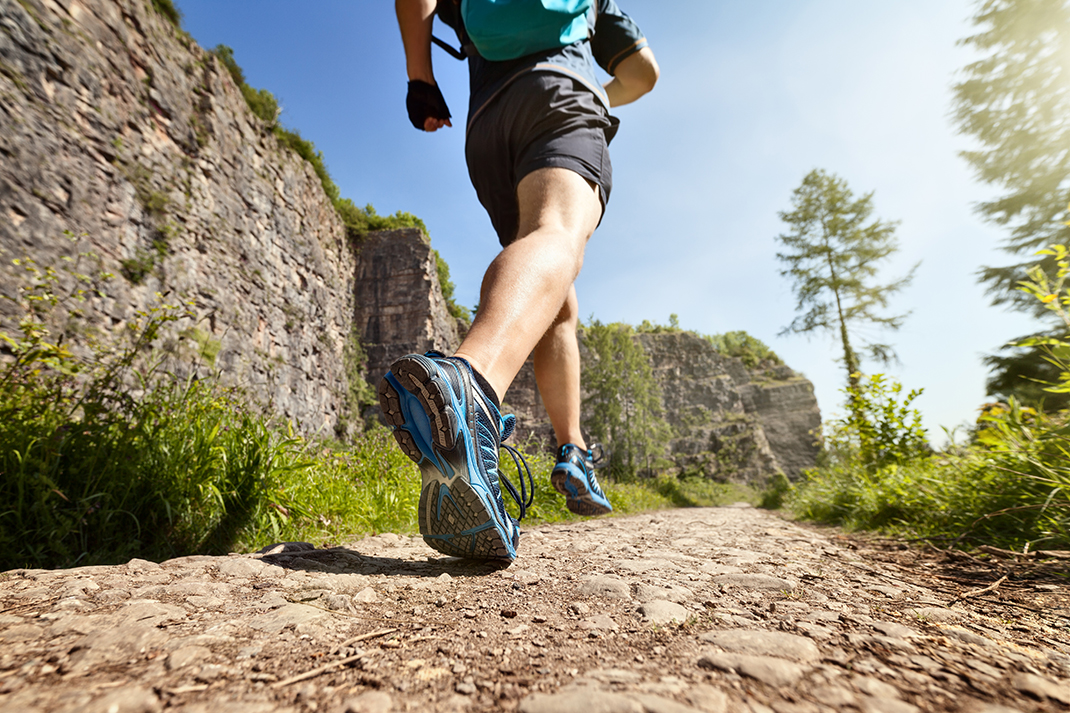
Runners wanting to take part in a trail run with many downhill sections should take this fact into account during the preparation. Because proper downhill running needs to be practiced. The art lies in running as smoothly, consciously and actively as possible and not simply letting yourself fall passively into each step (with a long step and outstretched leg). It is better to take short steps and roll loosely over the heel, or better still, over the middle of the foot. The most important factors:
Run with your legs slightly apart and lean forward from the hips so you can always react to uneven ground and won’t lose your balance so quickly. Those who run downhill quickly should make sure they have a steady breathing rhythm to avoid getting a stitch.
Don’t run too relaxed and always maintain a degree of residual tension in the leg muscles. This will ensure you are always ready to catch yourself should you take a false step.
Alternate between looking further down the trail and just in front of you. If you just look in front of your feet, you can’t proactively select the best way and will get surprised by an obstacle at the last moment.
Those who know that their training or competition involves a lot of steep descents should carefully consider the choice of shoes. Trail shoes are constructed in such a way that the feet are close to the ground to prevent twisting the ankle. Too much cushioning, particularly in the heel, prevents the necessary control of the foot. You can’t feel the ground properly and can’t react to any uneven surfaces and surprises.
On the other hand, well-cushioned trail shoes (such as the Hoka One One models) also have many followers in the trail community because good cushioning can protect the muscles, which has especially proved itself on trail runs with long and not too steep downward sections.
Also important: when selecting trail shoes, the size should be big enough to prevent your toes from banging against the front with every step.
Foto:iStock.com
You might be interested in
General tips
How do you nurture your fascia?
There is probably no fitness studio around any more without fascia training, and fascia accessories are sold in all kinds of forms and designs. But what exactly are fascias – and how do they work? The main points at a glance.
Regeneration: use the power of water!
Relaxation units in thermal water not only enable you to regenerate but they also combine a whole range of health-promoting elements.
General tips
The most important tips for warming up
Perfect preparation optimises performance - this especially applies to running.