Thu, February 1, 2018The best stabilisation exercises
Valentin Belz
If you want to be successful, you need to train over as long a period as possible. Continuity is the key word here. For many, however, it is a foreign word because they always need to break off their training. Sometimes it’s the heel, at other times it’s the back or the knee that starts twinging. Such complaints make life difficult for many athletes. Those wanting to research the root cause will discover that the vast majority of athletes do a lot of unilateral training, pay too little attention to recovery, and simply focus too little on stability when doing endurance training. Problems are therefore inevitable.
With our top 6 stabilisation exercises, we provide you with the basis for doing sports without any complaints This is because strength gymnastics enable you to develop your core stability along with an economic motion sequence. Set aside 20 to 30 minutes two times a week and stick to the following dosage and tips:
Each individual exercise is to be performed for 45 to 60 seconds and repeated three times. It is then followed by three series of the next exercise.
The rest periods last between 15 to 30 seconds.
Aim to do them as accurately as you can. The exercises will only fulfil their purpose when done properly.
Only make the exercises more difficult by doing the variations once you have totally mastered the base exercise.
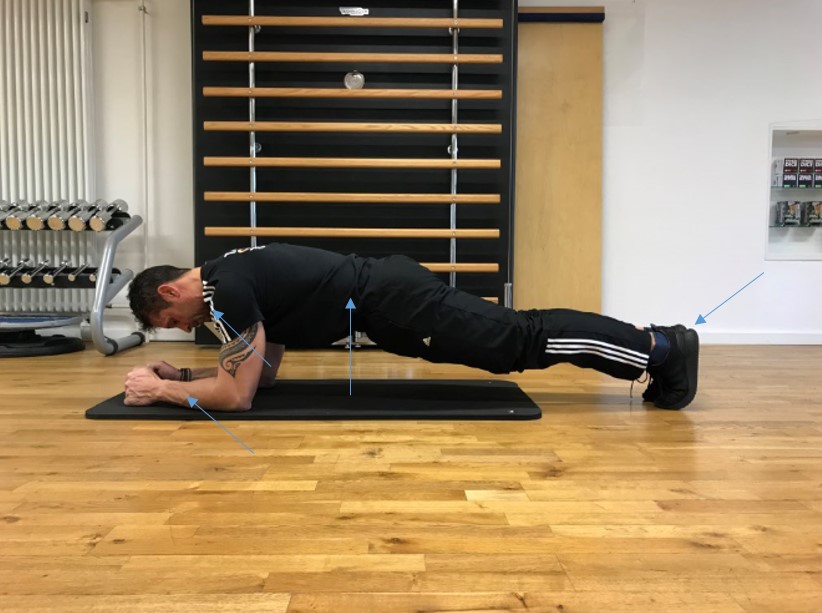
Front support
Focus:
Pull in your navel for a natural lordosis
A double chin gives you the optimum head position
Press your heels together to activate your buttocks
Rotate your forearms outwards to open the chest area
Variations:
Place your forearms further forwards
Alternately lift your toes from the floor
The most common mistakes:
Letting your body hang passively instead of activating the muscles
Holding your pelvis lower than the shoulders and tilting it forwards (hollow back)
Looking forwards instead of downwards
Test: take a rod and make sure it comes into contact with the back of your head, thoracic spine, and sacrum (image)
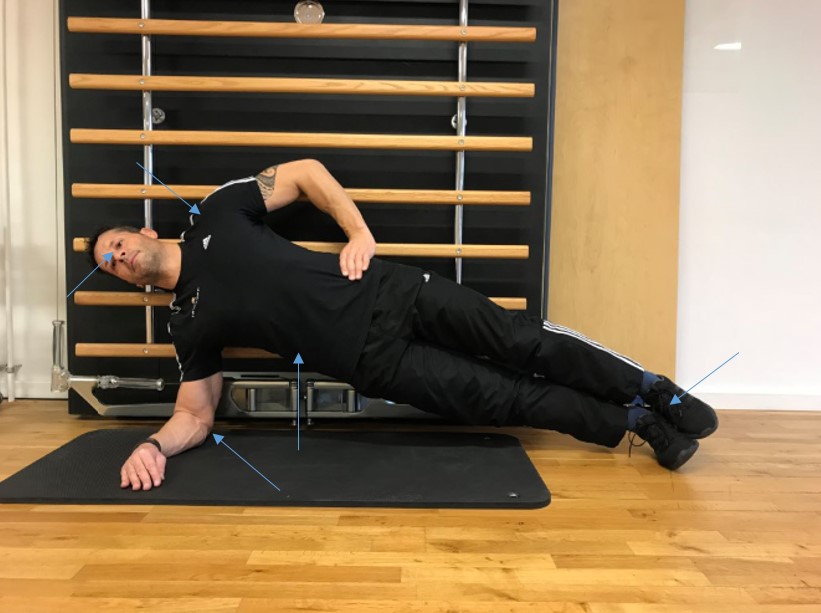
Side support
Focus:
Make sure the back of your head, the entire shoulder girdle, and both buttocks come into contact with the wall for a perfect diagonal
Activate of the lower side of your waist to fix your pelvis in the correct position
Press your heels together to activate your buttocks
Place your elbow under your shoulder to ensure an optimum load on the shoulder
Look directly ahead to straighten the upper body
Variations:
Slowly lower and raise your pelvis
Slowly brace your upper leg
The most common mistakes:
Twisting the upper body instead of actively stabilising it
Making the angle in the shoulder area too big and thus placing an unnecessary strain on the joint
Looking towards your feet instead of directly ahead
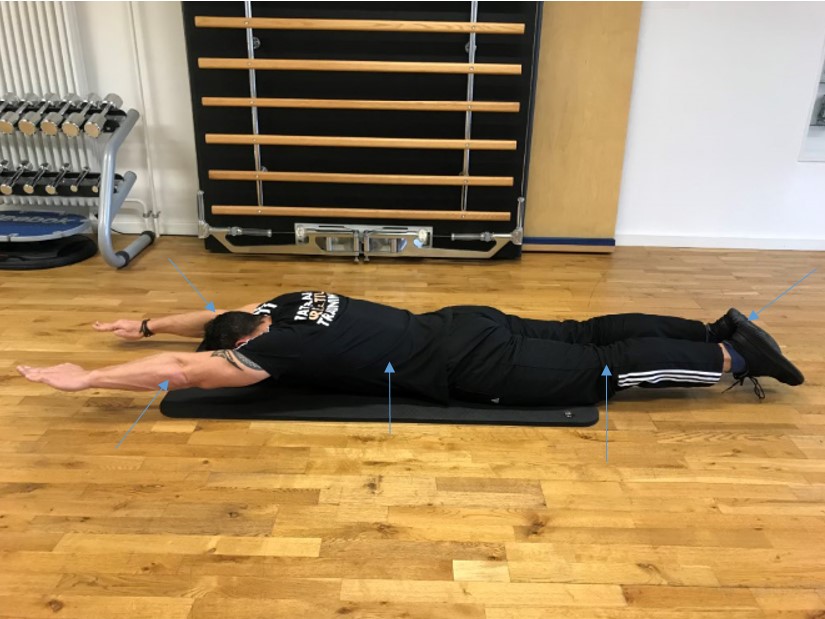
Handstand on the floor
Here you can see how to do a handstand on the floor properly
Focus:
Lay your chest on the floor, press your heels together, and lift your stretched arms and legs slightly off the floor to activate the supporting muscles
Pull your navel in towards your spine to create a space between your abdomen and the floor for a natural lordosis
Lift your head up slightly with a double chin to get an optimum head position
Variation:
Do the same exercise in the supine position, but look towards the ceiling (image)
The most common mistakes:
Insufficiently activating the buttocks
Losing tension in the abdomen, whereby it or the navel rests on the floor
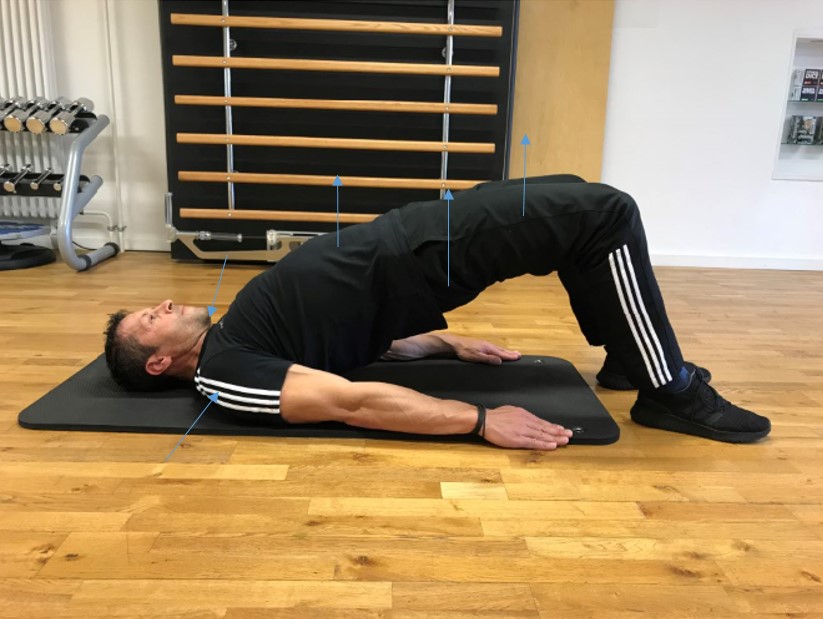
Rear support
Here you can see how to do the rear support properly
Focus:
Lift your navel towards the ceiling to activate all areas (hamstrings, buttocks, lower back)
Pull your shoulders and arms down to focus on activating the dorsal chain
Make sure you have a double chin to get an optimum head position
Variations:
Alternately lift each foot off the floor in 1-second intervals without tilting the pelvis
Lower your navel / pelvis all the way down and raise them again
Perform the three options on one leg
Lay the heels of your stretched legs on the Blackroll and keep your navel as high as possible (image)
The most common mistakes:
Hunching your shoulders instead of pulling your shoulders and arms down
Insufficiently activating the lower back
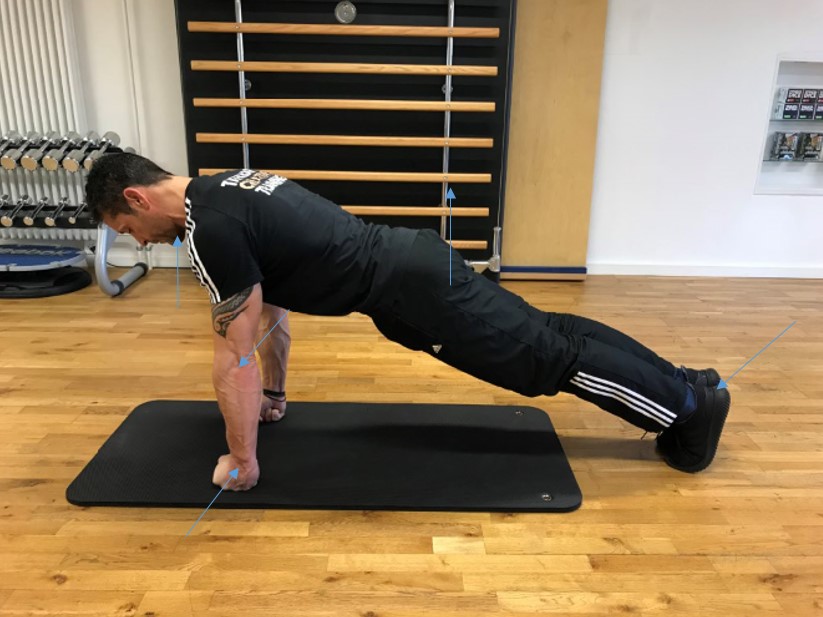
Shoulder support
Focus:
Support yourself on your fists to relieve your wrists
Keep your wrists, elbows, and shoulders in line to ensure the joints are placed under an even load
Pull in your navel for a natural lordosis
Stretch your arms and legs to the maximum to activate your muscles
A double chin gives you the optimum head position
Press your heels together to activate your buttocks
Variation:
Alternately lift each foot off the floor in 2-second intervals without losing the original position
The most common mistakes:
The arms and legs are not fully stretched
Looking forwards instead of downwards
The muscles are insufficiently activated, creating a hollow back
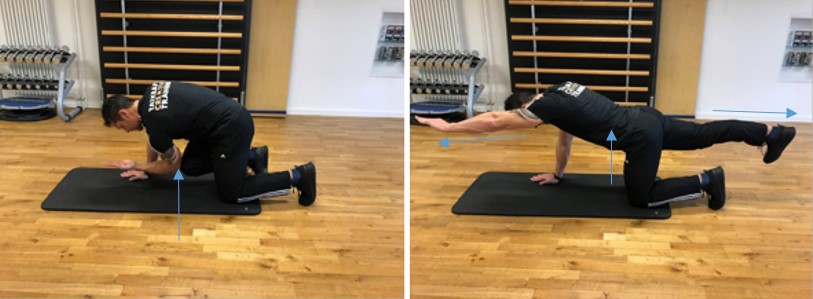
Rotational stability
Here you can see how to do the rotational stability properly
Focus:
Your knee, hips, as well as wrist and shoulders should be at the same height to prevent the pelvis from swerving
Bring the elbow and knee in to touch each other and apply a slight pressure, which will simultaneously activate the abdominal muscles
Pull in your navel for a natural lordosis
A double chin gives you the optimum head position
Fully stretch your arms and legs diagonally to activate your rotational stability
Apply maximum control, pressure, and stretch as far as you can to improve your rotational stability
Variation:
The basic position is the same, but this time place your toes behind one another in line with your arm. Now stretch your “free” arm forwards without tilting your pelvis (image)
The most common mistakes:
The movements are not being performed consistently, and the muscles aren’t activated
Looking forwards instead of downwards
Foto: Datasport
You might be interested in
Interviews
Interview with Céline Schärer
Periodically we publish an interview with an interesting sports personality. Today with Celine Schärer, winner of the Ironman Zurich 2017.
General tips
Mini band for maximum benefit
With these simple exercises, you can overcome your weaknesses and become a more powerful athlete.
General tips
Strength training for runners
Everyone needs strength, that’s clear. But should you use equipment, free weights, or your own body weight to do strength training? The various possibilities at a glance.