Interviews
Interview with Mike Schifferle
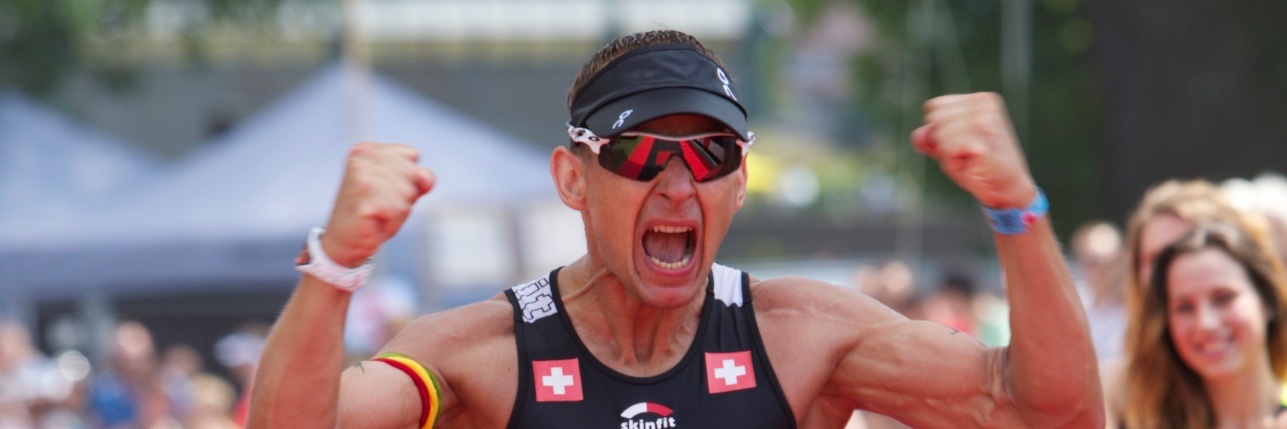
At the beginning of October, Mike Schifferle completed his 99th Ironman race at the Ironman Hawaii and thus achieved his athletic life goal.
Improve your running technique by stretching your hamstrings.
This exercise is brought to you by Spiraldynamik
We spend countless hours of our lives sitting down. Whether in the car, at the office or on the sofa in the evening: despite being originally built for movement, humans tend to spend more time sitting down these days, making us more Homo sedens than Homo erectus. Sitting with your legs crossed and upper body hunched forward causes the muscles on the back of the thigh, the hamstrings, to contract. This results in less flexibility in the hips and knees along with a rounded back, which isn't exactly ideal for a proper, aesthetically pleasing running technique.
It’s therefore a good idea for beginner runners and ‘old hands’ alike to regularly stretch their hamstrings. The best time to practice flexibility training is after a warmup, when the muscles are warm and well supplied with blood, or after a running session when the stressed muscles require stretching out again.
After all, actively running heel to butt – followed by lifting of the leg – is necessary for a well-rounded running technique. The hamstring muscles on the back of the thigh are primarily responsible for allowing the heel to reach the butt. If they are supple, this movement practically happens all by itself. If the hamstrings are tight, this can cause tension and torn muscle fibres, particularly if sprinting. Oftentimes, the muscles are simply too short and lack flexibility.
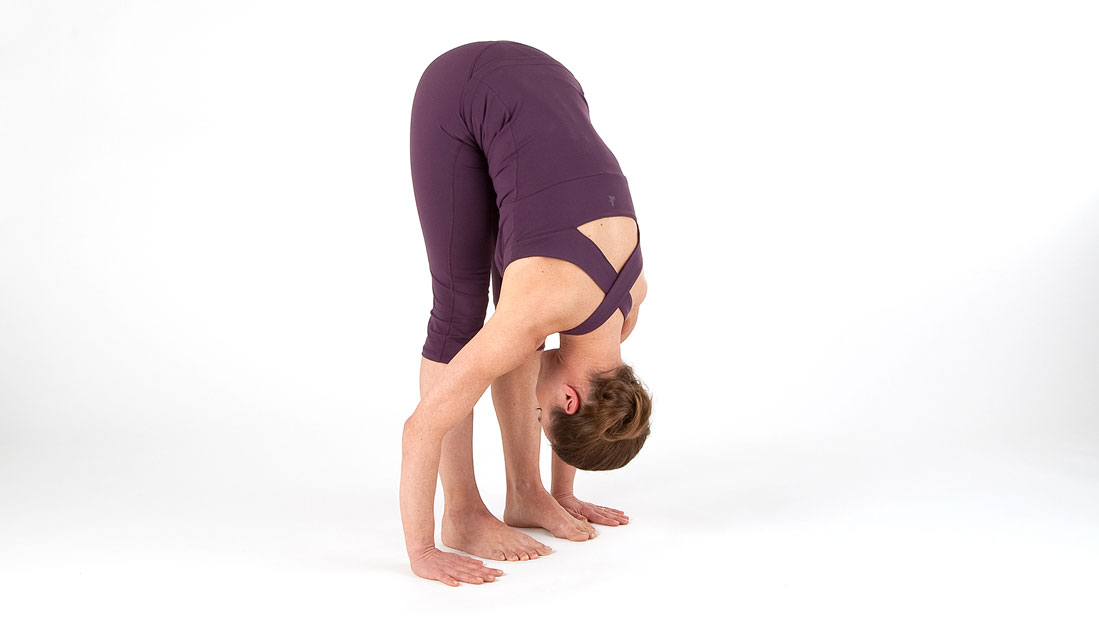
This yoga exercise, known as the Standing Forward Bend or Uttanasana, gently eases the upper body down into a passive C-shaped curve while keeping the back straight. The knees are placed into a deep stretch. The sitting bones are spread further apart, pointing vertically upwards as far as they will allow, while the crown of the head hangs as low as possible. This allows the hamstrings to lengthen.
Warning – Proceed with caution if you have chronic issues with your intervertebral discs. Listen to your body. Do not perform this exercise if you experience acute pain!
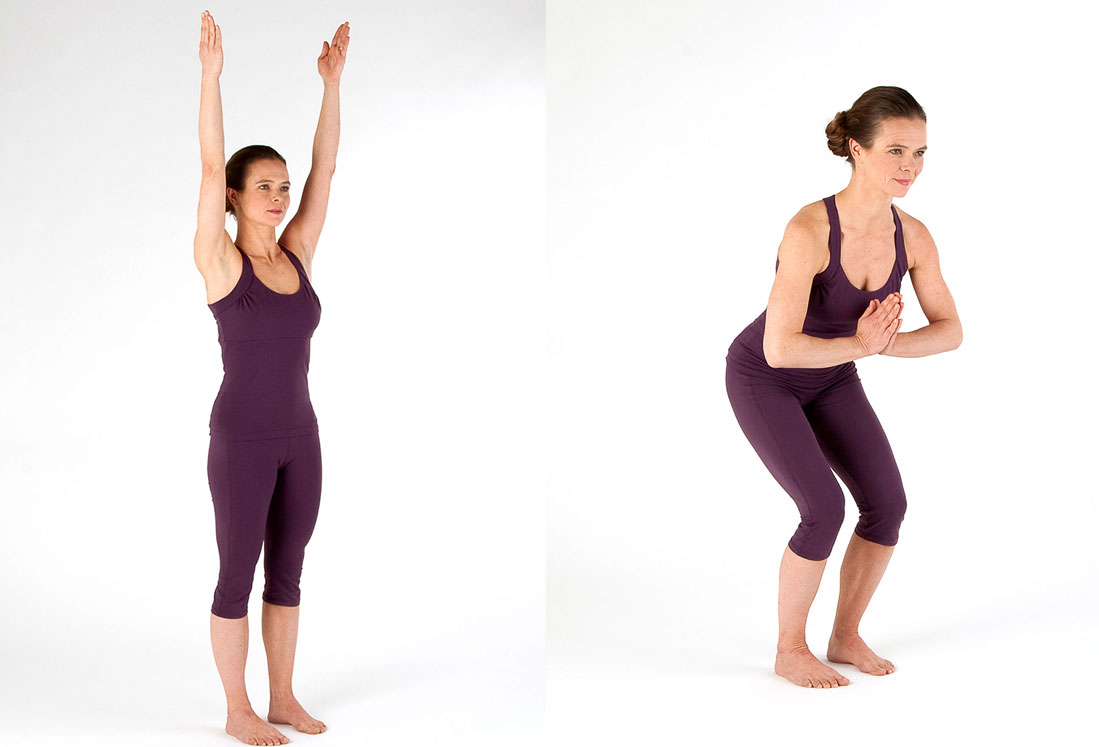
Objective: Good hip extension can relieve the calves when running and assist with proper forward thrust. This exercise helps you to intensively stretch the entire back of the body, particularly the Achilles’ heel, calf muscles and rear leg muscles. By shifting the body's centre of gravity forwards and activating the muscles in the forefoot and sole, you'll also be doing your feet a favour and supporting a light-footed running technique.
Our book recommendation:
Medical Yoga - TRIAS Verlag
Dr. med. Christian Larsen, Christiane Wolff, Eva Hager-Forstenlechner
https://shop.thieme.de/Medical-Yoga/9783432107677
At the beginning of October, Mike Schifferle completed his 99th Ironman race at the Ironman Hawaii and thus achieved his athletic life goal.

To exploit the power potential of your legs, you need strong and stable hips. If you want a powerful push-off while jogging, you should train the deep hip external rotators.