
Training tips
The key to peak Performance
Tapering is probably the most paradoxical yet most effective phase: you train less, yet your body gets stronger.

When you hear the word ‘stretching’, you immediately think of a wide variety of methods – from dynamic rocking to static stretching. The world of stretching techniques is full of trends and opinions. But which method can actually permanently lengthen a shortened muscle?
When a muscle contracts, its smallest building blocks, the sarcomeres, push into each other. Each sarcomere contains two protein filaments, actin and myosin, which interlock like small hooks. Movement of the myosin heads causes the filaments to contract, shortening the muscle.
If the muscle is now slowly stretched, i.e. pulled apart, something similar happens, but in reverse: the myosin heads still hold on to the actin, but they now slow down the pulling apart.
This slow yielding is called eccentric movement. It is more demanding for the muscle because it is ‘braking’. A typical example of this is when you slowly lower a heavy object to the floor – this is easier than lifting it up. Another example is bicep curls with a dumbbell. Lifting the weight is concentric, while slowly lowering it is eccentric. This is precisely the difference between the active contraction (concentric) and controlled yielding (eccentric) of a muscle.
Put simply, a tense muscle is too strongly contracted – the small building blocks in the muscle are too close together. Classic stretching, heat or gentle movement help to release the tension.
A shortened muscle, on the other hand, is actually too short because it has too few building blocks in length. Normal stretching is not enough in this case. Eccentric stretching, i.e. slowly yielding and stretching under tension, is the right method for this.
Braking under tension until the end of the movement triggers a growth response in the muscle during eccentric stretching. As the body perceives that there is insufficient strength towards the end of the movement, the long-term solution is to incorporate new muscle cells. This allows the muscle to work powerfully again towards the end of the movement. However, in order for the body to benefit from this stimulus, it is essential to work with a large lever or weight. The following three exercises can be done 2-3 times a week:
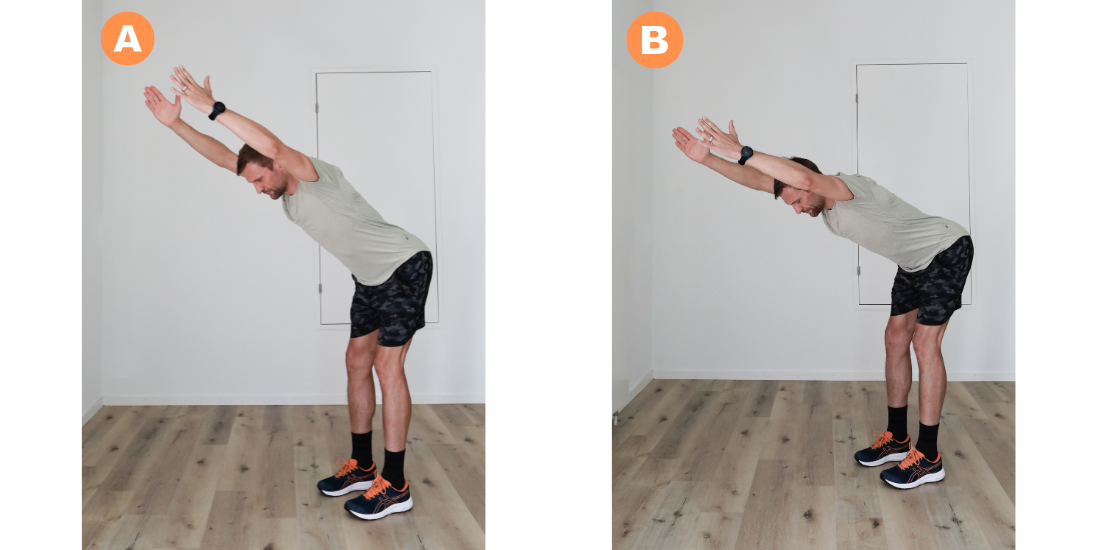
Goal: To stretch the hamstrings
How to do it:
Important:
Dosage: 2 sets of 20 repetitions per side.
Variation: Instead of using your arms, you can also perform the exercise with a barbell bar over your shoulders with a small amount of weight.
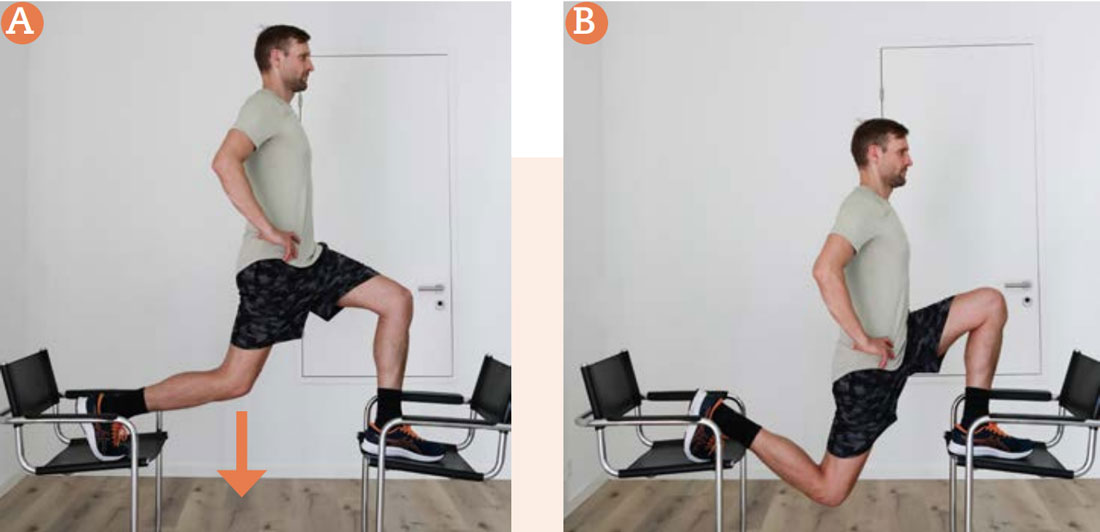
Goal: To lengthen the hip flexors and knee extensors
How to do it:
Important:
Dosage: 2 sets of 20 repetitions per side.
Variation: The exercise can be intensified by holding a dumbbell in each hand.
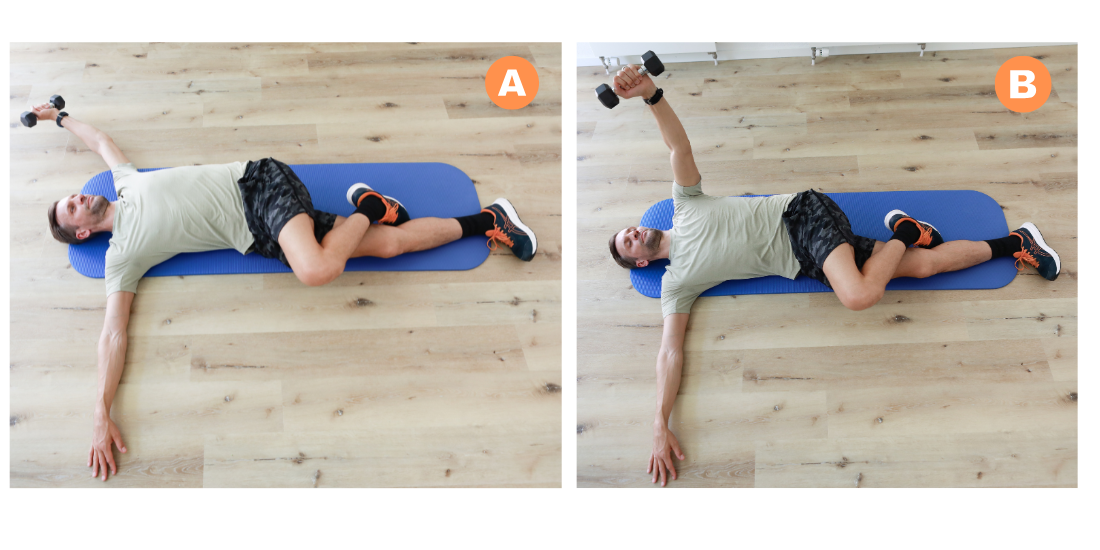
Goal: To lengthen the chest muscles
How to do it:
Caution:
Dosage: 2 sets of 20 repetitions per side.
Tapering is probably the most paradoxical yet most effective phase: you train less, yet your body gets stronger.

The gastrocnemius and soleus muscles play a central role in propulsion, efficiency and thus for fast times.

Many runners run too often at a moderate pace – not relaxed enough, not intense enough. Stephen Seiler's 80:20 principle addresses precisely this issue: 80% relaxed training, 20% hard training. This improves endurance, reduces the risk of overexertion – and allows the hard sessions to have their full effect.