
Training tips
Competition tips for mountain runners
A mountain run is different to a normal run on flat terrain. You should take note of the following racing tactics.
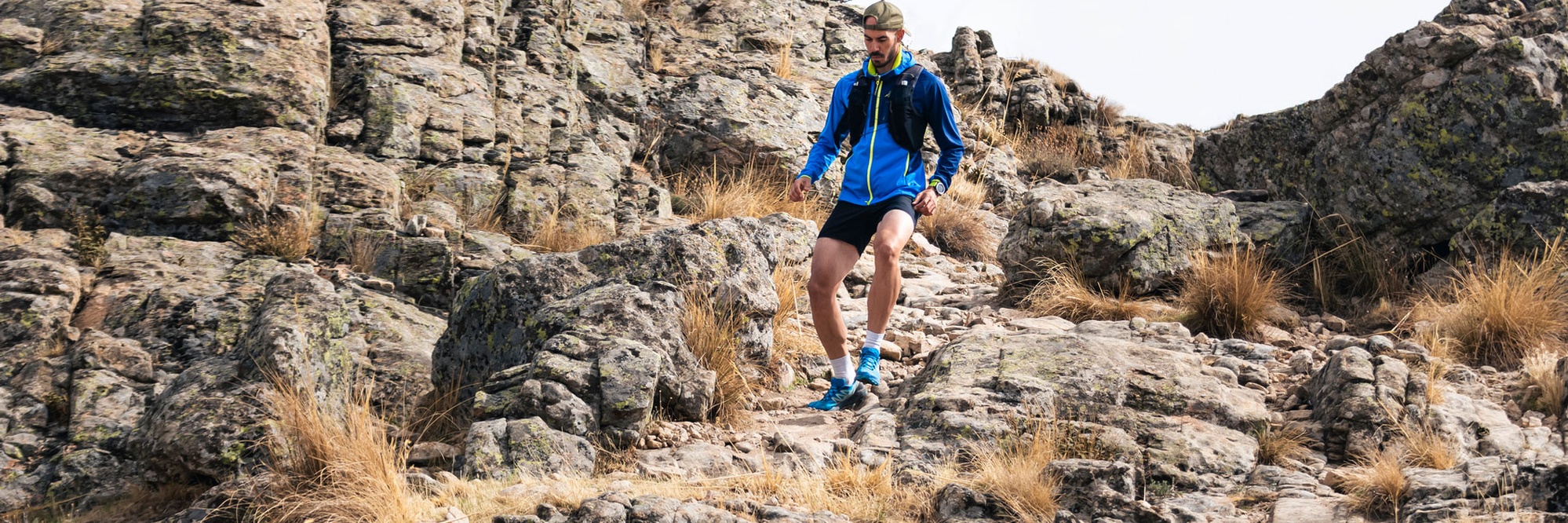
Many runners steer clear of downhill running. However, a healthy musculoskeletal system means you can certainly defy gravity in a safe way. Here are the best tips.
The very thing that drives and motivates cyclists can induce a sense of fear in some runners: downhill trails. After all, long, steep descents put runners at risk of trembling thighs, muscle cramp, stitch or, in the worst case scenario, a fall that results in torn ligaments. Nevertheless, it's possible to learn the technique for downhill running. The most important tips:
Another point about muscle cramps: Even well-trained athletes are prone to cramp during long periods of untypical exercise if the muscles being used aren't well prepared. Downhill running is predestined for muscle pain as the muscles are subjected to major forces, known as eccentric (stopping) forces.
As with all untypical forms of exercise, you should therefore slowly build up your body's exposure to downhill running and only increase the duration gradually. Instead of running the entire time, you might also walk for some of the steeper sections. Alternatively, simply run downhill for some of the trail and take the cable car the rest of the way. For longer descents, it's a good idea to increase the intensity of the training first. For example, you might run three times a week on hilly terrain instead of twice, or dedicate the third session to specific strength training exercises for the thigh and gluteal muscles..
A mountain run is different to a normal run on flat terrain. You should take note of the following racing tactics.

As part of the trail running boom, mountain runs are also soaring in popularity and are an increasingly coveted activity of running enthusiasts. Below, you fill find the most important points for mountain run training and four sample training sessions to try out!
