
Training tips
«Double threshold training»: A miraculous method for performance enhancement?
«Double Threshold Training» is gaining popularity among elite runners and performance-oriented athletes. What exactly is it and is it truly so effective?
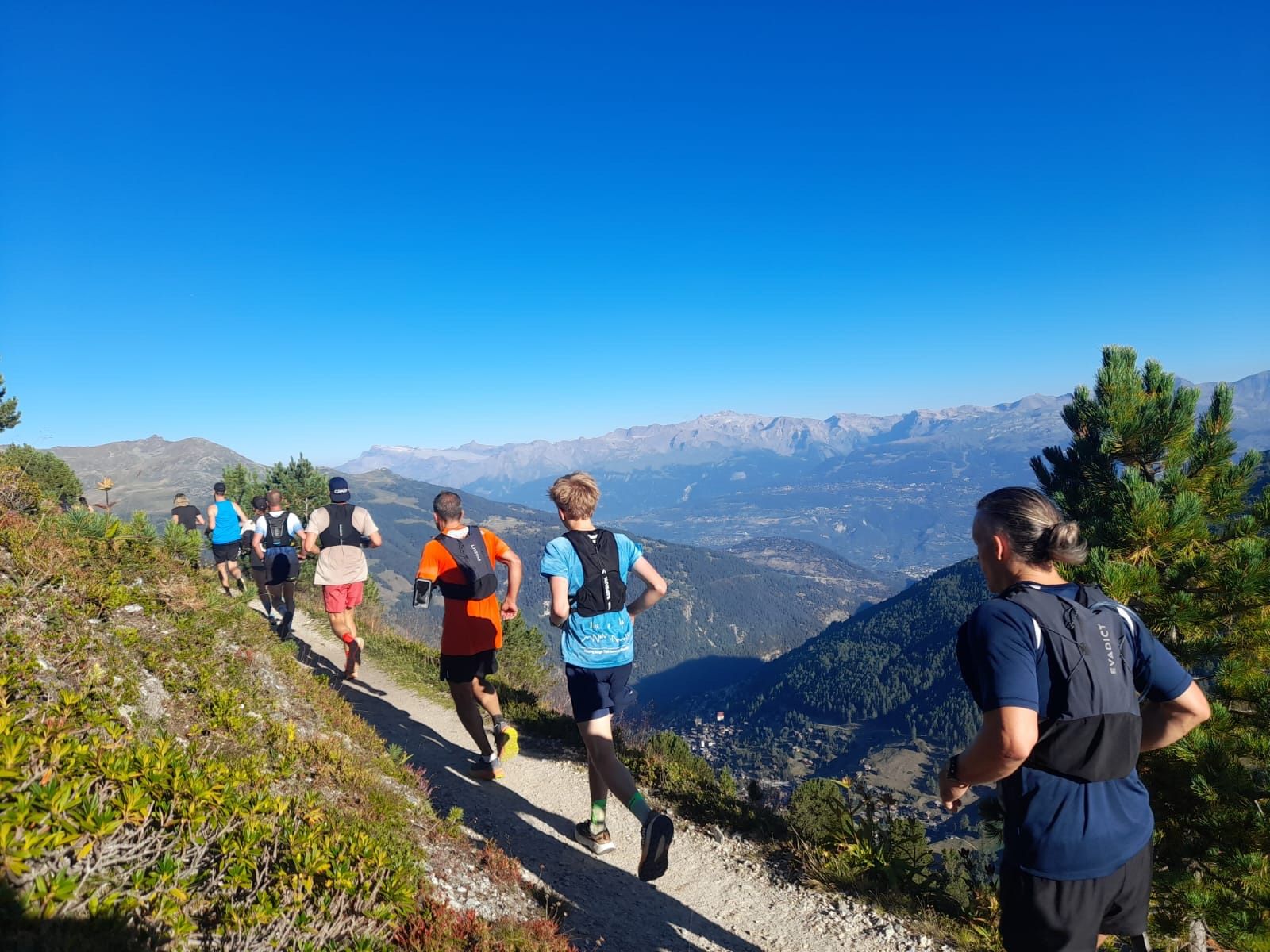
We explain what ‘threshold’ really means in endurance sports, how it is measured and why it should be used as a training guide with a sense of proportion.
Few terms crop up as often in endurance sports as ‘threshold’. Runners talk about threshold pace, cyclists about FTP, while performance testing brings terms such as lactate threshold and Critical Power into play. They generally describe an intensity that can be sustained for an extended period, but only just. Scientifically, however, these terms do not describe exactly the same thing.
As exercise intensity increases, the body does not suddenly switch from ‘aerobic’ to ‘anaerobic’ energy production. Both systems are working simultaneously; what changes is their relative contribution to energy production. At low intensities, the lactate produced can be continuously reused, meaning that blood lactate levels remain largely stable.
As exercise intensity increases, more lactate is produced. As long as the body can clear lactate at the same rate as it produces it, blood lactate levels can remain elevated but stable. At the upper limit of this range lies maximal metabolic steady state: the highest intensity at which exercise can be sustained for an extended period while the body’s metabolism remains relatively stable. Above this point, lactate levels and oxygen consumption continue to rise, fatigue sets in more rapidly and performance can only be maintained for a limited time.
The threshold can be measured in several different ways. In performance testing, for example, power or running speed, heart rate and blood lactate are measured. In spiroergometry, respiratory gases are also analysed.
The lactate threshold is determined from the way blood lactate levels change as exercise intensity increases. The familiar ‘4 mmol threshold’ is not a universal value, as different models are used to determine the lactate threshold. In cycling, Functional Threshold Power (FTP) is often used as a practical training metric. Critical Power, meanwhile, is calculated from maximum efforts performed over different durations. These values may be similar, but they are not identical. That is why it is important to know how a particular value was determined.
Knowing your intensity zones allows you to structure your training more effectively. An easy session provides a different stimulus from threshold or VO₂max training. Threshold also plays an important role in competition: the higher the power or speed you can sustain over an extended period, the better your chances of achieving strong endurance performance.
Threshold training therefore remains an important part of a well-rounded training programme. On the bike, for example, you could do 3 × 10–15 minutes at threshold intensity. For running, 3 × 8–10 minutes at a controlled, hard pace is a good option.
These intervals primarily improve your ability to sustain a high level of performance for longer. The aim is to train close to the highest intensity at which the body can still maintain a stable metabolism. This can improve aerobic energy production, lactate clearance and resistance to fatigue. The goal: to run faster or produce more watts at a comparable effort – or to maintain the same performance for longer.
If you want to improve your threshold, training at threshold as often as possible is not the answer. Successful endurance athletes typically spend most of their training time at low intensity. Depending on the sport and training phase, training intensity is distributed in either a pyramidal or polarised pattern. What both approaches have in common is that the majority of training – usually around 75–80% – remains easy, with high-intensity sessions used strategically.
Sessions above threshold, such as 4 × 4 minutes, place a greater emphasis on improving maximal oxygen uptake. They are designed to improve the body’s ability to take in, transport and use as much oxygen as possible. Put simply, VO₂max represents the size of your aerobic engine, while threshold describes how much of that engine you can use over an extended period.
For many endurance athletes, one or two hard sessions per week are sufficient. The appropriate amount of high-intensity training depends, however, on how often you train overall. A common approach is to combine one threshold session with one VO₂max session, while keeping the rest of your training predominantly easy. More hard sessions do not automatically mean better results. If fatigue increases more than the additional training stimulus, the quality of your training will suffer.
Threshold is not a magic point, but a useful model for guiding your training. Different methods attempt to define it, but the exact terminology matters less than understanding how to apply the concept in practice. Successful endurance training combines plenty of low-intensity work with targeted efforts at and above threshold.
Aerobic
Energy production using oxygen. It dominates at low to moderate intensities and allows the body to sustain exercise for long periods without a significant drop in performance.
Anaerobic
Energy production without the direct use of oxygen. It provides energy very quickly and becomes increasingly important at high intensities, but can only be sustained for a limited time.
Critical power (CP)
A mathematically calculated power value derived from several maximal efforts of different durations. It roughly represents the boundary between sustainable and only temporarily sustainable performance.
Functional threshold power (FTP)
A commonly used cycling training metric expressed in watts. It is intended to describe approximately the power that can be sustained for one hour, but is not identical to a physiologically measured threshold.
Lactate
A substance produced during energy metabolism that the body can also reuse as an energy source.
Lactate threshold
An exercise intensity determined from the pattern of blood lactate levels. The precise value can vary depending on the testing method used.
Maximal lactate steady state (MLSS)
The highest constant exercise intensity at which blood lactate concentration can still remain largely stable.
Polarised training
A model for distributing training intensity. It divides training into two distinct intensity zones: around 80% of training time is spent at low intensity in the aerobic base zone (below the first threshold), while around 20% consists of high-intensity intervals (above the second threshold). The moderate-intensity zone in between is largely avoided.
Pyramidal training
Another model for distributing training intensity: 75–80% of training volume is performed at low intensity, 15–20% at moderate intensity and 5% at high intensity.
Threshold
The intensity at which the body can just about sustain an effort for an extended period. Lactate production and clearance remain broadly in balance. Above threshold, fatigue increases significantly faster.
Threshold model
A third approach to distributing training intensity: 50–60% at low intensity, 30–40% at moderate intensity and 5–10% at high intensity. It is popular among recreational athletes with limited training time, but research suggests it is the least effective of the three approaches.
Threshold training
Intervals performed close to threshold. They primarily improve the ability to sustain a high level of performance for longer.
VO₂max
The maximum amount of oxygen the body can take in and use during intense exercise – in simple terms, the size of your ‘aerobic engine’.
VO₂max training
High-intensity intervals above threshold that specifically target maximal oxygen uptake.
Borszcz, F. K., Tramontin, A. F., & Costa, V. P. (2019). Is the functional threshold power interchangeable with the maximal lactate steady state in trained cyclists? International Journal of Sports Physiology and Performance, 14(8), 1029–1035.
Faude, O., Kindermann, W., & Meyer, T. (2009). Lactate threshold concepts: How valid are they? Sports Medicine, 39(6), 469–490.
Helgerud, J., Høydal, K., Wang, E., Karlsen, T., Berg, P., Bjerkaas, M., Simonsen, T., Helgesen, C., Hjorth, N., Bach, R., & Hoff, J. (2007). Aerobic high-intensity intervals improve VO₂max more than moderate training.
Medicine & Science in Sports & Exercise, 39(4), 665–671.
Iannetta, D., Inglis, E. C., Mattu, A. T., Fontana, F. Y., Pogliaghi, S., Keir, D. A., & Murias, J. M. (2020). A critical evaluation of current methods for exercise prescription in women and men. Medicine & Science in Sports & Exercise, 52(2), 466–473.
Jones, A. M., Burnley, M., Black, M. I., Poole, D. C., & Vanhatalo, A. (2019). The maximal metabolic steady state: Redefining the "gold standard". Physiological Reports, 7(10), e14098.
Jones, A. M., Vanhatalo, A., Burnley, M., Morton, R. H., & Poole, D. C. (2010). Critical power: Implications for determination of VO₂max and exercise tolerance. Medicine & Science in Sports & Exercise, 42(10), 1876–1890.
Seiler, S. (2010). What is best practice for training intensity and duration distribution in endurance athletes? International Journal of Sports Physiology and Performance, 5(3), 276–291.
Stöggl, T. L., & Sperlich, B. (2014). Polarized training has greater impact on key endurance variables than threshold, high intensity, or high volume training. Frontiers in Physiology, 5, 33.
Wong, S., Burnley, M., Mauger, A., Sun, F., & Hopker, J. (2022). Functional threshold power is not a valid marker of the maximal metabolic steady state. Journal of Sports Sciences, 40(23), 2578–2584.
«Double Threshold Training» is gaining popularity among elite runners and performance-oriented athletes. What exactly is it and is it truly so effective?
Do you want to really get going again in autumn after the hot summer? Then follow the five Dos. The five Don'ts have already been tried by enough others – you can read them, but you don't have to try them out.

The need to recover from time to time is common knowledge. Just not everyone agrees as to how much recovery is necessary and good. For endurance athletes, year’s end offers a welcome opportunity to let not just the soul, but also the body “unwind”.