Diet tips
Do older athletes have different nutritional requirements to younger athletes?
How important is the right amount of macro and micronutrients? What training stimuli is needed to stay healthy and competitive for as long as possible?
Stretching is a perennial issue in the sport of running. New research is always emerging on static and dynamic stretching. Static stretching used to be standard practice before and after exercising. Today, we know that passive stretching reduces muscle tension.
This can help to regulate muscle tone if your muscles feel tight after a run. Once warmed up, the muscle is stretched for 60-90 seconds in its end position. As it is stretched, the muscle should feel like it is being eased.
On the other hand, static stretching before running or other sport is generally considered futile. Reducing muscle tension at this point is actually counterproductive as less muscle tension means reduced performance.
Mobility is important when warming up before a run. For example, if we spend too long sitting down and our muscles have shortened in this posture, this can have a negative impact on our running technique and performance. Likewise, sitting down for a long period before a run isn't great for our feet and lower legs as it prevents us from running in a light-footed manner. Our feet and calf muscles can also become tighter and shorter due to regular running.
Active mobility exercises are more beneficial than static stretching here. This is where the joint is actively moved back and forth and the muscle is stretched under tension. This not only increases mobility in the stiff joint but also prepares the muscle for the upcoming workout. Here are our four mobility exercises.
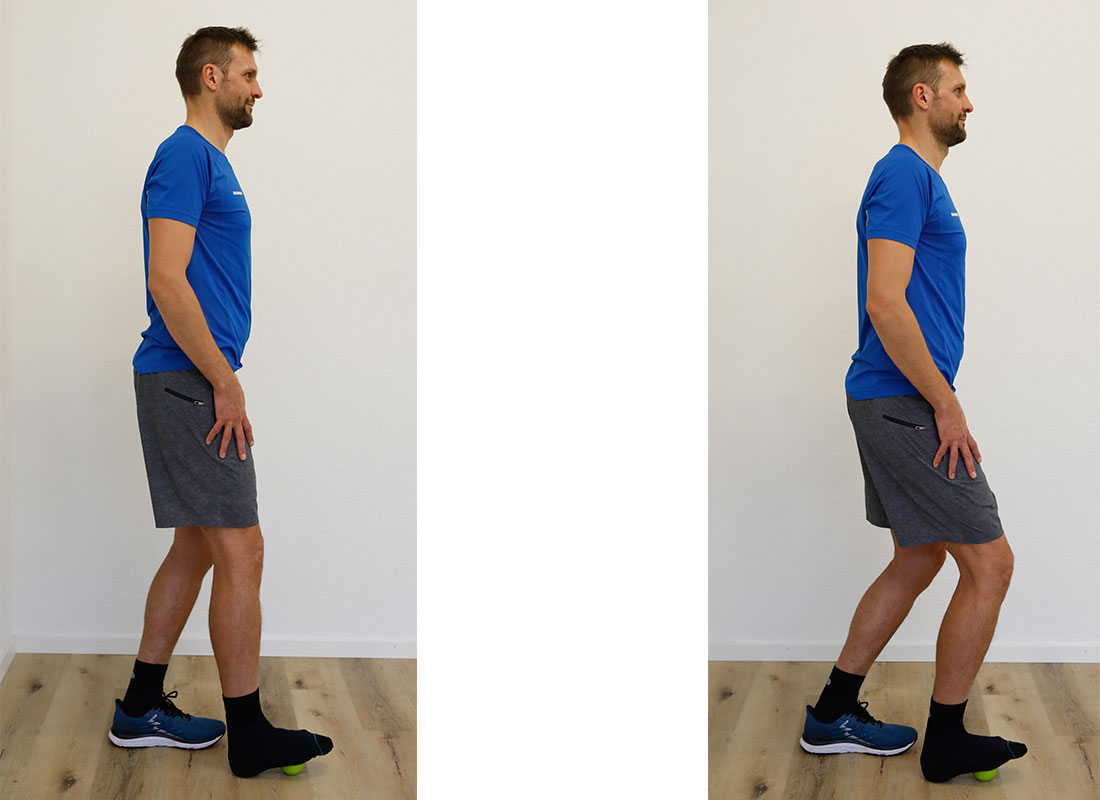
The first exercise “awakens” the feet and calf muscles and provides the necessary tension and length. The pressure of the ball helps to relieve tension in the foot and increase sensation. Moving the ankle joint relieves the foot muscles while the calf muscles benefit from the lengthening and pressure.
Here’s how:
Take note: move your knee forwards and backwards in a straight line. Keep your heel on the ground.
Repetitions: 2 sets of 20 repetitions per foot.
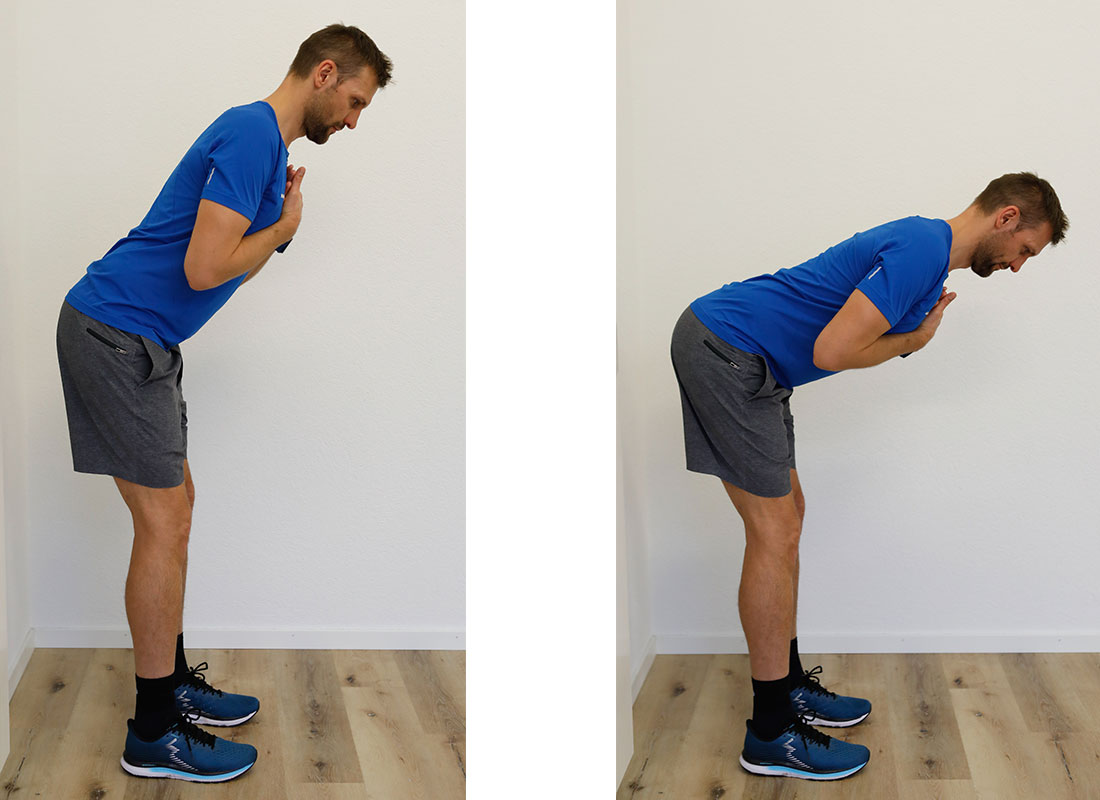
Tense, shortened muscles reduce running performance. A muscle that is too short is less effective as it no longer has its full range of motion and little strength at the end of the movement. Strength in an elongated position only comes if the muscle is trained while at its maximum length.
Here’s how:
Take note: make sure that your back hasn't become rounded by the end position. Always keep your knees slightly bent and facing forwards. To keep your neck correctly aligned, aim your gaze at the ground while bending over.
Repetitions: 2 sets of 20 repetitions.
The aim of improving mobility is also to improve running function. Functional stretching and mobility exercises should focus on the motions involved in running. If we spend too long sitting at a desk and start to get a stiff back, this has a negative impact on our running performance. The tighter the chest, the more limited our breathing capacity, which affects the connection between our pelvis and upper body while running.
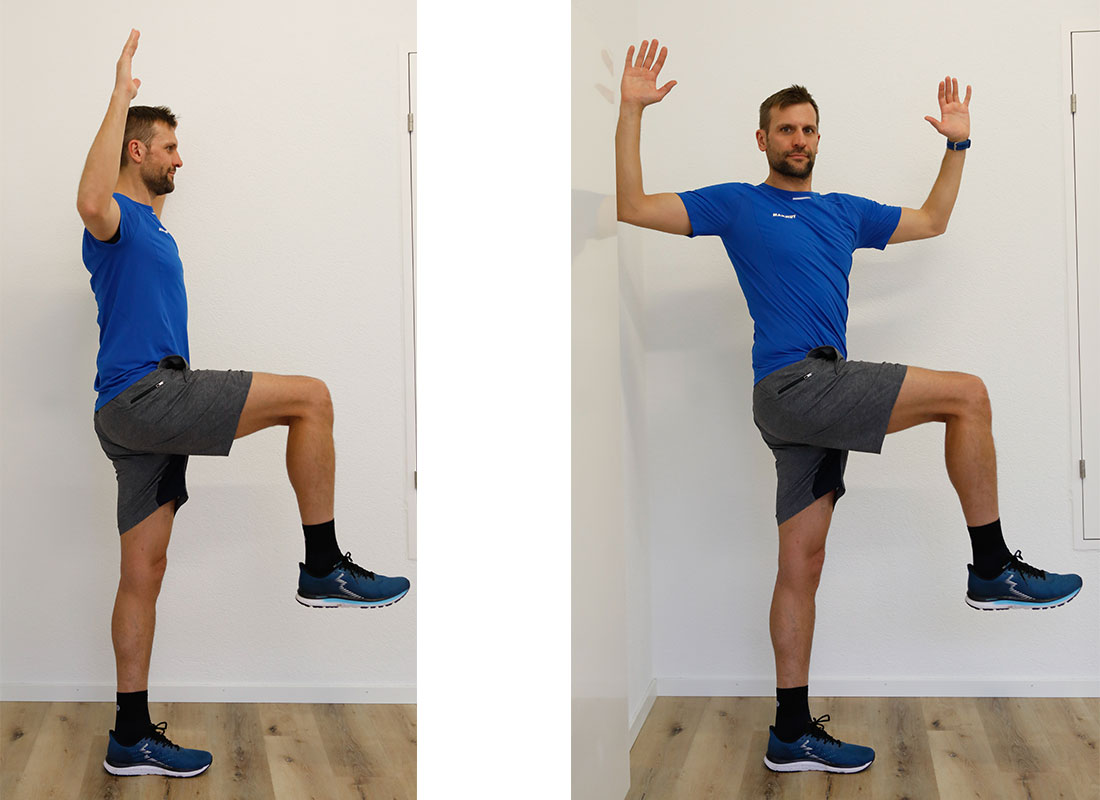
Here’s how:
Take note: if you have poor mobility, your pelvis will move as you twist your upper body. It's important to keep the pelvis straight as you twist. Turn your pelvis in the opposite direction or ensure that it remains in place. Keep the axis of the supporting leg straight. The raised knee should face forward and be parallel to your supporting foot.
Repetitions: 2 sets of 10 repetitions per side.
Stability of the leg axes and hip extension are two major factors when running. Lack of stability in the leg axes causes the supporting leg to buckle inwards or outwards with each step. Keeping the knee facing forward during the running motion prevents overloading of the legs. If the leg axes are misaligned, it takes effort to return the knee to a straight position. This then negatively impacts the forward movement.
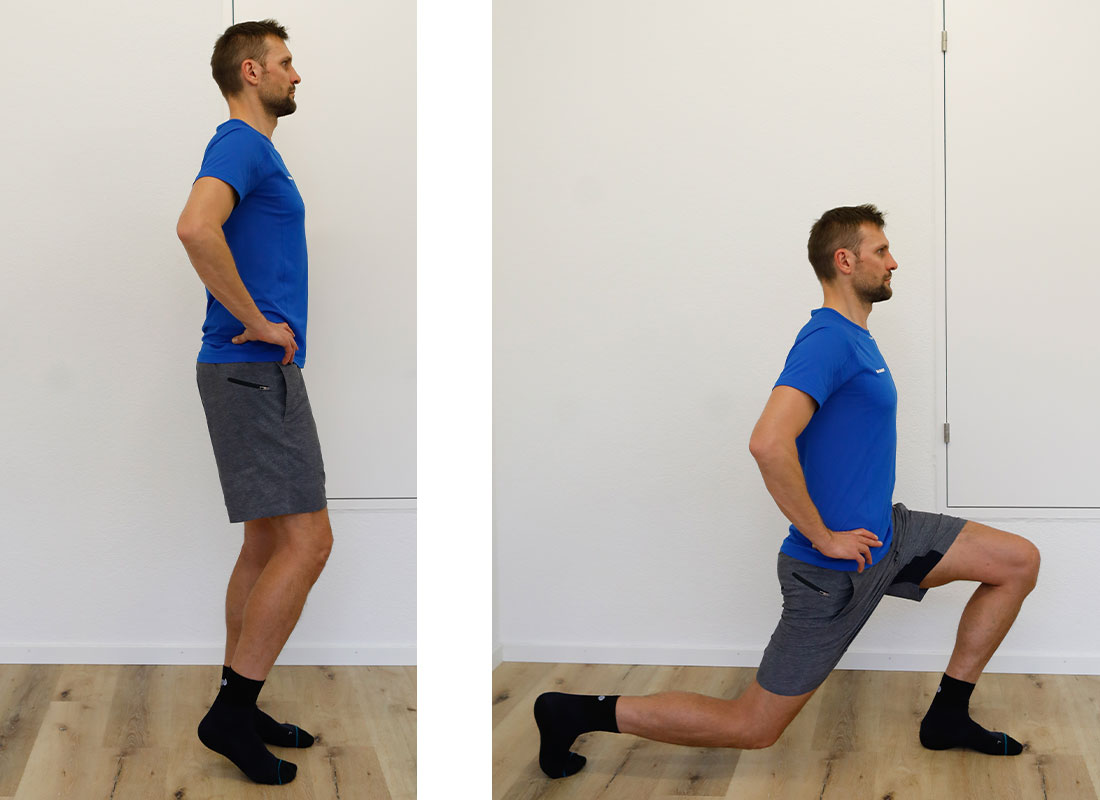
Here’s how:
Take note: if your hip flexors are short, your pelvis will want to tilt forwards as you slide. Use your lower abdominal muscles to keep your pelvis upright and hold it in this position. Keep your knee facing forwards and ensure that it doesn’t bend to the side.
Repetitions: 2 sets of 10 repetitions per side.
How important is the right amount of macro and micronutrients? What training stimuli is needed to stay healthy and competitive for as long as possible?
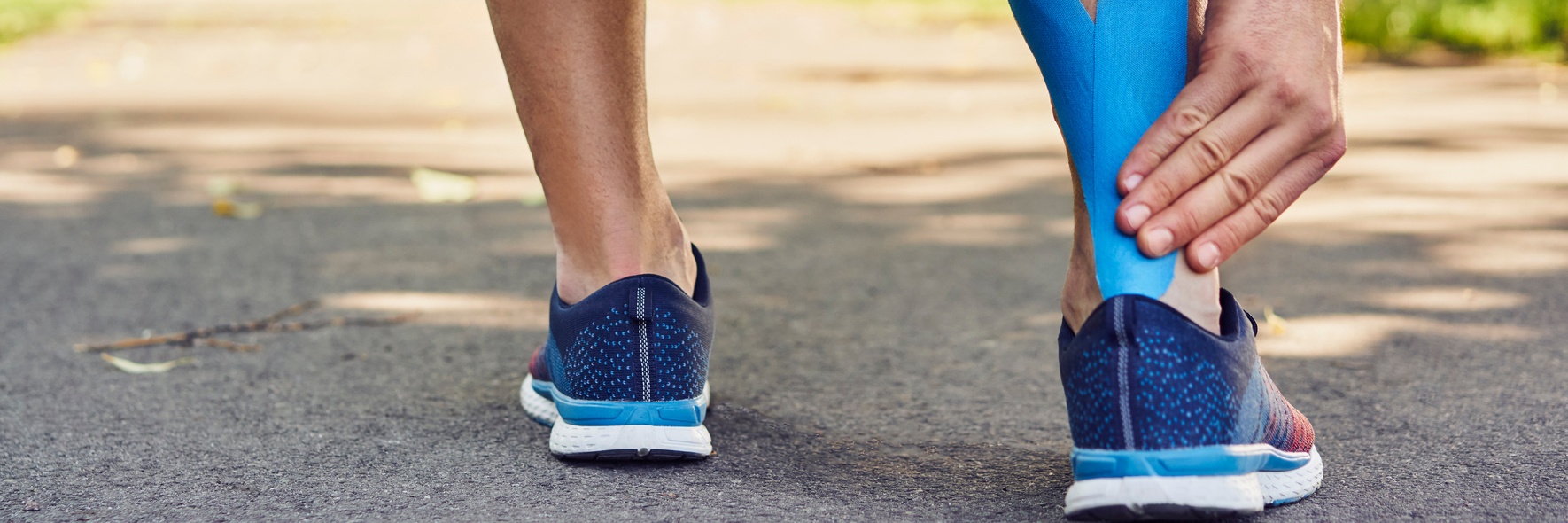
People visit physiotherapists for a wide range of issues. However, some areas of the human body are prone to more niggles than others. Three classics and an easy exercise to combat each issue.