
Interviews
Alanis Siffert in the Datasport Check
As indoor pools were closed during the pandemic, Alanis Siffert, an ambitious swimmer, shifted her focus to running and cycling.

Neck pain while cycling is a familiar issue for most and often appears at the beginning of the cycling season or during the first longer rides. Here are three exercises to help strengthen your neck.
The cause of neck problems on the bike is usually easy to identify: The neck muscles are not sufficiently trained to hold the specific, slightly upward-forward head position required when cycling. As a result, the muscles become tense and start to hurt. Most cyclists neglect specific neck strength training. To prevent neck pain, it's a good idea to incorporate a few exercises into your routine.
The muscles around the neck are not evenly distributed. The muscle volume at the back is greater than at the front. The extensor muscles in the neck tend to have more tension and are often unconsciously tensed. When the head is pushed forward during everyday life or sports, the posterior chain has to work harder, leading to tension or even headaches.
Especially the upper trapezius muscle, which runs from the back of the head to the shoulders, helps support the head and is used more intensively when the head is pushed forward. A raised shoulder position in everyday life also increases tension in this muscle. That’s why not just the head position but also the shoulder position on the bike is important for maintaining comfortable neck tension.
The correct head position relative to the torso is easier said than done. The head should be in line with the spine. On the bike, this is challenging because even though the upper body leans forward, you still need to look ahead. This results in a slight forward-upward tilt of the head, shortening the neck muscles in the back. The longer the head stays in this position, the more tension builds up in the neck. If the muscles aren’t well trained, this inevitably leads to pain and posture issues.
In the short term, it helps to occasionally tilt your head forward and downward while riding. Looking down at the ground stretches the neck and relieves tension in the back muscle chain during the ride. It can also help to relax your shoulders from time to time.
With neck exercises, the right dosage is key, as the neck muscles can quickly reach their limit. Many critical structures are located in the upper neck area, so overexertion can lead to dizziness, nausea, headaches, and vision issues. Start with few repetitions and gradually increase. Then stay consistent! The following three exercises can be done twice a week.
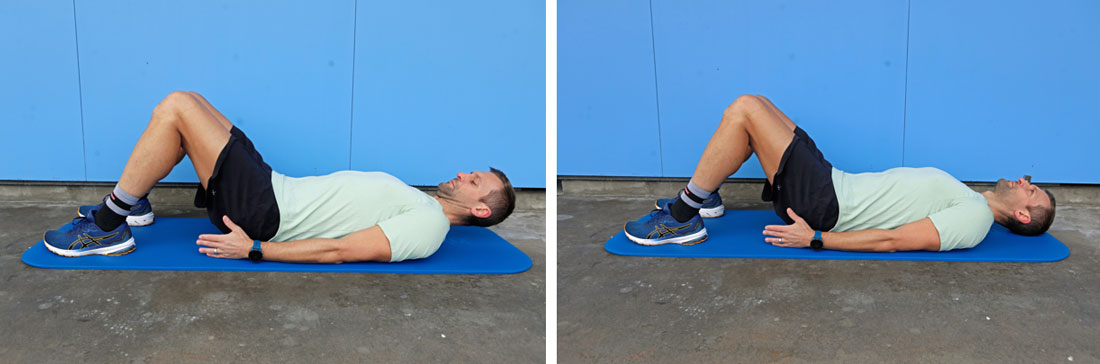
Goal: Improve activation of the front neck muscles.
Instructions:
Tips:
Recommended sets and reps: 2 sets of 6–8 reps.
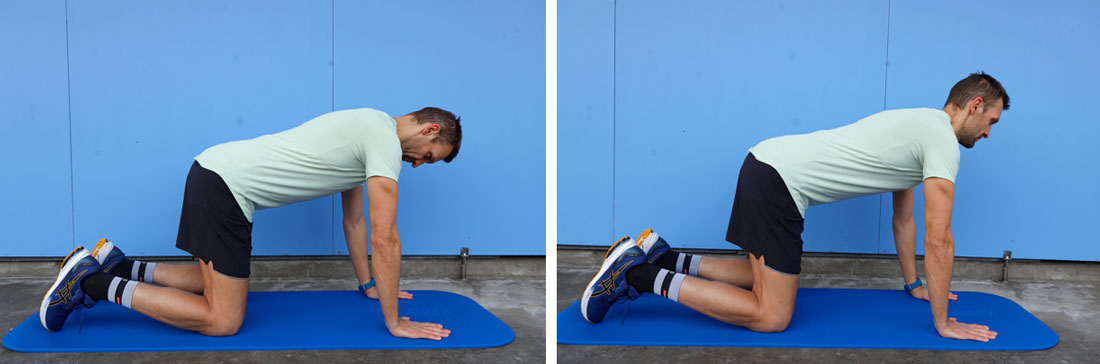
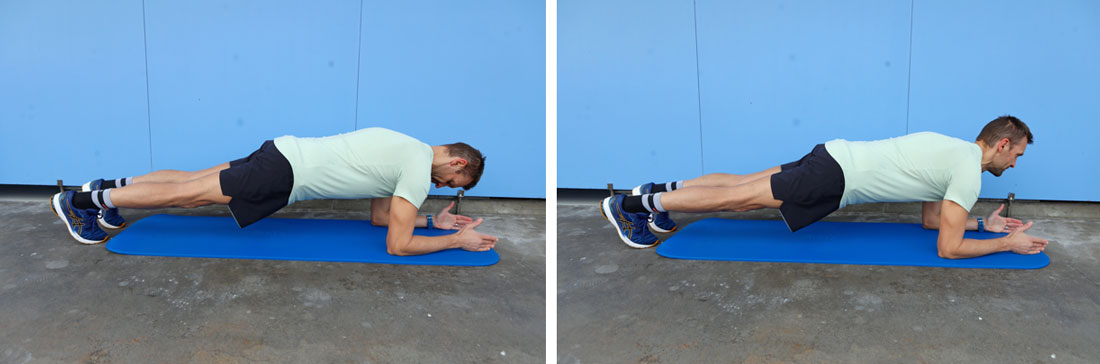
Goal: Improve coordination of head movement in a support position.
Instructions:
Tips:
Recommended sets and reps: 2 sets of 15 reps.
Variation: Do the same exercise from a plank position for increased shoulder effort.
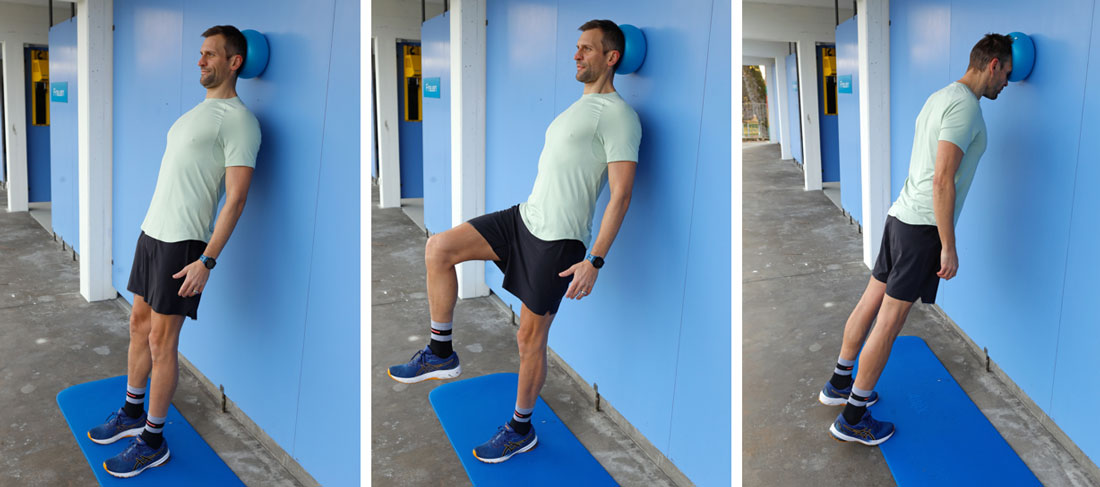
Goal: Improve coordination and stability of the neck muscles.
Instructions:
Tips:
Recommended sets and reps: 2 sets of 10 reps.
Variation: Press your forehead against the ball and hold the position. To make it harder, alternate small steps in place.
As indoor pools were closed during the pandemic, Alanis Siffert, an ambitious swimmer, shifted her focus to running and cycling.

After an intense running session or competition, you’re not just left with tired legs; your immune system also takes a hit. This is where the so-called «Open Window» effect comes into play.

Strength training is still often underestimated. However, targeted strength training is not only beneficial for all types of runners but is actually a fundamental requirement for practicing your favorite sport in a healthy way over the long term.