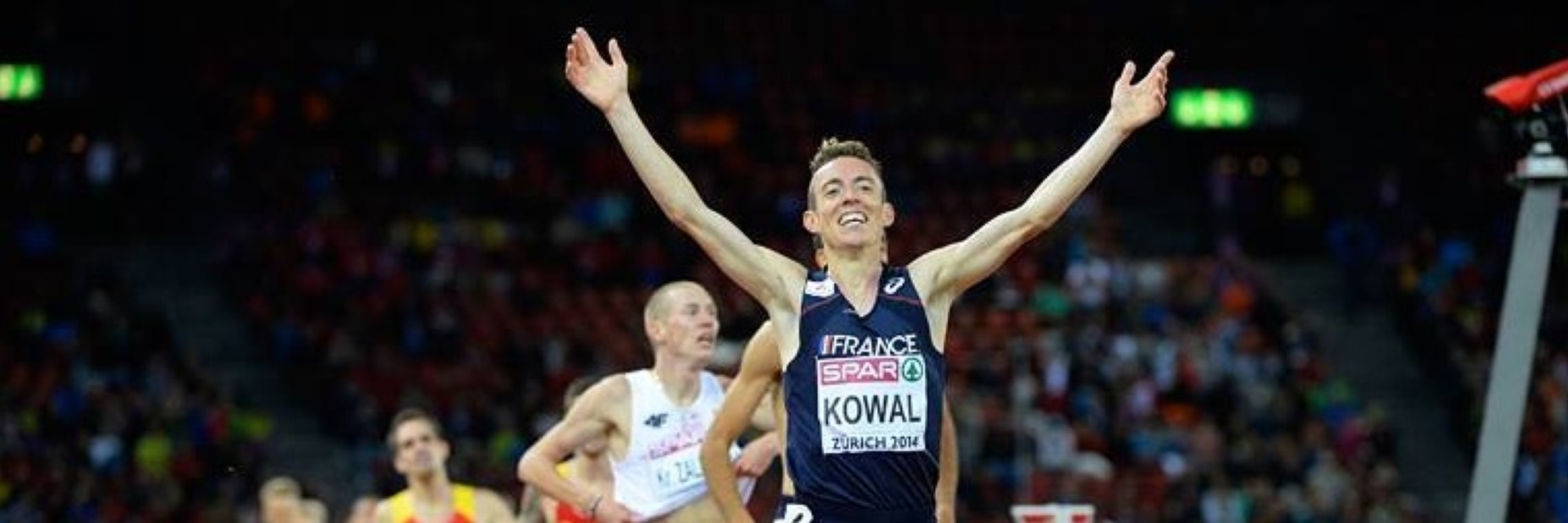
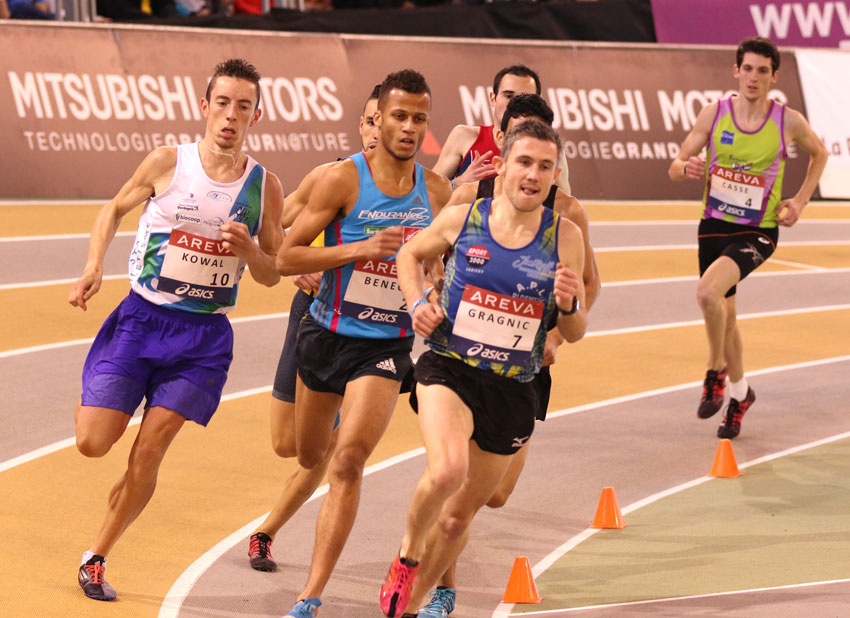
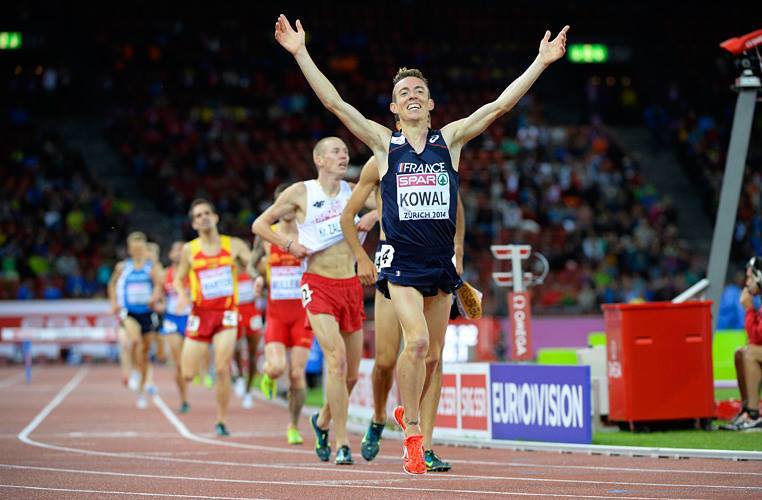
The Frenchman Yoann Kowal had a remarkable win at the oldest city race in Switzerland, the Course Titzé de Noël in Sion. Currently, the athlete, winning 5th place at the Rio Olympics, is getting ready for his next major challenge: the European Championships in Berlin.
To prepare for your next challenge, you care currently training at INSEP in Paris. What does your typical training day look like?
I started training at INSEP in early September. I start my day by getting up at 7 am then I have my breakfast. At 9:30, I take my daughter to nursery and I go to INSEP where I start my first training session of the day at around 10 am. Throughout the week, I alternate the types of training - I do hill work, track, fartlek out in nature, strength training and tempo outings among other things. I finish at around 12:30 and I pick up my daughter at nursery before going home for lunch. In the afternoon, I take it easy and can even have a little nap. I think it's very important to really recover for at least 6 hours between two training sessions. At 5 pm, my wife comes home to take care of our daughter and I leave for my second training session of the day. This is when I often go running along the Marne River with my dog.
In recent years, you've prepared for the season in Kenya. Why aren't you doing this type of altitude training this year?
This is a choice I made to better combine my professional life and my private life. In the past, my wife has made a lot of concessions in order to follow me and adapt to my lifestyle. This time she got a professional opportunity in Paris and I decided to follow her. I was fortunate to be able to join INSEP, which offers outstanding preparation conditions for athletes, with excellent infrastructure and where you are monitored by a team of high level professionals.
This spring I still plan to go to Flagstaff in Arizona, USA for an altitude session.
According to you, what are the three major differences between Kenyan runners and European runners?
Athletics is part of their culture. It is neither a luxury nor a choice as it can be back home. Running is surviving and running allows a lot of people to make a living there.
Kenyans train in groups, and because a lot of people run, it creates a bigger pool of potential elite athletes.
Finally, their geographic location means that they train at an average altitude of 2,400 metres, on courses with lots of differences in height. This means that they are under "easier" conditions when they come to Europe to compete.
What are your training principles?
I am very thorough and diligent in everything that I do - for example when it comes to my training sessions, making sure I get enough sleep and my diet. I do allow myself to lapse from time to time, but I never let myself go completely. I find that this is my greatest strength.
I also get a lot of inspiration from Kenya. I was lucky enough to live my passion, which naturally makes me feel more positively inclined towards my work.
Your goal is to switch to the marathon discipline. How do you envision this change? What are the biggest issues involved?
My next goal is to take part, still in the steeplechase, in the Tokyo Olympics in 2020. Then I will start to switch over to marathon. This is going to mean many changes to my training: diet, hydration, physical preparation... everything is different. But I am motivated to adapt and optimise my prep as much as possible to have luck on my side and to succeed in this discipline.
In Kenya, I was lucky enough to have Daniel Brodard as my training partner. He gave me his support and offered to put me in touch with confirmed athletes like Viktor Röthlin. As for my goal, I am to run the marathon in 2:10 and to take part in the Paris Olympics in 2024.
It's important to have goals and to be ambitious, that's what motivates me in my training. I give everything I've got and I don't regret it.
In your opinion, what are the three essential points that explain your success?
Strict adherence to a regime for my everyday life, as previously explained, that's what I consider to be my greatest strength.
Being diligent - never missing a training, and of course sticking to my plan and believing in achieving my goals.
Motivation - mastering the mental and self-confidence. I always try to find the right balance, to use all my potential, without going beyond my capacities and risking injury.
Do you have a secret that you could reveal to us?
In 2011, at the European Indoor Championships at Bercy, I made it to the semi-finals. I had a good chance to come home with a medal and the media were all trained on me. I finished 5th in the heat. I put pressure on myself and I run with the fear of losing instead of the desire to win.
After this experience, I started sophrology sessions, a type of mental preparation, which allowed me to become aware of my emotions and better manage them. It was very important input and I still use it today. Even if this might seem like a weakness on the outside, I personally consider this tool a strength that has given me an advantage over my competitors.
Foto: ZVG
You might be interested in
General tips
The best marathon tips in brief
Not infrequently, even well-trained runners fail at their grand marathon goal because they have ignored some of the details. Here are some tips on how you can prepare for the marathon and perform to your best.
Diet tips
Supplements in sports - high expectations for small remedies
The global market for sports nutrition and supplements, which currently lies at just under 30 billion dollars, is expected to grow 50% by 2022. The number of available supplements is likewise enormous, and it is no longer possible to obtain a clear overview. What should you make of them?
Interviews
Interview with Fabian Anrig
Periodically we publish an interview with an interesting sports personality. Today with Fabian Anrig, Swiss Marathon Champion 2017.