
Training tips
Strong posterior muscles increase your running efficiency
If you use the posterior leg muscle chain correctly while jogging, you can not only gain speed, but also practice injury prevention.

Your feet have been carrying you your entire life. But suddenly your forefoot hurts while jogging. Do your feet even hurt when cycling? Here you can find out where this pain can come from and what you can do about it.
This article is brought to you by Spiraldynamik
Achieving at least 10,000 steps a day by the evening is a popular goal. But now your feet already hurt after the first few minutes of walking and the pain becomes more and more intense, forcing you to stop. The same can happen when cycling and the longer you pedal, the more painful the forefoot. What exactly is happening to your feet here?
The foot is a dynamic-elastic masterpiece, designed to adapt to all uneven surfaces. The muscle-controlled arch of the forefoot cushions every step, just like a shock absorber in a car. Uneven ground challenges and trains our feet at the same time. Each position of the foot adapts perfectly to the ground whether walking in a flowery meadow or straight through a forest. But now we wear shoes every day and walk almost exclusively on flat floors. This causes the foot muscles to atrophy, whereby tension in the forefoot decreases and the transverse arch slowly sinks. This is how forefoot pain, medically known as metatarsalgia, begins.
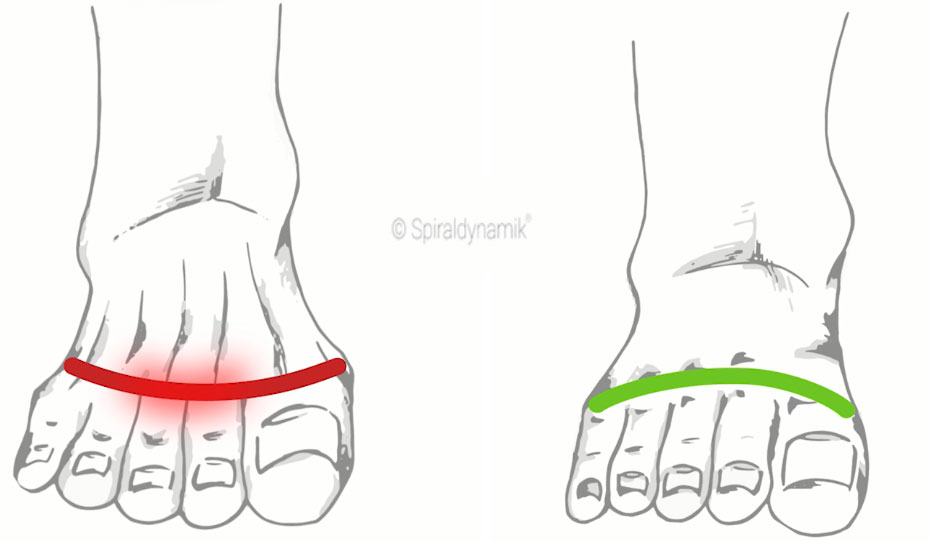
There are three main causes of metatarsalgia: Firstly, the mechanical pressure overload on the metatarsophalangeal joints; secondly, the irritation of the nerves running between the bones; and thirdly, inflammation of the metatarsophalangeal joints. Forefoot running, neutral shoes with little cushioning and a lack of daily exercise make things worse. When cycling, the narrow space in the forefoot area is a problem because the forefoot loses its tension in the arch and is compressed at the same time. The forefoot muscles need to be trained just like any other muscle in the body, otherwise they will lose their function. «Use it or lose it».
If you use the posterior leg muscle chain correctly while jogging, you can not only gain speed, but also practice injury prevention.
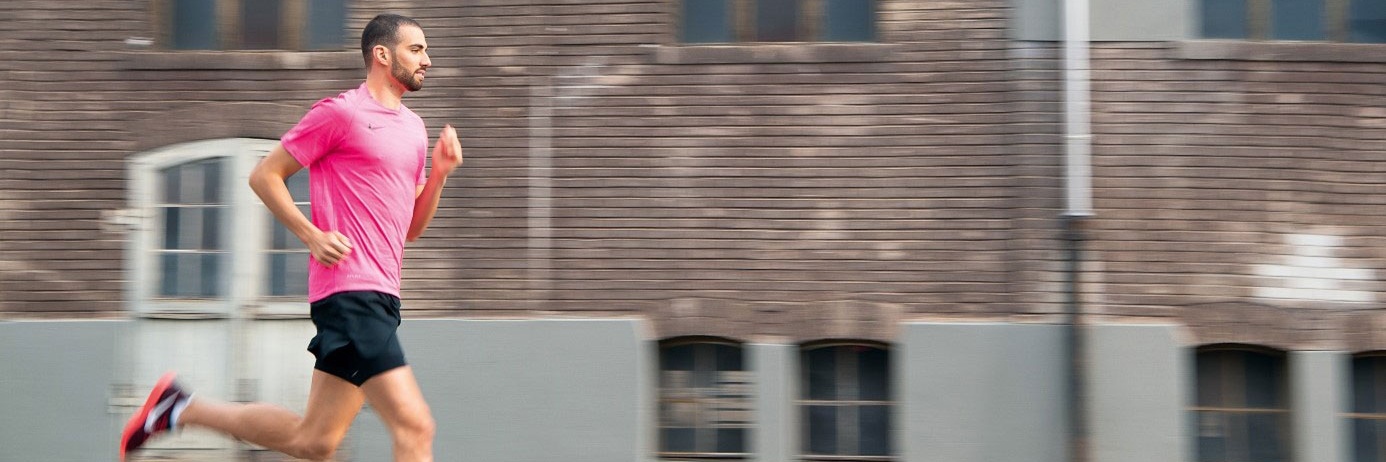
Physics helps to improve your jogging performance, but how exactly does this work?