Thu, October 22, 2026A stiff back after sitting? Your hip flexors could be to Blame
If you spend a long time sitting down, you may notice it in your lower back. However, the cause often lies elsewhere: deep in the hip, in a muscle called the psoas. A short routine can help keep it mobile and strong.
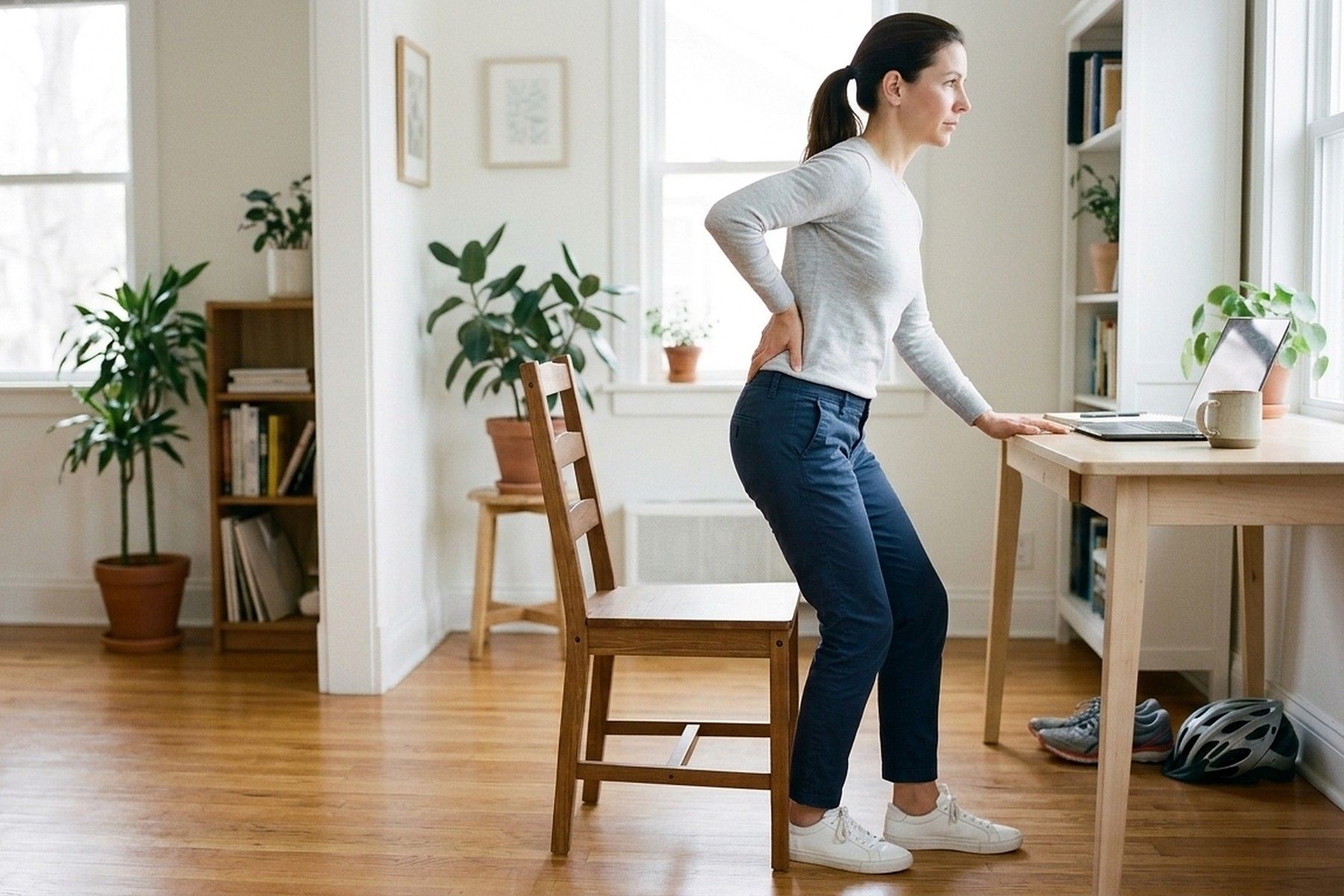
Hours at your desk, followed by the drive home: when you stand up, your lower back feels as stiff as a board. The problem does not always originate in the back itself. Often, the culprit is the psoas, a large muscle deep in the lower back.
Small, deep and important
The psoas runs from the lumbar spine, through the pelvis, to the inner part of the thigh bone. It flexes the hip and lifts the knee towards the upper body – exactly the movement you need with every running stride and every pedal stroke. It also helps stabilise the pelvis and lumbar spine.
Sprinters tend to have larger and stronger psoas muscles than non-sprinters. That is good for speed, but it is not always so beneficial for the hips and back. Cyclists are also familiar with the problem, as they spend many hours with their hips flexed. If you also spend a lot of time sitting in everyday life, you may soon notice the effects.
What the research says
Mobility tends to decline with age. In one small study, older adults had around 30 per cent less hip extension than younger adults. They simply lacked the necessary range of movement, resulting in shorter strides.
However, this can be reversed. In a ten-week randomised study, 82 older adults were divided into two groups. One group stretched their hip flexors twice a day, while the other stretched their shoulders. The hip-flexor group improved their hip extension. Those who had been stiffest at the start also took longer strides by the end of the study.
The muscle itself changes too. A long-term study involving 1,849 people found that the psoas shrank over a ten-year period, with greater reductions among older participants. A 2024 study followed 94 people around the age of 70 for one year. Those who did not fall had greater hip-flexor strength than those who did.
The conclusion? Stretching alone is not enough. The psoas also needs to stay strong.
Your five-minute routine for home
These exercises take five to eight minutes. Start with one gentle round and adjust the intensity according to how you feel during and after the session.
1. Get moving
Walk around gently for one to two minutes. After sitting at a desk or in a car for a long time, your body needs a little time to warm up before you start stretching.
2. Gently stretch the front of your hip
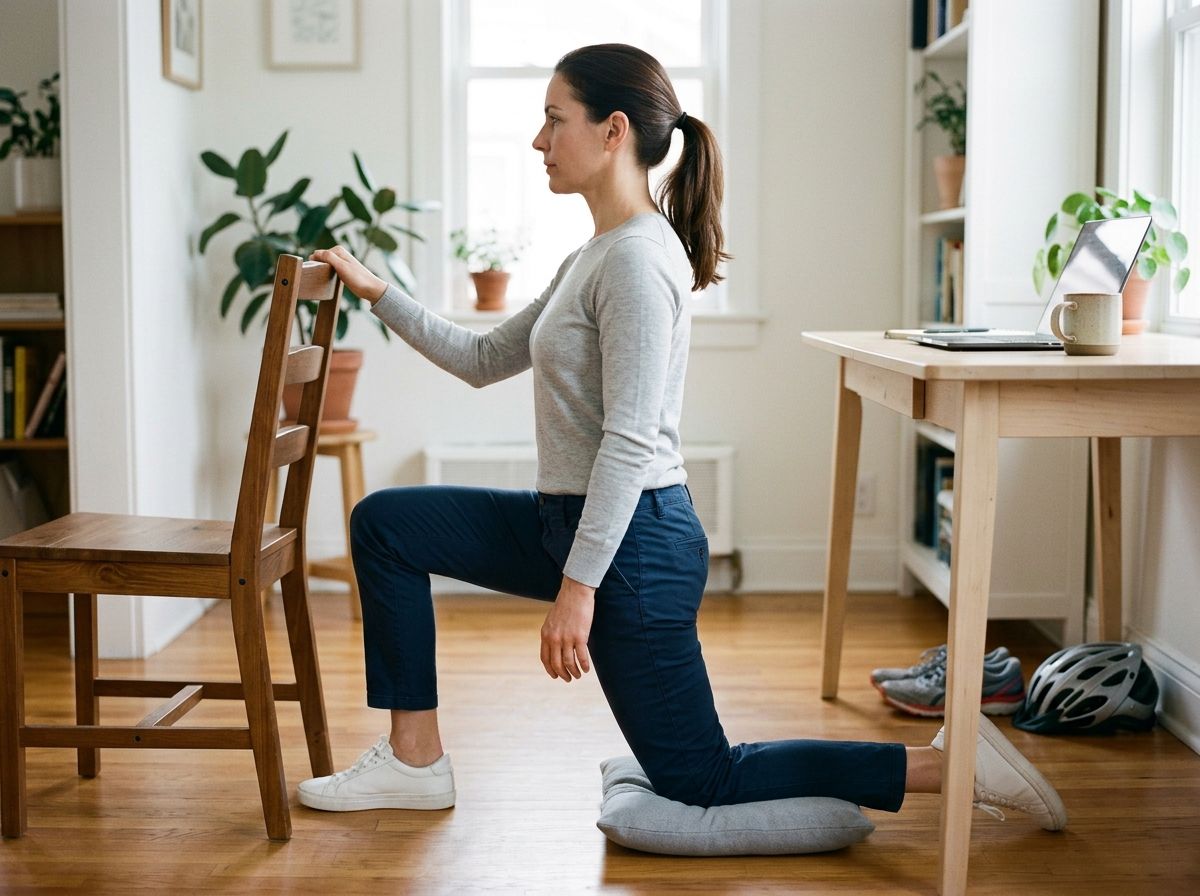
Kneel on a cushion with one knee on the floor and your other foot planted in front of you. Hold on to a sturdy chair for support. Keep your ribs aligned over your pelvis. Tighten the gluteal muscle on the side of your kneeling leg and gently tilt your pelvis backwards. Bend forwards until you feel a slight stretch at the back of your leg. Breathe normally, hold for 20 to 30 seconds, then switch sides. Important: Do not push your abdomen forwards or arch your lower back.
Variation: If kneeling is uncomfortable, perform the exercise standing in a short split stance, holding on to a bench for support. A small movement is often enough. Skip the exercise if it causes discomfort or pain.
3. Strengthen your hip Flexors
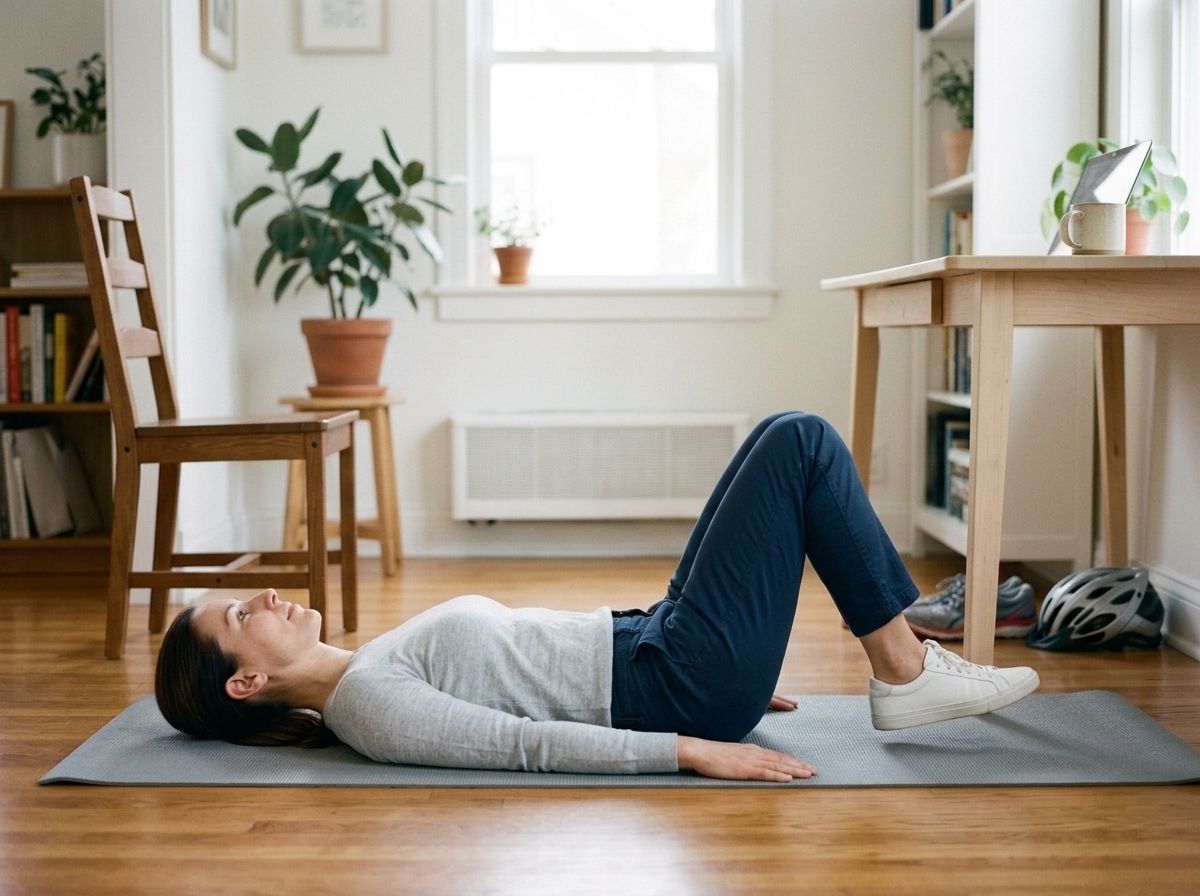
Lie on your back with your knees bent and your feet flat on the Floor
Lift one foot 5 to 10 cm off the floor.
Hold this position for two to three seconds.
Slowly lower your foot back down.
Alternate legs.
Keep your lower back still and gently engage your abdominal muscles. Perform the movement slowly and you should feel your hip flexors working. Too easy? Stand upright and lift one knee to hip height. Hold for two seconds, then slowly lower it. Perform six to eight repetitions on each side, holding on to a bench for support if needed.
4. Engage your entire leg musculature
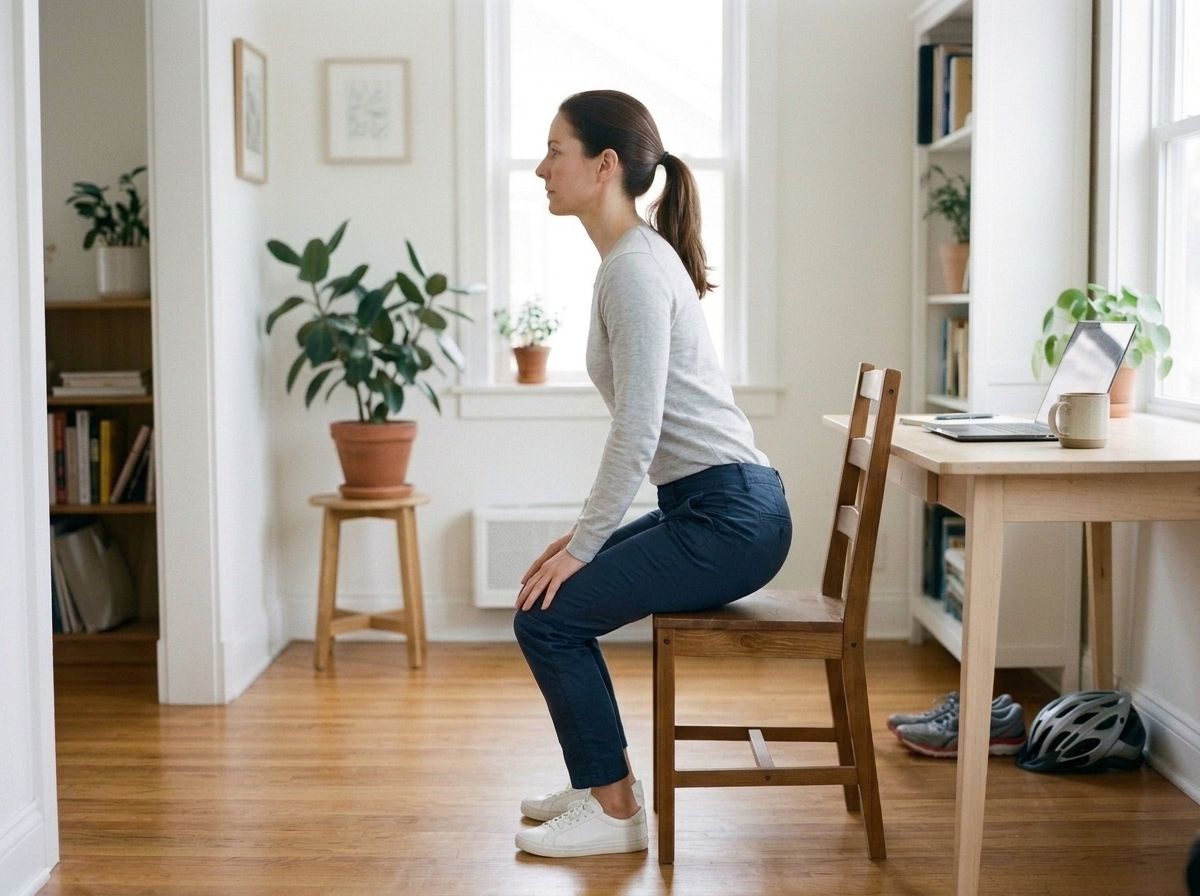
To finish, stand up from a chair or box six to ten times in a controlled manner. Stand up straight, then slowly lower yourself back down to the seat.
Make it a habit
Break up long periods of sitting with a short walk or some gentle stretching.
Stretch daily, ideally twice a day.
Perform the strengthening exercises two to three times a week.
Increase the intensity gradually.
Please note: Stop immediately if you experience sharp pain or pain that radiates down your leg. If your symptoms persist or get worse, consult a physiotherapist.
They not only connect your upper body to your legs, but also give you support and stability. Here you’ll find out how exactly the hip flexors work and what you should bear in mind when training.
Training tips
Get ready for winter
If you want to enjoy your cross-country skiing in December with confidence and good technique, now is the time to lay the foundations. With the right preparation, you can turn a challenging start to the season into an enjoyable experience from the very first kilometre.
Interviews
Nicola Wigger in the Datasport-Check
At the very last moment, Nicola Wigger secured a place on the Swiss Olympic team. With a determinated race at the end of January, he achieved the second required result by finishing among the top 25, and will now compete in the distance races in Cortina.
General tips
Tired legs, clear head: 3 mental tips for your final race
Heavy legs and waning motivation as the season draws to a close? That’s normal. Rather than training even harder, focus on your mental game: here are 3 simple strategies to help you approach your final race with a clear and focused mind.