If you want to enjoy your cross-country skiing in December with confidence and good technique, now is the time to lay the foundations. With the right preparation, you can turn a challenging start to the season into an enjoyable experience from the very first kilometre.
For many people, the first few days on the cross-country trails can be a sobering experience: Their arms start burning after just a few minutes, their core muscles tire and their technique feels as though they have forgotten everything over the summer. It is hardly surprising, as cross-country skiing works muscle groups that are rarely challenged by running or cycling. The good news: six to eight weeks of targeted preparation can make all the difference. The best approach is to prepare in two stages.
The basics: Pole walking, resistance bands and core strength
These three types of training are accessible to everyone, require very little equipment and can easily be fitted into your daily routine. They provide the foundation for everything that follows.
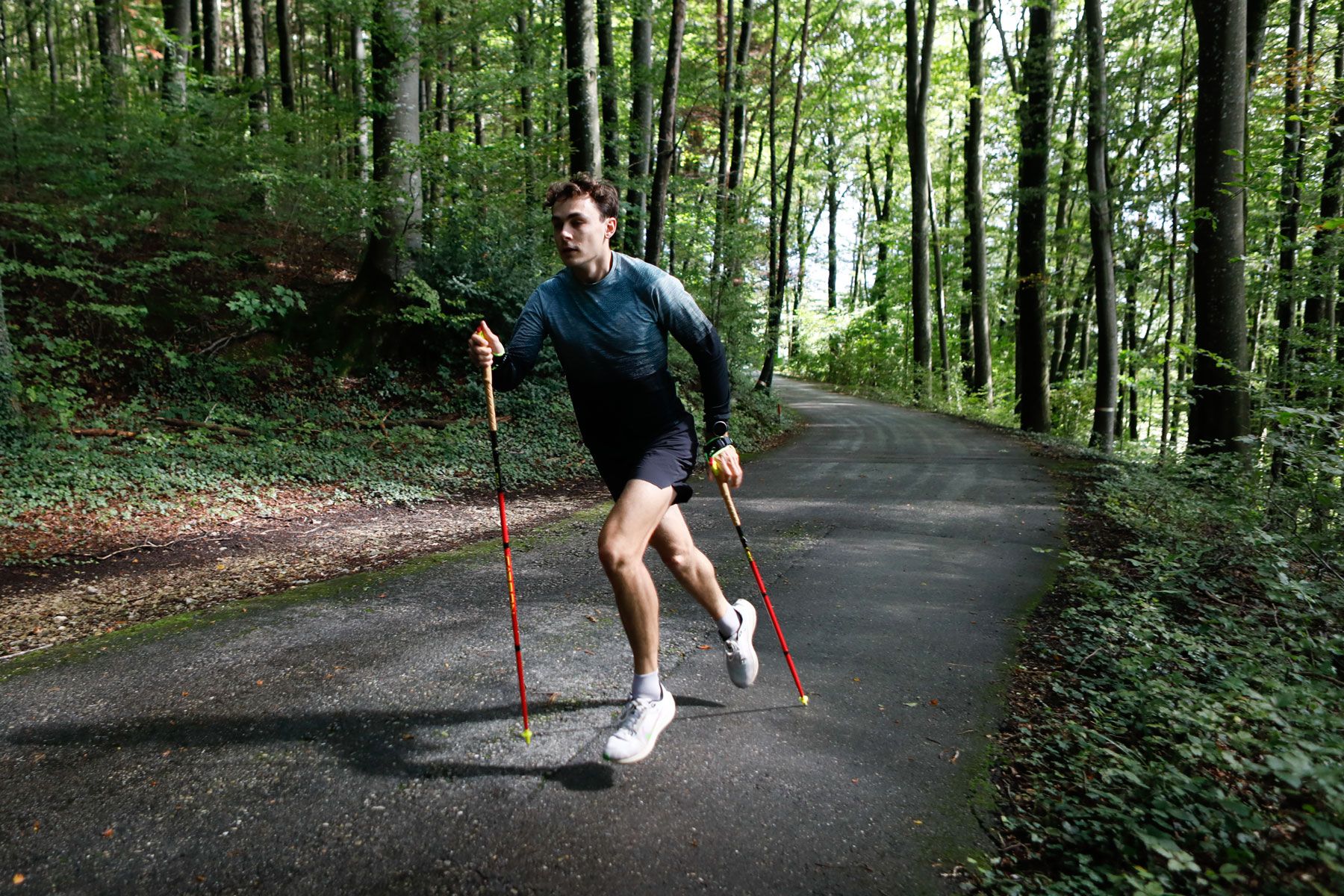
Pole walking and ski walking: Walking uphill with poles using a diagonal stride trains endurance, coordination and the synchronisation of arm and leg movements – ideal for the classic technique. All you need is a pair of running shoes, cross-country ski poles and a hill.
Resistance bands or Theraband: Attach a resistance band or Theraband to a door handle or tree to practise the double-poling movement at home. Sets of one to two minutes specifically strengthen the arms, shoulders and back in preparation for poling.
Core strength: Planks, Theraband crunches and rowing exercises strengthen the muscles that power your propulsion. An efficient double-poling push doesn't come from the arms alone; it comes from the core. The body leans forwards, using its weight to press down on the poles.
Two or three short sessions a week are enough to get your arm and shoulder muscles accustomed to the new demands.
The next level: SkiErg and roller skis
For those looking to take their preparation further, there are two more options. The SkiErg and roller skis replicate the cross-country skiing movement much more closely, making your preparation even more effective.
The SkiErg is available in many gyms and simulates the double-poling action almost exactly. Why choose the SkiErg?
It is weather-independent and safe, with no traffic or risk of falling.
It displays power output and speed. This makes it easy to control your training precisely and track your progress.
It is ideal for interval training, for example, six three-minute efforts at a brisk pace, with two minutes of recovery between each.
Roller skis are the most effective form of preparation because they replicate the full cross-country skiing movement on tarmac. Why choose roller skis?
Balance, the gliding phase and timing are trained just as they are on snow, helping you get your technique right from the start of the season.
They are available for both styles: skating roller skis are short and manoeuvrable, while classic roller skis have a ratchet mechanism that prevents the wheels from rolling backwards during push-off.
Longer outdoor sessions offer variety and help build a strong aerobic endurance base specific to cross-country skiing.
Safety is essential: roller skis generally have no brakes. A helmet, gloves and goggles are essential. Beginners should opt for slower wheels and stick to flat, quiet roads with little traffic or a dedicated roller-ski track.
The weeks before the snow arrives
A simple training plan is all you need: Do the basic exercises two to three times a week, add one or two SkiErg or roller-ski sessions and continue with your usual running or cycling training. Increase the volume and intensity gradually.
Those who arrive at the first cross-country trails well prepared will reap the rewards: their technique will come back more quickly, fatigue will be less of an issue, and a challenging start to the season will give way to a winter of genuine training progress.