
Diet tips
Lose weight – but how?
Your body composition, or body weight, can have a strong impact on your athletic performance in certain sports. The dos and don'ts of losing weight.

Foto: iStock.com/Motortion
The largest study of people who have successfully lost – and kept off – up to 30 kilograms over the long term provides both surprising and unsurprising answers. The key takeaway: anyone looking to lose weight should approach the process as a long-term commitment.
Not just one, two or three kilograms, but double-digit amounts – in some cases up to 30 kilograms. A large-scale study examined 784 people who had achieved such substantial weight loss to find out exactly how they had done it. The researchers were interested not only in how these individuals managed to reduce their weight so dramatically, but also in identifying common behavioural patterns that helped them maintain their lower weight over many years.
Unsurprisingly, diet played a key role in the participants' success. Almost all of them (89%) reported changing both their eating habits and their level of physical activity. Only 10% achieved their weight loss through dietary changes alone, while a mere 1% relied solely on increased exercise without altering their diet.
So what changes did participants actually make to their diets? The vast majority (88%) reported cutting back on specific food groups. By contrast, fewer than half (44%) said they had lost weight mainly through calorie counting or portion control without fundamentally changing what they ate. The average macronutrient split – 24% fat, 19% protein and 56% carbohydrates – provides little evidence for any particular dietary strategy, such as low-fat, low-carb or high-protein eating.
Instead, participants tended to eat mostly home-cooked or self-prepared meals, with only around three meals per week eaten out. Taken together, these findings suggest a move away from highly processed foods and towards whole or minimally processed alternatives.
Another study provides striking evidence of how switching to a more natural diet can support weight loss. In this study, 20 participants were instructed to eat as much as they wanted for two weeks, consuming either highly processed foods or whole and minimally processed foods.
During the two-week period of eating highly processed foods, participants consumed around 500 additional calories per day on average. As a result, they gained approximately one kilogram over the course of the two weeks. In contrast, during the phase in which they ate whole or minimally processed foods, they lost around one kilogram.
Interestingly, neither hunger nor feelings of fullness differed between the two dietary conditions. One possible explanation is that highly processed foods appear to bypass the body's natural satiety mechanisms, leading people to consume more food than they otherwise would. As a result, simply trying to eat less often amounts to treating the symptom rather than addressing the underlying cause. Switching to real, minimally processed foods tackles the issue more fundamentally and may help restore the body's natural ability to regulate food intake through hunger and satiety signals.
Physical activity is another key pillar of long-term weight loss. Most participants (92%) reported exercising primarily at home. Around one third were regularly active as part of a group or together with a friend or colleague. The most commonly reported activities included cycling, strength training, aerobics, running or jogging, hiking and step training.
Overall, activity levels were relatively high. On average, participants expended around 400 calories per day through exercise. Perhaps most importantly, successful weight loss was associated with finding an activity that people genuinely enjoyed, making it easier to incorporate into their daily lives over the long term.
As straightforward as the recipe for long-term weight loss may sound, putting it into practice is far from easy. Only 26% of participants said they found it easy to lose weight, while 74% described the process as moderately to very demanding. The effort appears to have been worthwhile, however. Nearly all participants reported improvements in various aspects of their lives after losing weight, including quality of life, energy levels, mobility, self-confidence and physical health. The study also revealed several other interesting findings:
45% said they had lost weight on their own, while 55% did so with the help of a weight-loss programme.
91% reported having previously attempted to lose weight at least once. In other words, a previous setback does not mean that a future attempt is doomed to fail.
77% said a specific trigger had prompted them to start losing weight, most commonly health-related or emotional reasons.
70% reported having been overweight since childhood. Despite this predisposition, they were able to achieve a healthy weight through dietary changes and increased physical activity.
Many participants said that maintaining their weight was easier than losing it in the first place. This suggests that healthy habits become less demanding over time and that the benefits of improved wellbeing can themselves become a powerful source of motivation.
The study delivers a clear message: long-term weight loss is possible, often without special weight-loss products, medication, surgery or any particular programme – even for people with a predisposition to being overweight. Those who successfully lost weight did not follow a single diet, a specific training plan or rely on a particular product. Instead, they changed their eating habits, became significantly more physically active and developed routines they could maintain over the long term. Losing weight may still be challenging for many people – but it is possible.
Your body composition, or body weight, can have a strong impact on your athletic performance in certain sports. The dos and don'ts of losing weight.

Whether an endurance athlete can deliver good performance also depends on body build and weight. But when does a lower body weight actually lead to better performance? And where are the limits?
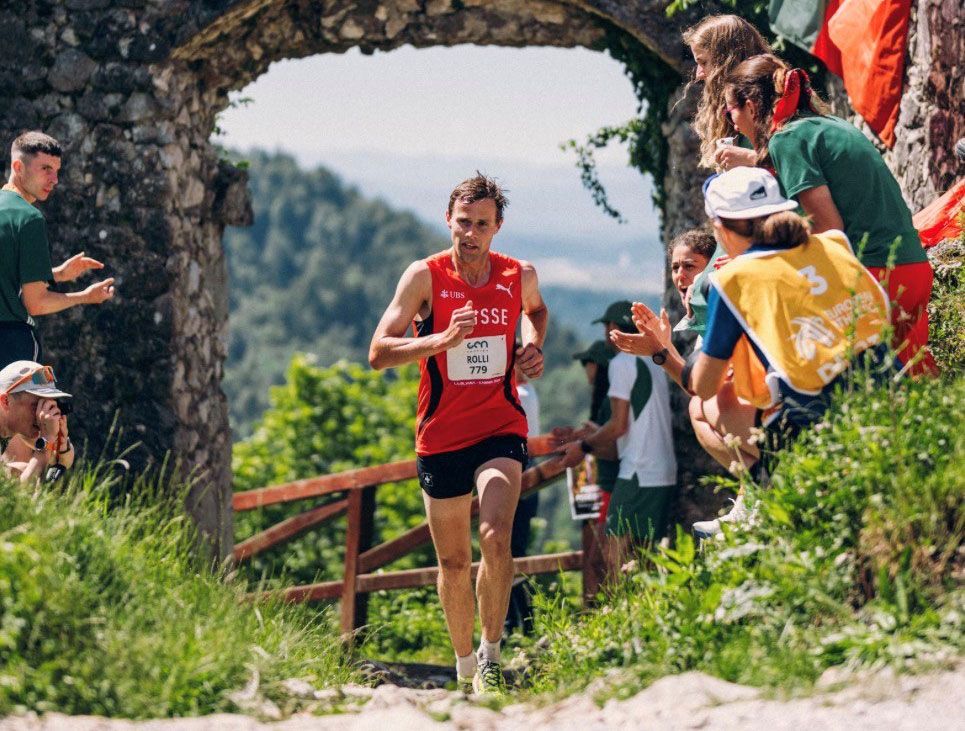
At the beginning of June, Dominik Rolli won the third European Championship medal of his career at the European Off-Road Running Championships in Kamnik (SLO). The 30-year-old from the canton of Bern, who has already won medals at Swiss Championships over 5,000 m, 10,000 m, half marathon, marathon, cross-country and mountain running in recent years, once again demonstrated that he belongs among the world's best mountain runners.