Training tips
Mastering your race pace
Do you often struggle to choose the right pace for your races? That’s perfectly normal, since race pace is never the same for every event: it depends on a variety of factors.
In recent months, numerous records have been broken that, after the peak EPO era, were considered untouchable. We highlight the key reasons behind these performances and show where you, too, can benefit and improve your own results.
Despite increasingly stringent anti-doping controls, we regularly see new records that surpass even those set during the height of the EPO era. Looking at the all-time rankings, both at the very top and across the wider field, we are witnessing an unprecedented increase in athletic performance. Several factors lie behind these performances, most of them linked to advances in sports science, from technology and physiology to training methodology and psychology.
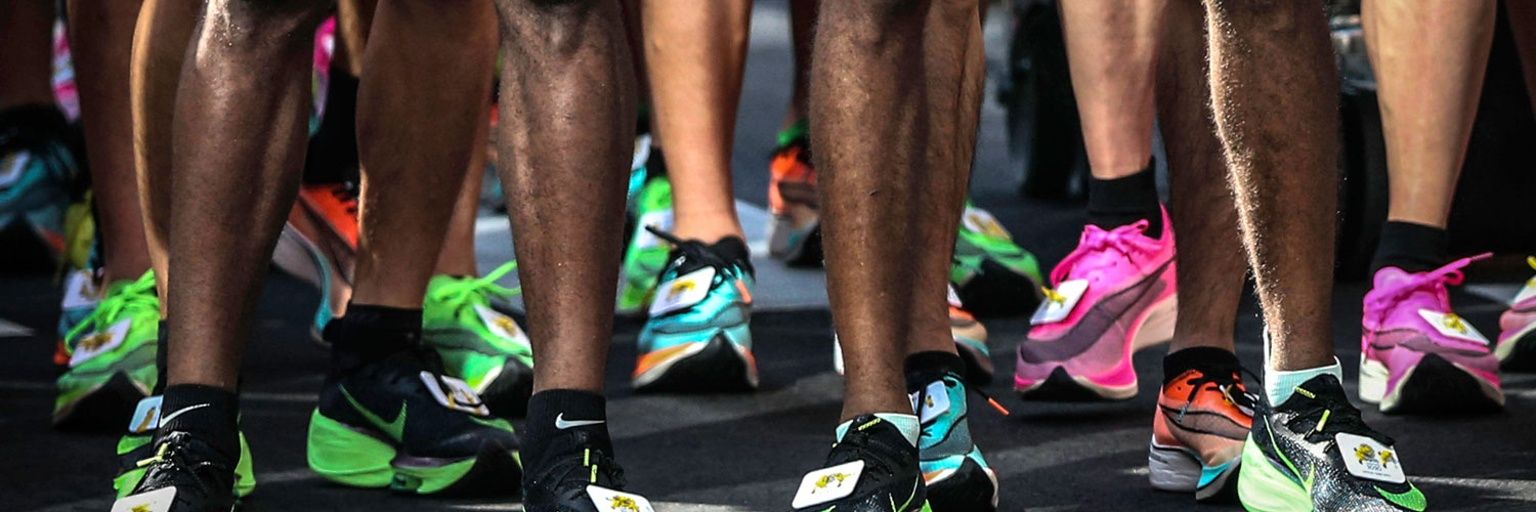
Since 2017, the introduction of carbon plates and innovative PEBA foam materials has transformed running efficiency. Studies and analyses typically estimate the advantage for elite marathon runners at around 1–3%, which over 42 kilometres can translate into anything from several seconds to several minutes. However, the benefit isn’t just limited to race day. The advanced cushioning systems also allow athletes to handle greater training volumes and higher intensities, as recovery times are reduced. This cumulative benefit is one reason why athletes are still improving years after carbon-plated shoes first appeared.
How you can benefit: These new shoes can help you train more frequently and at a higher intensity because your muscles recover more quickly. The key is choosing a shoe that matches your individual needs and abilities. At the same time, you should work on your core and pelvic stability and continue refining your running technique. To fully benefit from the shoe's dynamic properties, you need to provide the necessary stability through your running technique.
Until recently, sports scientists believed that the body could absorb no more than 60 grams of carbohydrates per hour and that long training sessions should be used to enhance fat metabolism. More recent research has shown that a high carbohydrate intake during training and competition improves training quality and supports faster recovery afterwards. The key, however, is to gradually train the digestive system to tolerate these higher amounts.
How to improve your performance: For events lasting longer than 60 minutes, start taking carbohydrates strategically during races and practise this approach in long or demanding training sessions so that your stomach becomes accustomed to it. Be sure to refuel and rehydrate soon after training. Even the best training session will not deliver its full benefits if your nutrition during and afterwards is not up to the same standard.
There have been no major breakthroughs in training itself. Instead, it is the accumulation of many small improvements over time that has made the difference. Athletes now complete multiple altitude-training camps with precise monitoring, make more regular use of lactate testing, rely increasingly on data-driven training plans and place a greater emphasis on recovery.
How recreational runners can benefit: This is where the biggest difference between elite and recreational athletes becomes apparent. Professional athletes simply have more time to bring together all the pieces of the performance puzzle. For most recreational runners, recovery is one area that still offers considerable scope for improvement. While the world's best athletes can dedicate significant time to recovery, you have to fit your training around work and other daily commitments. And stress is stress. Your body does not distinguish between training stress, work stress or personal stress. That makes it all the more important to consciously create opportunities to switch off, relax and recharge.
Ten or twenty years ago, elite athletes would prepare for major competitions in relatively isolated training groups and might only cross paths at a handful of preparatory races. Today, social media has transformed that landscape. Training methods, workouts and performance data are shared openly, leaving very few secrets and making it easier than ever for successful approaches to be adopted by others. When one athlete breaks into a new realm of performance, it tends to inspire others to do the same rather than convince them that such achievements are beyond reach.
How recreational runners can take the next step: The greatest limits are often the ones we place on ourselves. If you are willing to challenge those boundaries and embrace new approaches, you may be surprised by the level of performance you can achieve.
Do you often struggle to choose the right pace for your races? That’s perfectly normal, since race pace is never the same for every event: it depends on a variety of factors.

June can be a difficult month for athletes, as motivation often starts to dip. Discover three strategies to manage mental fatigue and stay on track with your training this summer!