Foto: canva.com/caballerocontent
Spring is here and the warmer weather makes those longer rides far more appealing. Here are six tips to help make them a success.
Some cyclists have spent all winter on the turbo trainer in the basement, others have focused on running instead, while some have taken a complete break. Now, however, it’s time to properly kick-start the cycling season and get back into structured training.
We’ll show you what to focus on during your longer rides. Long, steady sessions are essential for building aerobic base endurance – the foundation you need to ride efficiently and consistently over longer periods. Without this base, your overall performance will suffer. Try to include a ride of at least three to four hours in your training schedule twice per month.
Adjust your bike individually
Before setting off, have your road bike properly fitted by a specialist. You should be able to sit comfortably for several hours and apply your power efficiently. Also important to remember: just because something looks fast and professional doesn’t mean it’s comfortable, suitable or actually faster for you. That’s why expert advice is so valuable.
Optimal pacing
If you have plenty of time available, it makes sense to complete a long ride at low intensity to improve your aerobic base. If time is limited, it’s better to increase the pace and focus on interval work or hill training instead.
Try to stick consistently to a low intensity. Average speed is not important here. Heart rate matters much more. Ideally, this should remain in the low zone (60–70% of maximum heart rate) for at least half – preferably two-thirds – of the session.
Since the intensity should stay low, choose routes that are mostly flat or gently rolling. Long climbs can make it difficult to maintain a low heart rate, depending on your fitness level.
Fuel properly
The days when athletes were advised to eat as little as possible to stimulate fat metabolism are over. Today we know that supplying the body with energy continuously is more effective. It improves training quality, helps prevent hunger pangs after the session and shortens recovery time.
For a three to four-hour training ride, aim to consume around 1 gram of carbohydrates per kilogram of body weight per hour.
Check the weather
Check the forecast the evening before and again in the morning, and plan your start time so you can avoid possible showers. At the same time, take note of the expected temperatures. Dress accordingly and don’t forget sunscreen.
Optimise your clothing
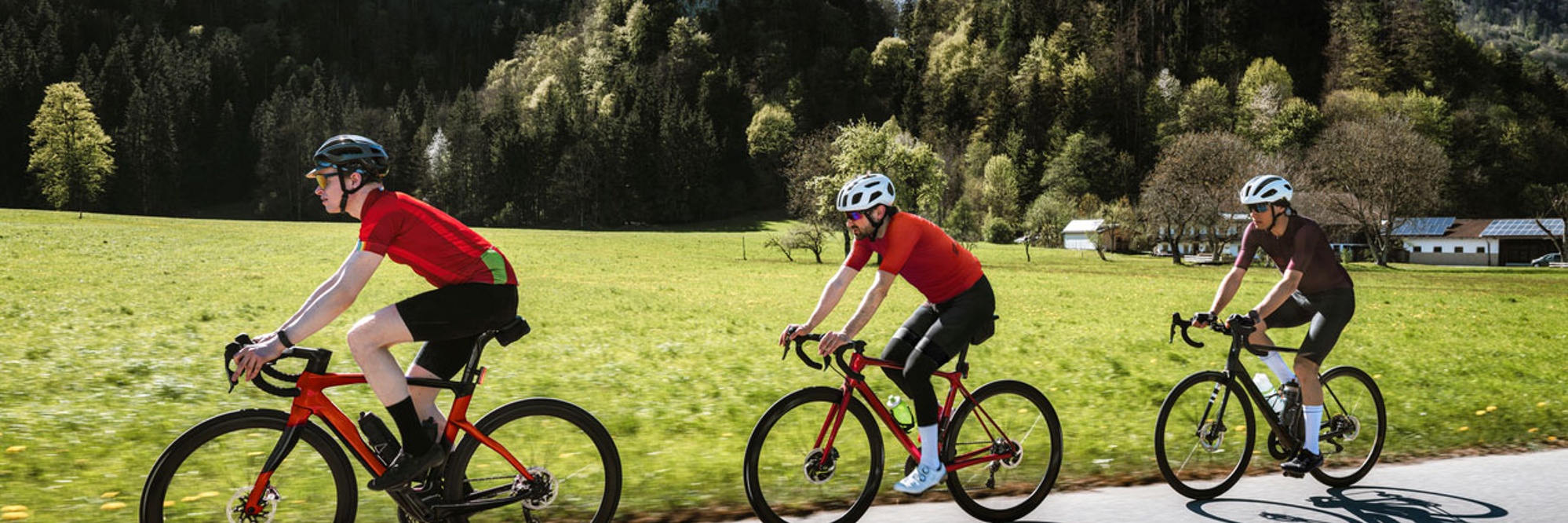
Equip yourself with good-quality kit so you’re prepared for all conditions. A road cycling shorts-and-jersey combination is essential along with arm and leg warmers for cooler days. A lightweight rain jacket and gilet are also highly recommended for windy conditions or descents. A long-sleeve jersey is particularly practical if your ride starts early in the morning, when temperatures are still low, or if you’re riding in early spring and late autumn.
It’s definitely worth giving your clothing a little extra attention. When you’re out for several hours, comfort matters – and the right kit supports and protects you throughout the ride.
Use a mental strategy
Three to four hours can pass surprisingly quickly – especially if you’ve chosen a beautiful route, fuelled well or are riding with good company. If you still struggle mentally, try the ‘pizza technique’:
this mental strategy breaks large goals into smaller, manageable pieces. Instead of focusing on the entire ride, concentrate on individual “slices”, such as the next 10 kilometres or the next few minutes. This reduces pressure and mental strain. Each completed section creates a sense of achievement and boosts motivation for the next one. This method helps you stay focused throughout your ride.